Department of Psychiatrym, The Affiliated Brain Hospital of Guangzhou Medical University, Guangzhou Huiai Hospital, Guangzhou City, China.
Department of Neurology, The Affiliated Brain Hospital of Guangzhou Medical University, Guangzhou Huiai Hospital, Guangzhou City, China.
Int J Neuropsychopharmacol. 2018 Jul 1;21(7):640-648. doi: 10.1093/ijnp/pyy016.
Late-life depression patients are at a high risk of developing Alzheimer's disease, and diminished olfactory identification is an indicator in early screening for Alzheimer's disease in the elderly. However, whether diminished olfactory identification is associated with risk of developing Alzheimer's disease in late-life depression patients remains unclear.
One hundred and twenty-five late-life depression patients, 50 Alzheimer's disease patients, and 60 normal controls were continuously recruited. The participants underwent a clinical evaluation, olfactory test, neuropsychological assessment, and neuroimaging assessment.
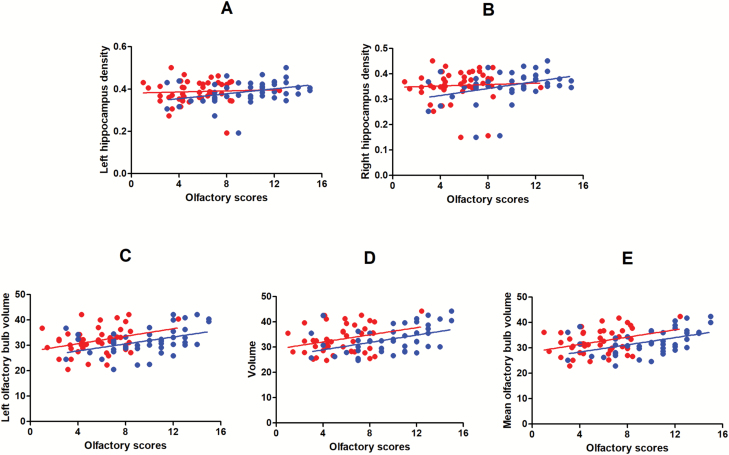
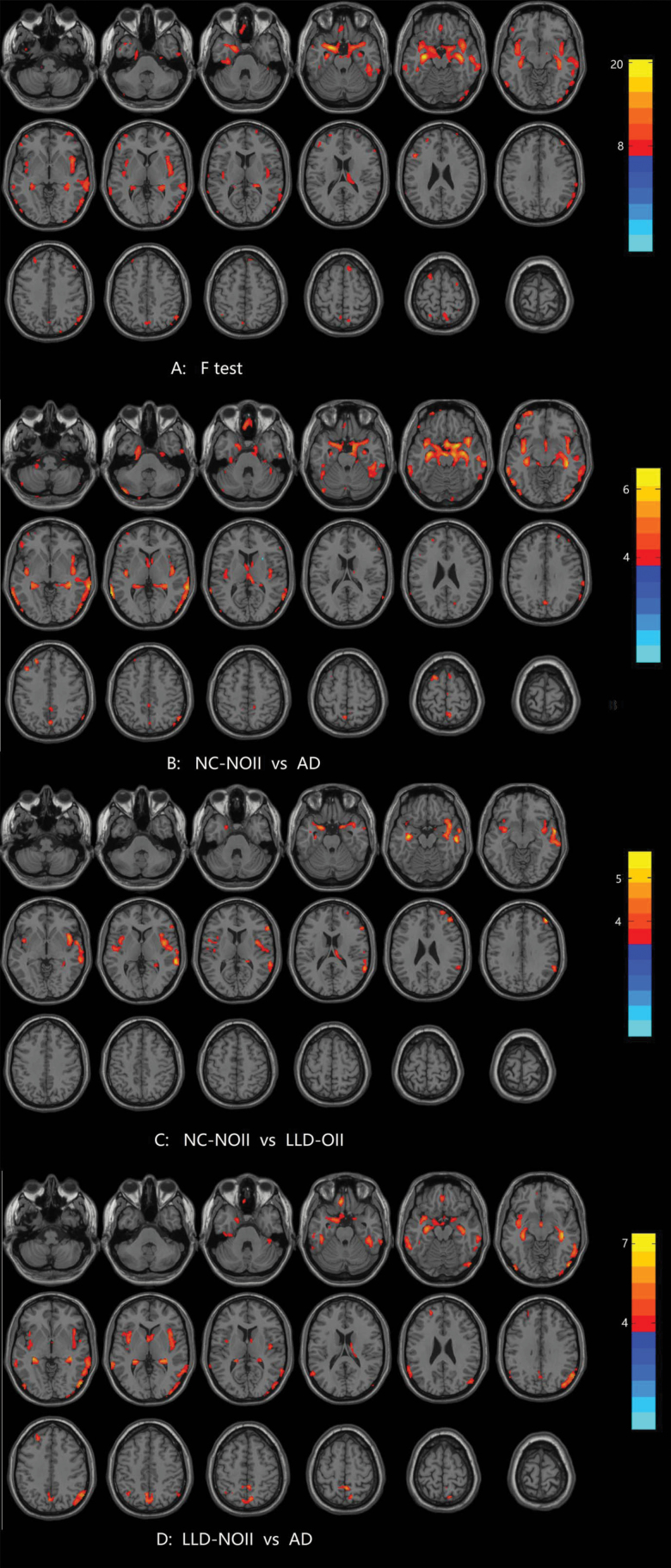
The olfactory identification impairment in late-life depression patients was milder than that in Alzheimer's disease patients. Diminished olfactory identification was significantly correlated with worse cognitive performance (global function, memory language, executive function, and attention) and reduced grey matter volume (olfactory bulb and hippocampus) in the late-life depression patients. According to a multiple linear regression analysis, olfactory identification was significantly associated with the memory scores in late-life depression group (B=1.623, P<.001). The late-life depression with olfactory identification impairment group had worse cognitive performance (global, memory, language, and executive function) and more structural abnormalities in Alzheimer's disease-related regions than the late-life depression without olfactory identification impairment group, and global cognitive function and logical memory in the late-life depression without olfactory identification impairment group was intact. Reduced volume observed in many areas (hippocampus, precuneus, etc.) in the Alzheimer's disease group was also observed in late-life depression with olfactory identification impairment group but not in the late-life depression without olfactory identification impairment group.
The patterns of cognitive impairment and structural abnormalities in late-life depression with olfactory identification impairment patients were similar to those in Alzheimer's disease; olfactory identification may help identify late-life depression patients who are at a high risk of developing Alzheimer's disease.
老年期抑郁症患者发生阿尔茨海默病的风险较高,嗅觉识别能力下降是老年人群阿尔茨海默病早期筛查的指标之一。然而,嗅觉识别能力下降是否与老年期抑郁症患者发生阿尔茨海默病的风险相关仍不清楚。
连续纳入 125 例老年期抑郁症患者、50 例阿尔茨海默病患者和 60 例正常对照者。所有参与者均进行临床评估、嗅觉测试、神经心理学评估和神经影像学评估。
老年期抑郁症患者的嗅觉识别障碍较轻,与阿尔茨海默病患者相比差异有统计学意义。嗅觉识别障碍与认知功能下降(总体功能、记忆语言、执行功能和注意力)和灰质体积减少(嗅球和海马)显著相关。多元线性回归分析显示,嗅觉识别与老年期抑郁症组的记忆评分显著相关(B=1.623,P<.001)。与嗅觉识别正常的老年期抑郁症患者相比,嗅觉识别障碍的老年期抑郁症患者认知功能更差(总体、记忆、语言和执行功能),阿尔茨海默病相关区域的结构异常更多,而嗅觉识别正常的老年期抑郁症患者的总体认知功能和逻辑记忆正常。阿尔茨海默病组多个区域(海马、楔前叶等)体积减少在嗅觉识别障碍的老年期抑郁症患者中也观察到,但在嗅觉识别正常的老年期抑郁症患者中未观察到。
嗅觉识别障碍的老年期抑郁症患者的认知损害和结构异常模式与阿尔茨海默病相似;嗅觉识别可能有助于识别发生阿尔茨海默病风险较高的老年期抑郁症患者。