Department of Basic Sciences, Physiological Division, School of Medicine, Loma Linda University, Loma Linda, CA 92324, USA.
Int J Mol Sci. 2018 Mar 21;19(4):927. doi: 10.3390/ijms19040927.
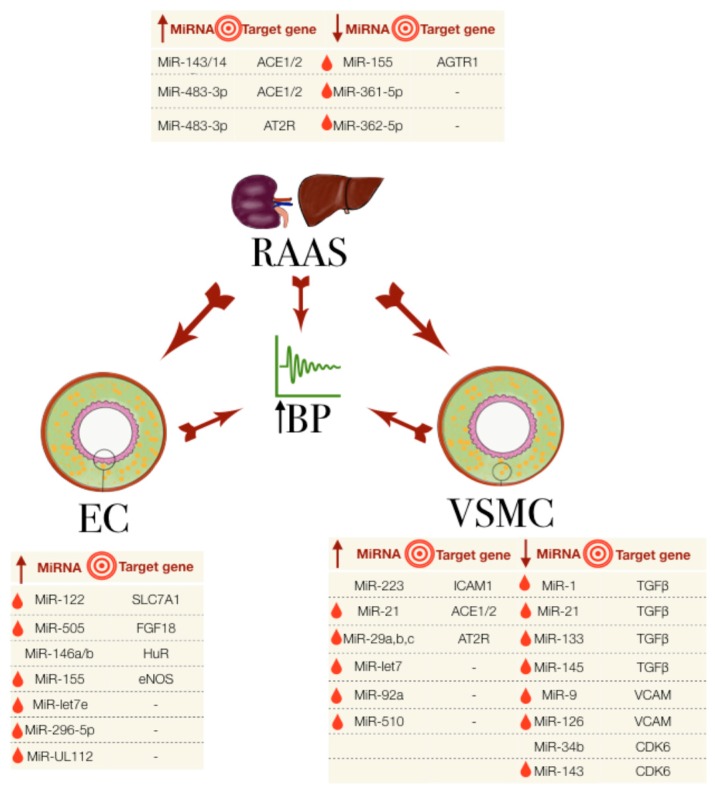
Hypertension is a complex, multifactorial disease that involves the coexistence of multiple risk factors, environmental factors and physiological systems. The complexities extend to the treatment and management of hypertension, which are still the pursuit of many researchers. In the last two decades, various genes have emerged as possible biomarkers and have become the target for investigations of specialized drug design based on its risk factors and the primary cause. Owing to the growing technology of microarrays and next-generation sequencing, the non-protein-coding RNAs (ncRNAs) have increasingly gained attention, and their status of redundancy has flipped to importance in normal cellular processes, as well as in disease progression. The ncRNA molecules make up a significant portion of the human genome, and their role in diseases continues to be uncovered. Specifically, the cellular role of these ncRNAs has played a part in the pathogenesis of hypertension and its progression to heart failure. This review explores the function of the ncRNAs, their types and biology, the current update of their association with hypertension pathology and the potential new therapeutic regime for hypertension.
高血压是一种复杂的、多因素的疾病,涉及多种危险因素、环境因素和生理系统的共存。其复杂性还延伸到高血压的治疗和管理,这仍然是许多研究人员追求的目标。在过去的二十年中,各种基因已经成为可能的生物标志物,并成为基于危险因素和主要病因的专门药物设计的研究目标。由于微阵列和下一代测序技术的不断发展,非编码 RNA(ncRNA)越来越受到关注,它们在正常细胞过程以及疾病进展中的冗余状态变得重要。ncRNA 分子构成了人类基因组的重要部分,其在疾病中的作用仍在不断被揭示。具体来说,这些 ncRNA 在高血压的发病机制及其向心力衰竭的进展中发挥了作用。本综述探讨了 ncRNA 的功能、类型和生物学特性,以及它们与高血压病理的关联的最新进展,以及高血压的潜在新治疗方案。