Farncombe Family Digestive Health Research Institute, Department of Medicine, McMaster University, Hamilton, Ontario, Canada.
Graduate Program in Areas of Basic and Applied Biology, Instituto de Ciências Biomédicas Abel Salazar, Universidade do Porto, Porto, Portugal.
Microbiome. 2018 Mar 22;6(1):57. doi: 10.1186/s40168-018-0433-4.
Changes in hygiene and dietary habits, including increased consumption of foods high in fat, simple sugars, and salt that are known to impact the composition and function of the intestinal microbiota, may explain the increase in prevalence of chronic inflammatory diseases. High salt consumption has been shown to worsen autoimmune encephalomyelitis and colitis in mouse models through p38/MAPK signaling pathway. However, the effect of high salt diet (HSD) on gut microbiota and on intestinal immune homeostasis, and their roles in determining vulnerability to intestinal inflammatory stimuli are unknown. Here, we investigate the role of gut microbiota alterations induced by HSD on the severity of murine experimental colitis.
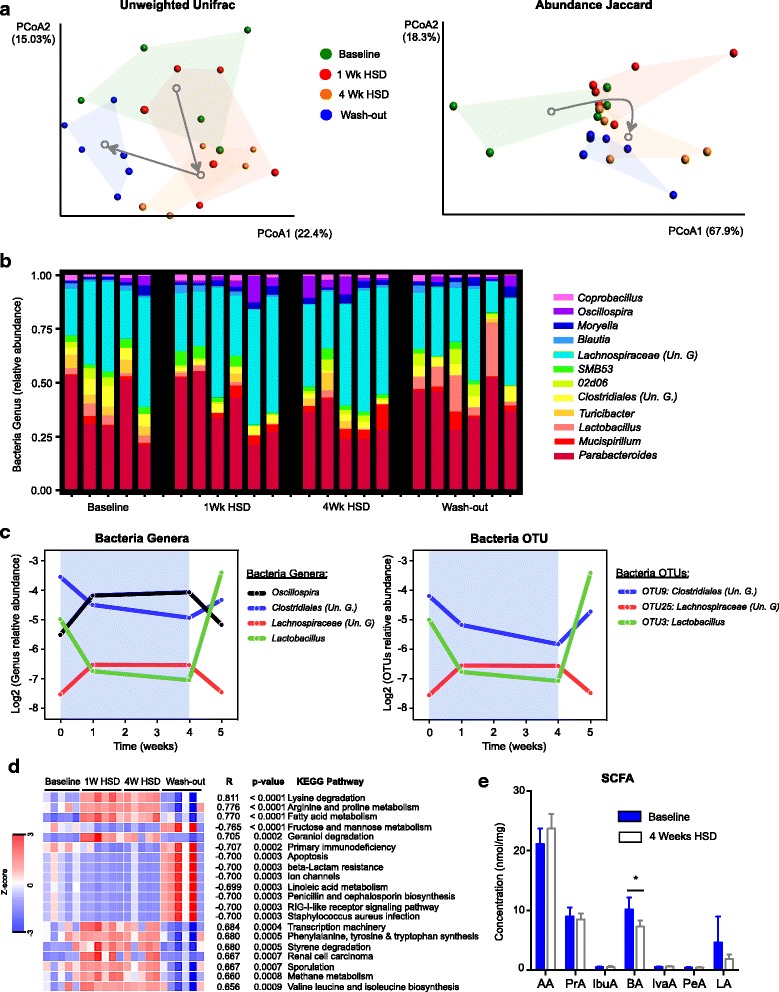
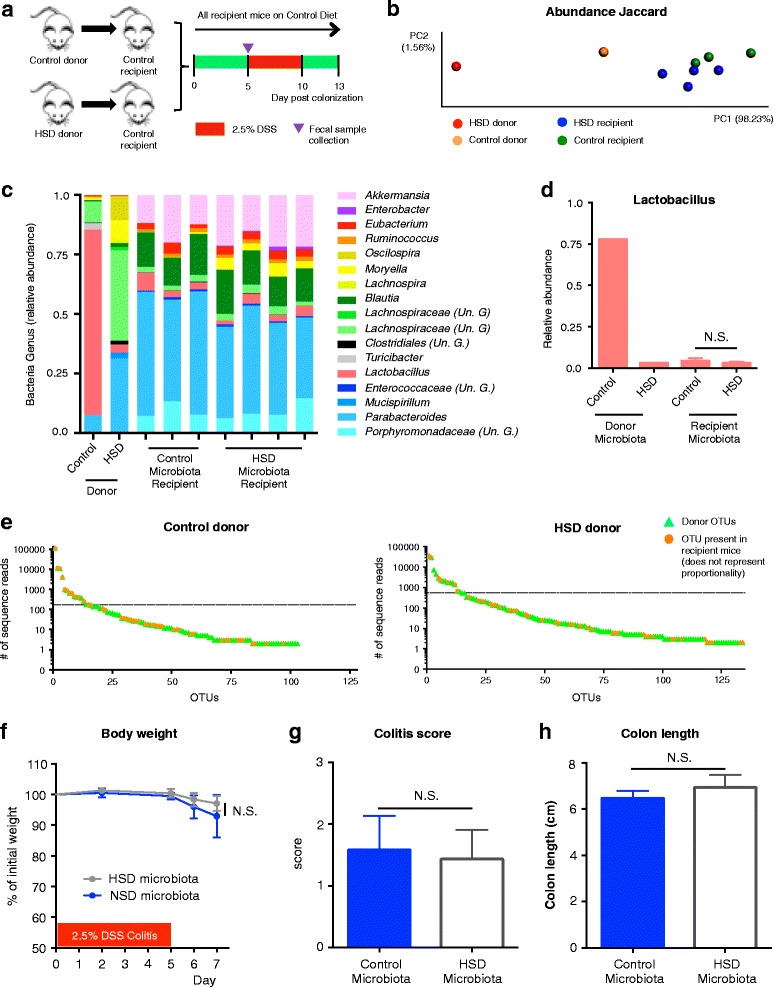
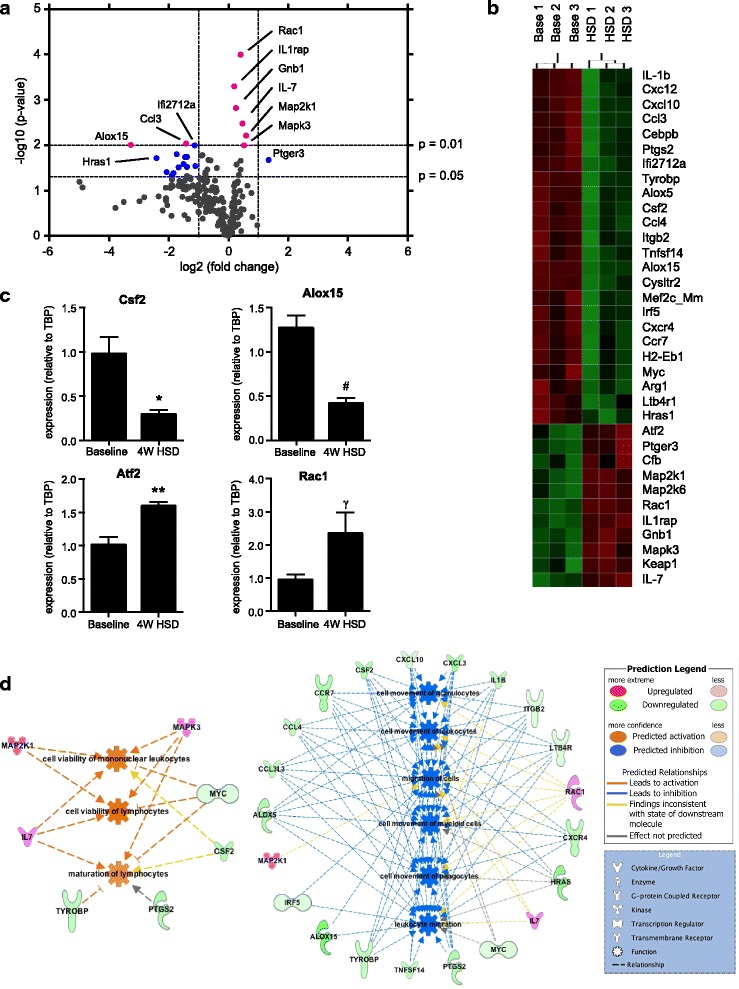
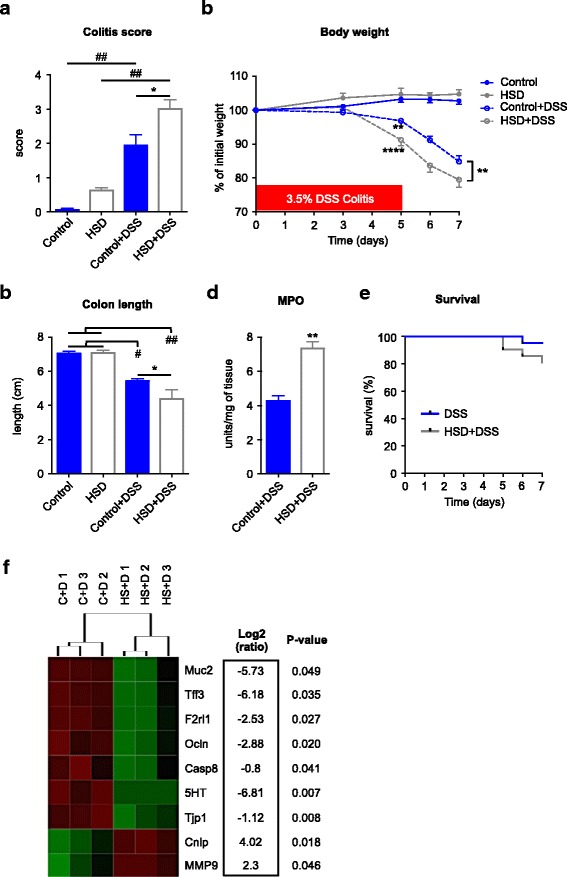
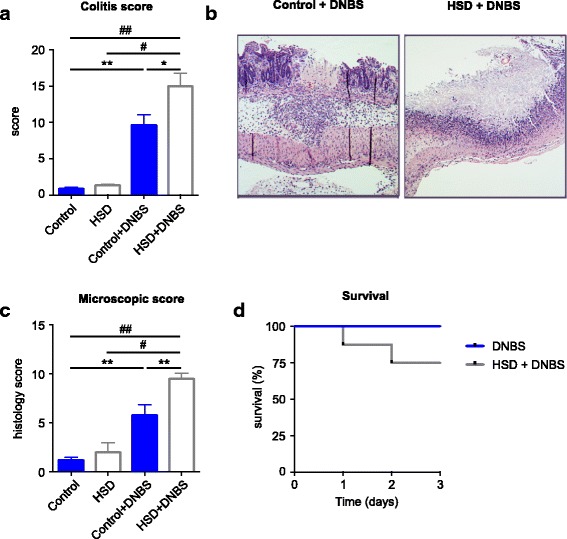
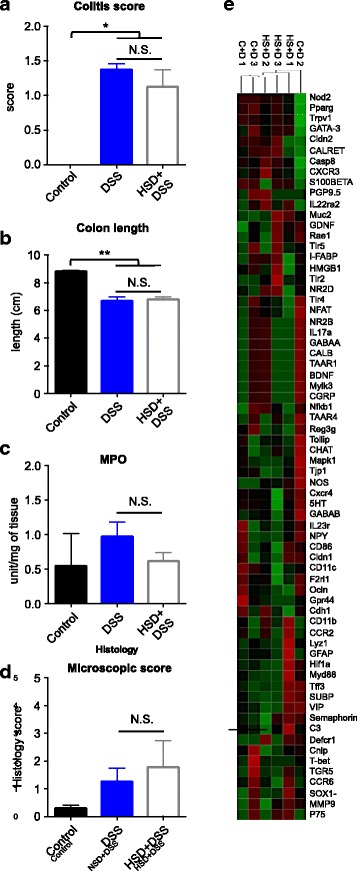
Compared to control diet, HSD altered fecal microbiota composition and function, reducing Lactobacillus sp. relative abundance and butyrate production. Moreover, HSD affected the colonic, and to a lesser extent small intestine mucosal immunity by enhancing the expression of pro-inflammatory genes such as Rac1, Map2k1, Map2k6, Atf2, while suppressing many cytokine and chemokine genes, such as Ccl3, Ccl4, Cxcl2, Cxcr4, Ccr7. Conventionally raised mice fed with HSD developed more severe DSS- (dextran sodium sulfate) and DNBS- (dinitrobenzene sulfonic acid) induced colitis compared to mice on control diet, and this effect was absent in germ-free mice. Transfer experiments into germ-free mice indicated that the HSD-associated microbiota profile is critically dependent on continued exposure to dietary salt.
Our results indicate that the exacerbation of colitis induced by HSD is associated with reduction in Lactobacillus sp. and protective short-chain fatty acid production, as well as changes in host immune status. We hypothesize that these changes alter gut immune homeostasis and lead to increased vulnerability to inflammatory insults.
卫生和饮食习惯的改变,包括增加食用高脂肪、简单糖和盐的食物,这些已知会影响肠道微生物群的组成和功能,可能解释了慢性炎症性疾病患病率的增加。高盐饮食已被证明通过 p38/MAPK 信号通路加重小鼠模型中的自身免疫性脑脊髓炎和结肠炎。然而,高盐饮食(HSD)对肠道微生物群和肠道免疫稳态的影响,以及它们在决定对肠道炎症刺激的易感性方面的作用尚不清楚。在这里,我们研究了 HSD 引起的肠道微生物群改变对实验性结肠炎严重程度的影响。
与对照饮食相比,HSD 改变了粪便微生物群的组成和功能,降低了乳杆菌属的相对丰度和丁酸盐的产生。此外,HSD 通过增强 Rac1、Map2k1、Map2k6、Atf2 等促炎基因的表达,同时抑制许多细胞因子和趋化因子基因,如 Ccl3、Ccl4、Cxcl2、Cxcr4、Ccr7,影响结肠和较小程度的小肠黏膜免疫。用 HSD 喂养的常规饲养的小鼠比用对照饮食喂养的小鼠发展出更严重的 DSS-(葡聚糖硫酸钠)和 DNBS-(二硝基苯磺酸)诱导的结肠炎,而在无菌小鼠中则没有这种效果。向无菌小鼠进行的转移实验表明,HSD 相关的微生物群谱严重依赖于持续暴露于饮食盐。
我们的结果表明,HSD 加重结肠炎与乳杆菌属减少和保护性短链脂肪酸产生减少以及宿主免疫状态改变有关。我们假设这些变化改变了肠道免疫稳态,导致对炎症刺激的易感性增加。