School of Physiotherapy and Exercise Sciences, Faculty of Health Science, Curtin University, Perth, Western Australia.
Faculty of Medicine, Nursing and Health Science, Monash University, Melbourne, Victoria, Australia.
Age Ageing. 2018 Jul 1;47(4):512-519. doi: 10.1093/ageing/afy043.
older adults are known to have increased falls rates and functional decline following hospital discharge, with substantial economic healthcare costs. This systematic review aimed to synthesise the evidence for effective falls prevention interventions in older adults recently discharged from hospital.
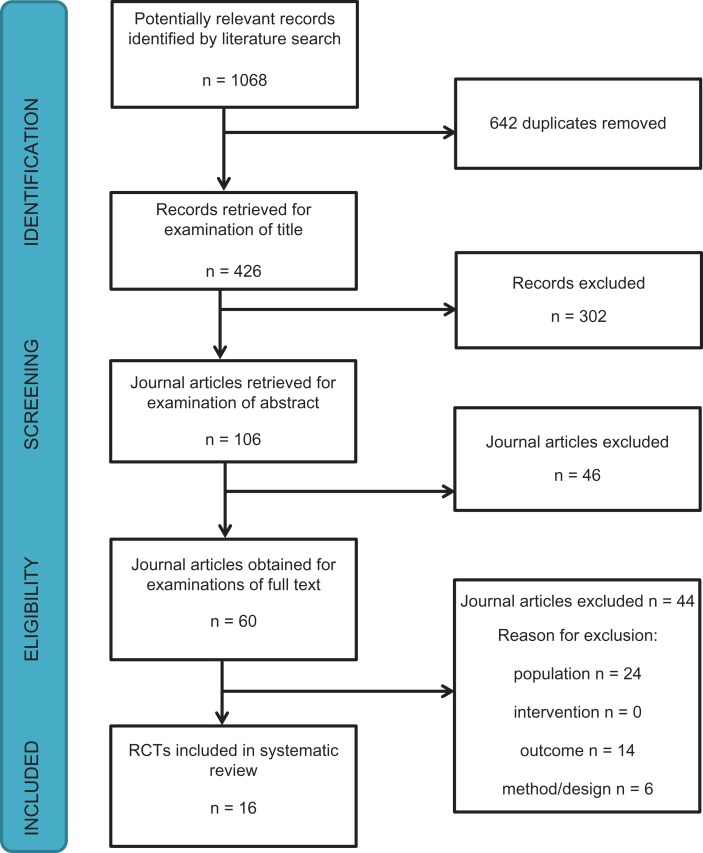
literature searches of six databases of quantitative studies conducted from 1990 to June 2017, reporting falls outcomes of falls prevention interventions for community-dwelling older adults discharged from hospital were included. Study quality was assessed using a standardised JBI critical appraisal tool (MAStARI) and data pooled using Rev-Man Review Manager®.
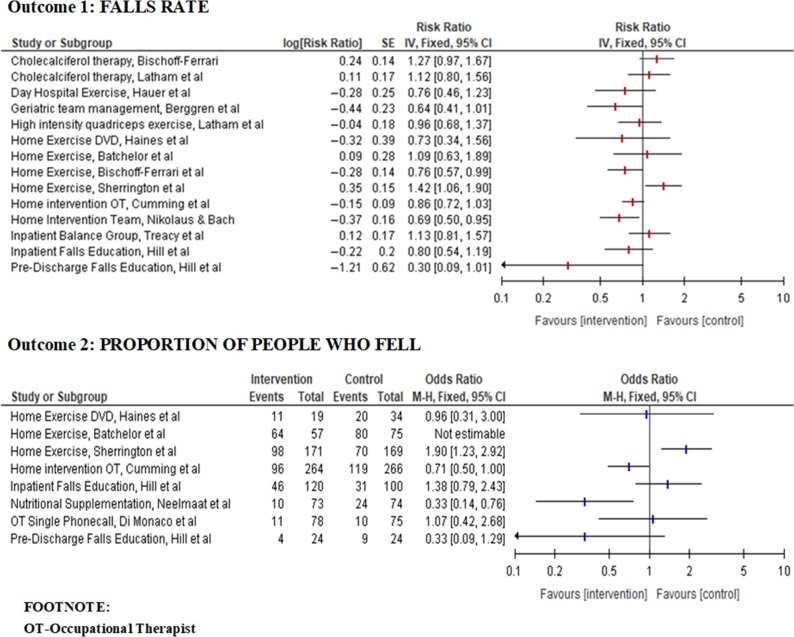
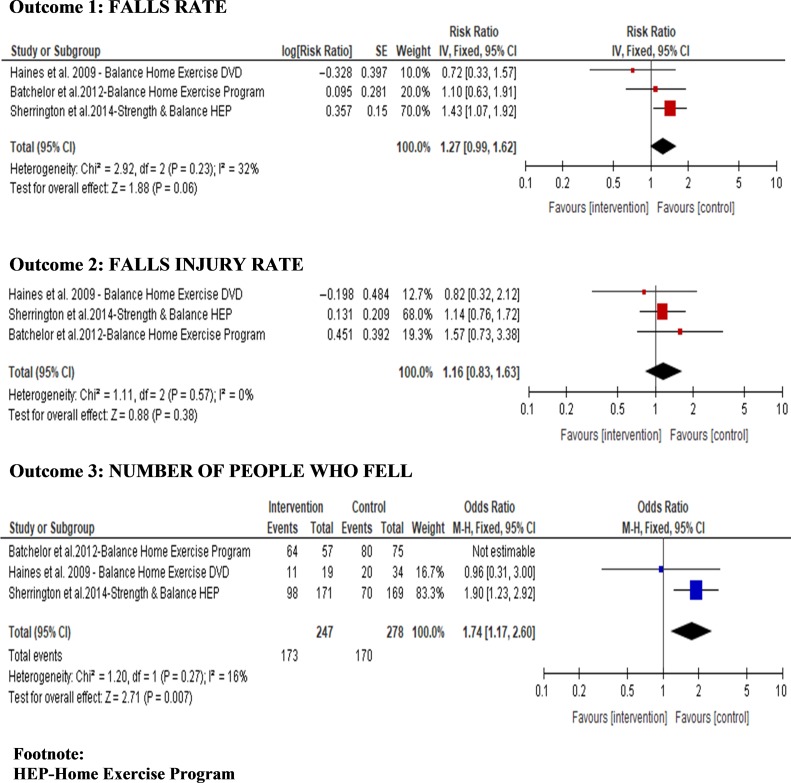
sixteen studies (total sample size N = 3,290, from eight countries, mean age 77) comprising 12 interventions met inclusion criteria. We found home hazard modification interventions delivered to those with a previous falls history (1 study), was effective in reducing the number of falls (RR 0.63, 95%CI 0.43, 0.93, Low GRADE evidence). Home exercise interventions (3 studies) significantly increased the proportion of fallers (OR 1.74, 95%CI 1.17, 2.60, Moderate GRADE evidence), and did not significantly reduce falls rate (RR 1.27, 95%CI 0.99, 1.62, Very Low GRADE evidence) or falls injury rate (RR 1.16, 95%CI, 0.83,1.63, Low GRADE evidence). Nutritional supplementation for malnourished older adults (1 study) significantly reduced the proportion of fallers (HR 0.41, 95% CI 0.19, 0.86, Low GRADE evidence).
the recommended falls prevention interventions for older adults recently discharged from hospital are to provide home hazard minimisation particularly if they have a recent previous falls history and consider nutritional supplementation if they are malnourished.
众所周知,老年人出院后跌倒率和功能下降的风险增加,这会带来大量的经济和医疗保健成本。本系统评价旨在综合分析最近从医院出院的老年人中有效的跌倒预防干预措施的证据。
从 1990 年至 2017 年 6 月,对六个数据库中的定量研究文献进行检索,纳入报告社区居住的老年人出院后跌倒预防干预措施的跌倒结局的研究。使用标准化的 JBI 批判性评估工具(MAStARI)评估研究质量,并使用 RevMan Review Manager®软件对数据进行汇总。
16 项研究(总样本量 N = 3290 人,来自 8 个国家,平均年龄 77 岁),共 12 项干预措施符合纳入标准。我们发现,对有既往跌倒史的患者进行家庭危险环境改造干预(1 项研究),可有效减少跌倒次数(RR 0.63,95%CI 0.43,0.93,低等级证据)。家庭运动干预(3 项研究)显著增加了跌倒者的比例(OR 1.74,95%CI 1.17,2.60,中等级证据),但不能显著降低跌倒率(RR 1.27,95%CI 0.99,1.62,低等级证据)或跌倒伤害率(RR 1.16,95%CI,0.83,1.63,低等级证据)。营养不良的老年人进行营养补充(1 项研究)可显著降低跌倒者的比例(HR 0.41,95%CI 0.19,0.86,低等级证据)。
最近从医院出院的老年人推荐的跌倒预防干预措施是提供家庭危险最小化,特别是如果他们有近期的跌倒史,如果他们营养不良,可考虑进行营养补充。