Infection and Immunity Program, Monash Biomedicine Discovery Institute and Department of Microbiology, Monash University, Clayton, Australia.
Monash Bioinformatics Platform, Monash University, Clayton, Australia.
mBio. 2018 Mar 27;9(2):e00473-18. doi: 10.1128/mBio.00473-18.
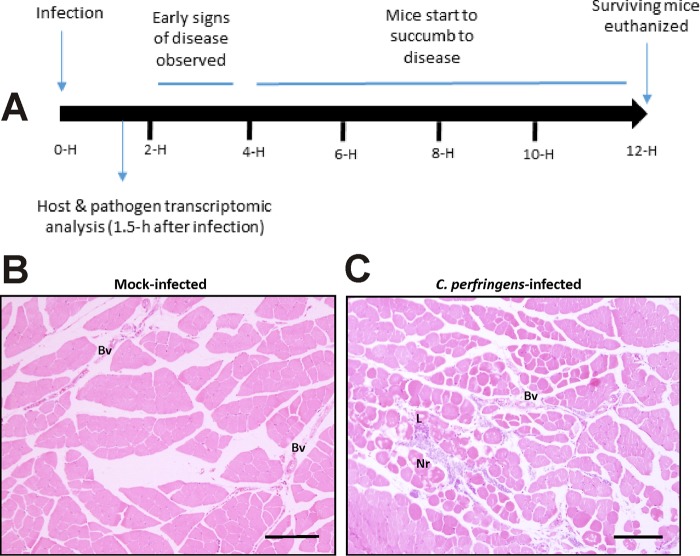
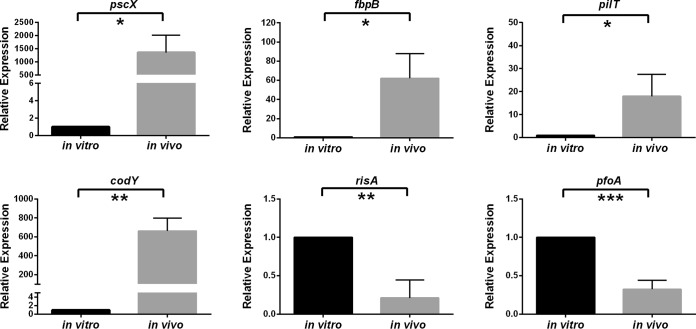
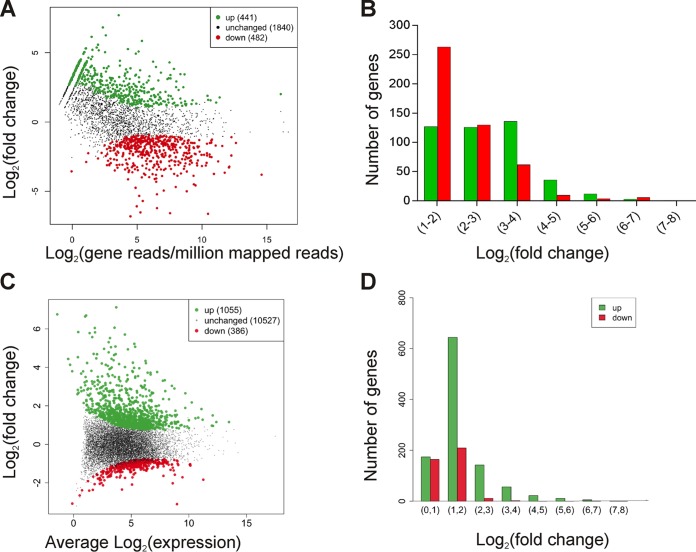
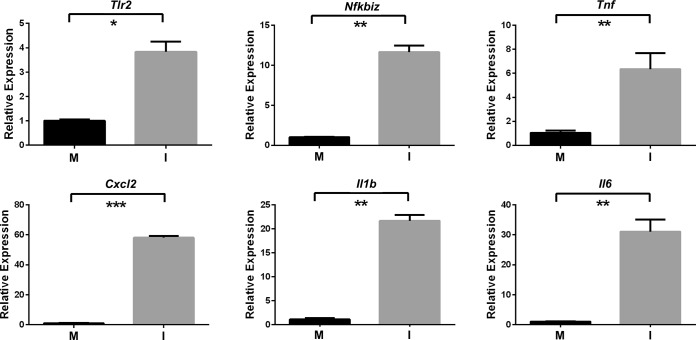
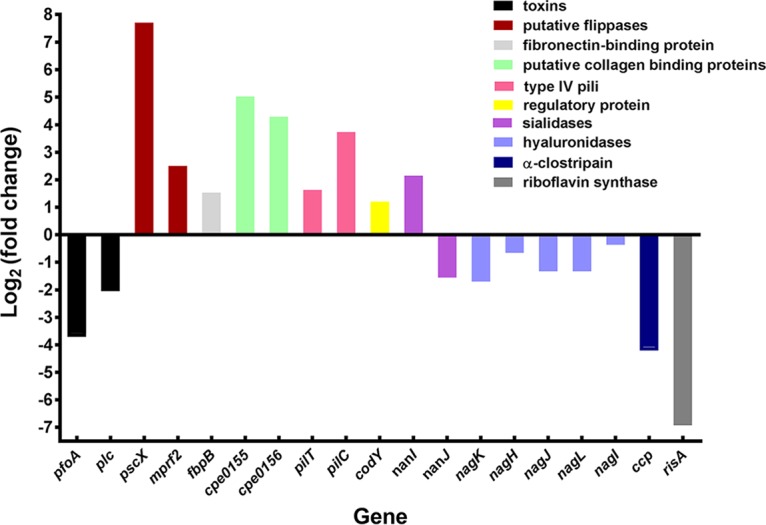
To obtain an insight into host-pathogen interactions in clostridial myonecrosis, we carried out comparative transcriptome analysis of both the bacterium and the host in a murine infection model, which is the first time that such an investigation has been conducted. Analysis of the host transcriptome from infected muscle tissues indicated that many genes were upregulated compared to the results seen with mock-infected mice. These genes were enriched for host defense pathways, including Toll-like receptor (TLR) and Nod-like receptor (NLR) signaling components. Real-time PCR confirmed that host TLR2 and NLRP3 inflammasome genes were induced in response to infection. Comparison of the transcriptome of cells from the infected tissues with that from broth cultures showed that host selective pressure induced a global change in gene expression. A total of 33% (923) of genes were differentially regulated, including 10 potential virulence genes that were upregulated relative to their expression These genes encoded putative proteins that may be involved in the synthesis of cell wall-associated macromolecules, in adhesion to host cells, or in protection from host cationic antimicrobial peptides. This report presents the first successful expression profiling of coregulated transcriptomes of bacterial and host genes during a clostridial myonecrosis infection and provides new insights into disease pathogenesis and host-pathogen interactions. is the causative agent of traumatic clostridial myonecrosis, or gas gangrene. In this study, we carried out transcriptional analysis of both the host and the bacterial pathogen in a mouse myonecrosis infection. The results showed that in comparison to mock-infected control tissues, muscle tissues from -infected mice had a significantly altered gene expression profile. In particular, the expression of many genes involved in the innate immune system was upregulated. Comparison of the expression profiles of cells isolated from the infected tissues with those from equivalent broth cultures identified many potential virulence genes that were significantly upregulated These studies have provided a new understanding of the range of factors involved in host-pathogen interactions in a myonecrosis infection.
为了深入了解梭菌坏死性肌炎中的宿主-病原体相互作用,我们在一种鼠类感染模型中对细菌和宿主进行了比较转录组分析,这是首次进行此类研究。对感染肌肉组织的宿主转录组进行分析表明,与模拟感染的小鼠相比,许多基因上调。这些基因富集了宿主防御途径,包括 Toll 样受体 (TLR) 和 Nod 样受体 (NLR) 信号成分。实时 PCR 证实宿主 TLR2 和 NLRP3 炎症小体基因在感染后被诱导。比较感染组织中细胞的转录组与肉汤培养物中的转录组显示,宿主选择压力诱导了 基因表达的全局变化。共有 33%(923 个)的 基因差异调节,包括 10 个相对表达上调的潜在毒力基因。这些基因编码的假定蛋白可能参与细胞壁相关大分子的合成、与宿主细胞的黏附或宿主阳离子抗菌肽的保护。本报告首次成功对梭菌坏死性肌炎感染过程中细菌和宿主基因的共调控转录组进行了表达谱分析,并为疾病发病机制和宿主-病原体相互作用提供了新的见解。是创伤性梭菌坏死性肌炎或气性坏疽的病原体。在本研究中,我们在小鼠坏死性肌炎感染中对宿主和细菌病原体进行了转录分析。结果表明,与模拟感染的对照组织相比,感染小鼠的肌肉组织具有明显改变的基因表达谱。特别是,许多参与先天免疫系统的基因表达上调。比较从感染组织分离的 细胞的表达谱与来自等效肉汤培养物的表达谱,确定了许多显著上调的潜在毒力基因。这些研究为宿主-病原体相互作用在坏死性肌炎感染中的涉及的一系列因素提供了新的认识。