Department of Integrative Biology, University of California, Berkeley, CA, USA.
Centro de Investigación de la Biodiversidad y Cambio Climático (BioCamb) e Ingeniería en Biodiversidad y Recursos Genéticos, Facultad de Ciencias de Medio Ambiente, Universidad Tecnológica Indoamérica, Machala y Sabanilla, Quito, Ecuador.
Gigascience. 2018 Apr 1;7(4). doi: 10.1093/gigascience/giy033.
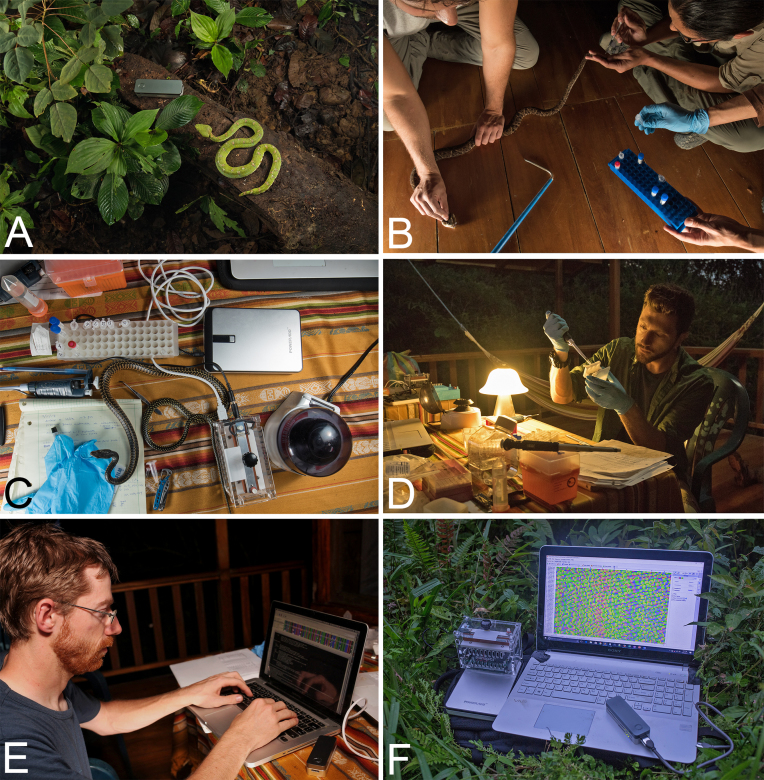
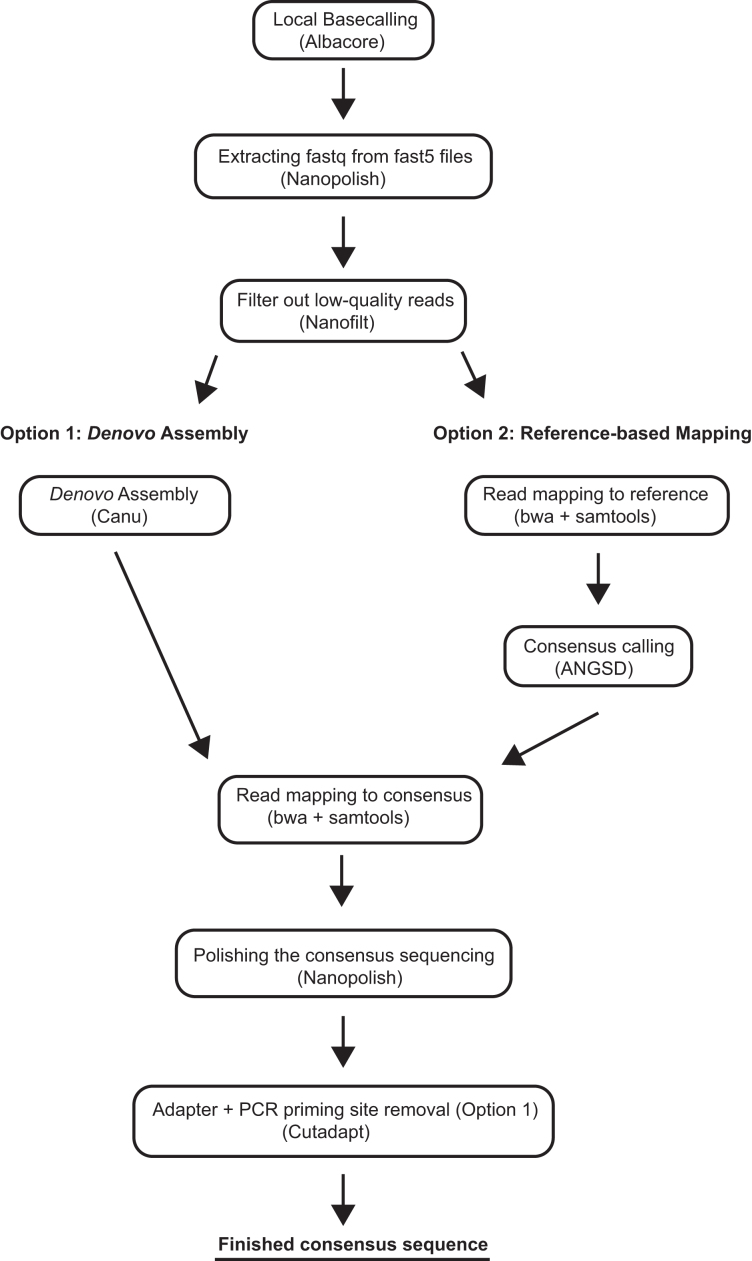
Advancements in portable scientific instruments provide promising avenues to expedite field work in order to understand the diverse array of organisms that inhabit our planet. Here, we tested the feasibility for in situ molecular analyses of endemic fauna using a portable laboratory fitting within a single backpack in one of the world's most imperiled biodiversity hotspots, the Ecuadorian Chocó rainforest. We used portable equipment, including the MinION nanopore sequencer (Oxford Nanopore Technologies) and the miniPCR (miniPCR), to perform DNA extraction, polymerase chain reaction amplification, and real-time DNA barcoding of reptile specimens in the field.
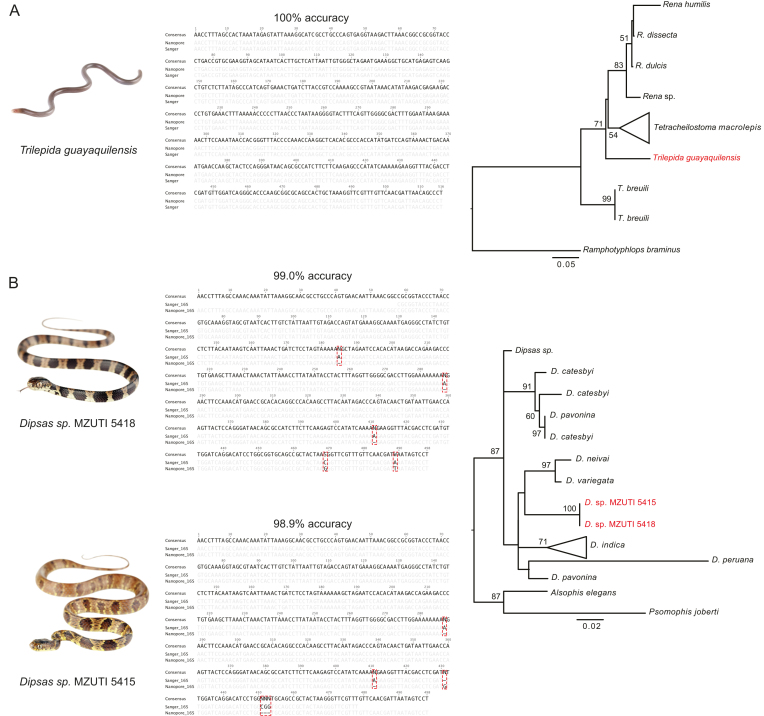
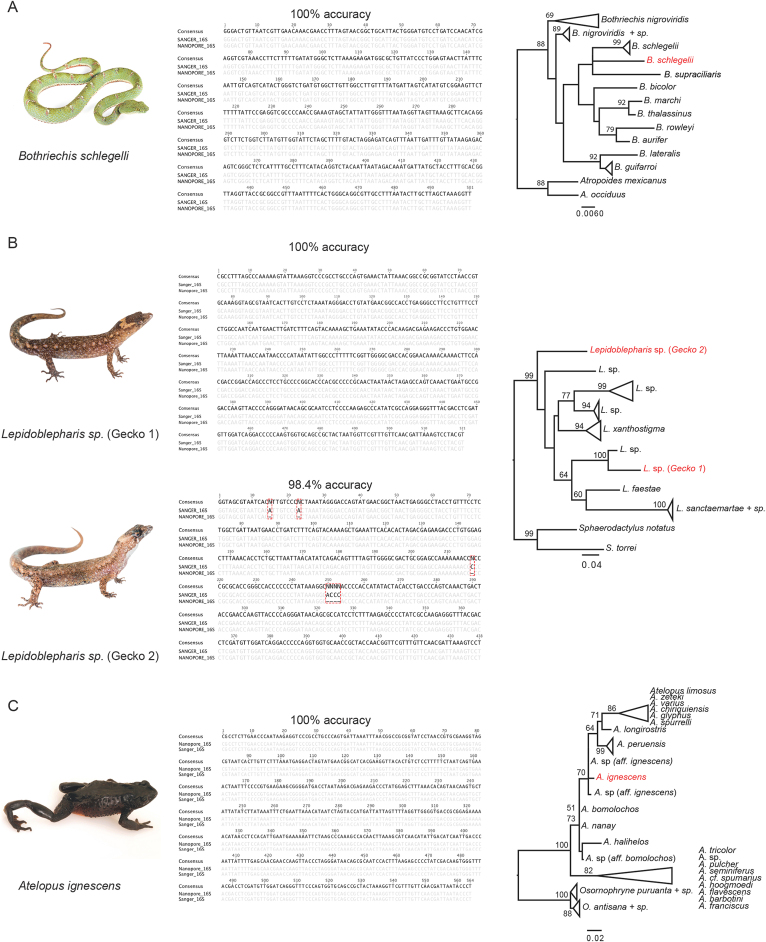
We demonstrate that nanopore sequencing can be implemented in a remote tropical forest to quickly and accurately identify species using DNA barcoding, as we generated consensus sequences for species resolution with an accuracy of >99% in less than 24 hours after collecting specimens. The flexibility of our mobile laboratory further allowed us to generate sequence information at the Universidad Tecnológica Indoamérica in Quito for rare, endangered, and undescribed species. This includes the recently rediscovered Jambato toad, which was thought to be extinct for 28 years. Sequences generated on the MinION required as few as 30 reads to achieve high accuracy relative to Sanger sequencing, and with further multiplexing of samples, nanopore sequencing can become a cost-effective approach for rapid and portable DNA barcoding.
Overall, we establish how mobile laboratories and nanopore sequencing can help to accelerate species identification in remote areas to aid in conservation efforts and be applied to research facilities in developing countries. This opens up possibilities for biodiversity studies by promoting local research capacity building, teaching nonspecialists and students about the environment, tackling wildlife crime, and promoting conservation via research-focused ecotourism.
便携式科学仪器的进步为加快实地工作提供了有希望的途径,以便了解栖息在我们星球上的各种生物。在这里,我们在世界上生物多样性热点之一的厄瓜多尔乔科雨林中,测试了在一个背包内容纳一个便携式实验室,对特有动物区系进行原位分子分析的可行性。我们使用便携式设备,包括 MinION 纳米孔测序仪(Oxford Nanopore Technologies)和 miniPCR(miniPCR),在现场对爬行动物标本进行 DNA 提取、聚合酶链反应扩增和实时 DNA 条形码分析。
我们证明了纳米孔测序可以在偏远的热带森林中实施,使用 DNA 条形码快速准确地识别物种,因为我们在收集标本后不到 24 小时内,就以>99%的准确率生成了用于物种分辨率的共识序列。我们的移动实验室的灵活性还使我们能够在基多的印度美洲技术大学为稀有、濒危和未描述的物种生成序列信息。其中包括最近重新发现的 Jambato 蟾蜍,它被认为已经灭绝了 28 年。在 MinION 上生成的序列只需 30 次读取即可实现与 Sanger 测序相当的高精度,并且随着样品进一步多路复用,纳米孔测序可以成为一种快速、便携的 DNA 条形码的经济有效的方法。
总的来说,我们确定了移动实验室和纳米孔测序如何帮助加快偏远地区的物种鉴定,以帮助保护工作,并应用于发展中国家的研究设施。这为生物多样性研究开辟了可能性,通过促进当地研究能力建设、向非专业人士和学生传授环境知识、打击野生动物犯罪以及通过以研究为重点的生态旅游促进保护。