Petersen Henning, Mostafa Ahmed, Tantawy Mohamed A, Iqbal Azeem A, Hoffmann Donata, Tallam Aravind, Selvakumar Balachandar, Pessler Frank, Beer Martin, Rautenschlein Silke, Pleschka Stephan
Clinic for Poultry, University of Veterinary Medicine Hannover, Hanover, Germany.
Institute of Medical Virology, Justus Liebig University Giessen, Giessen, Germany.
Front Microbiol. 2018 Mar 22;9:526. doi: 10.3389/fmicb.2018.00526. eCollection 2018.
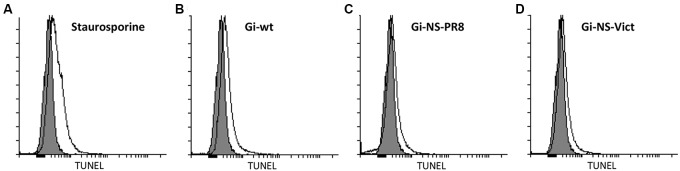
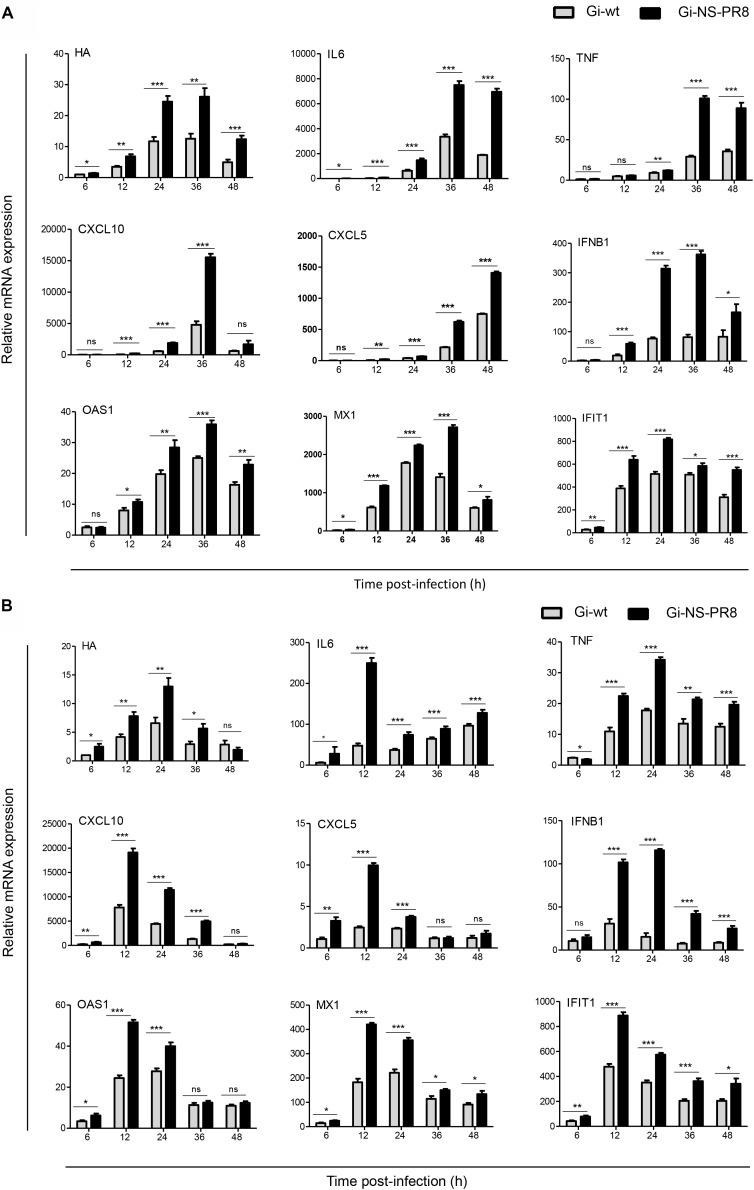
The 2009 pandemic influenza A virus (IAV) H1N1 strain (H1N1pdm09) has widely spread and is circulating in humans and swine together with other human and avian IAVs. This fact raises the concern that reassortment between H1N1pdm09 and co-circulating viruses might lead to an increase of H1N1pdm09 pathogenicity in different susceptible host species. Herein, we explored the potential of different NS segments to enhance the replication dynamics, pathogenicity and host range of H1N1pdm09 strain A/Giessen/06/09 (Gi-wt). The NS segments were derived from (i) human H1N1- and H3N2 IAVs, (ii) highly pathogenic- (H5- or H7-subtypes) or (iii) low pathogenic avian influenza viruses (H7- or H9-subtypes). A significant increase of growth kinetics in A549 (human lung epithelia) and NPTr (porcine tracheal epithelia) cells was only noticed for the reassortant Gi-NS-PR8 carrying the NS segment of the 1918-descendent A/Puerto Rico/8/34 (PR8-wt, H1N1), whereas all other reassortants showed either reduced or comparable replication efficiencies. Analysis using tracheal organ cultures of turkeys (TOC-Tu), a species susceptible to IAV H1N1 infection, demonstrated increased replication of Gi-NS-PR8 compared to Gi-wt. Also, Gi-NS-PR8 induced a markedly higher expression of immunoregulatory and pro-inflammatory cytokines, chemokines and interferon-stimulated genes in A549 cells, THP-1-derived macrophages (dHTP) and TOC-Tu. , Gi-NS-PR8 induced an earlier onset of mortality than Gi-wt in mice, whereas, 6-week-old chickens were found to be resistant to both viruses. These data suggest that the specific characteristics of the PR8 NS segments can impact on replication, virus induced cellular immune responses and pathogenicity of the H1N1pdm09 in different avian and mammalian host species.
2009年甲型流感病毒(IAV)H1N1毒株(H1N1pdm09)已广泛传播,并与其他人类和禽流感病毒一起在人类和猪中循环。这一事实引发了人们的担忧,即H1N1pdm09与共同循环的病毒之间的重配可能导致H1N1pdm09在不同易感宿主物种中的致病性增加。在此,我们探讨了不同NS片段增强H1N1pdm09毒株A/吉森/06/09(Gi-wt)复制动力学、致病性和宿主范围的潜力。NS片段来源于:(i)人类H1N1和H3N2 IAV;(ii)高致病性(H5或H7亚型)或(iii)低致病性禽流感病毒(H7或H9亚型)。仅携带1918年衍生的A/波多黎各/8/34(PR8-wt,H1N1)NS片段的重配株Gi-NS-PR8在A549(人肺上皮细胞)和NPTr(猪气管上皮细胞)中生长动力学显著增加,而所有其他重配株的复制效率均降低或相当。使用对IAV H1N1感染易感的火鸡气管器官培养物(TOC-Tu)进行分析表明,与Gi-wt相比,Gi-NS-PR8的复制增加。此外,Gi-NS-PR8在A549细胞、THP-1衍生的巨噬细胞(dHTP)和TOC-Tu中诱导免疫调节和促炎细胞因子、趋化因子和干扰素刺激基因的表达明显更高。此外,Gi-NS-PR8在小鼠中比Gi-wt更早引发死亡,而6周龄的鸡对两种病毒均具有抗性。这些数据表明,PR8 NS片段的特定特征可影响H1N1pdm09在不同禽类和哺乳动物宿主物种中的复制、病毒诱导的细胞免疫反应和致病性。