Moraga Fernando A, López Iván, Morales Alicia, Soza Daniel, Noack Jessica
Laboratorio de Fisiología, Hipoxia y Función Vascular, Departamento de Ciencias Biomédicas, Facultad de Medicina, Universidad Católica del Norte, Coquimbo, Chile.
Safety Group, Atacama Large Millimeter Submillimeter Array, Calama, Chile.
Front Physiol. 2018 Mar 23;9:187. doi: 10.3389/fphys.2018.00187. eCollection 2018.
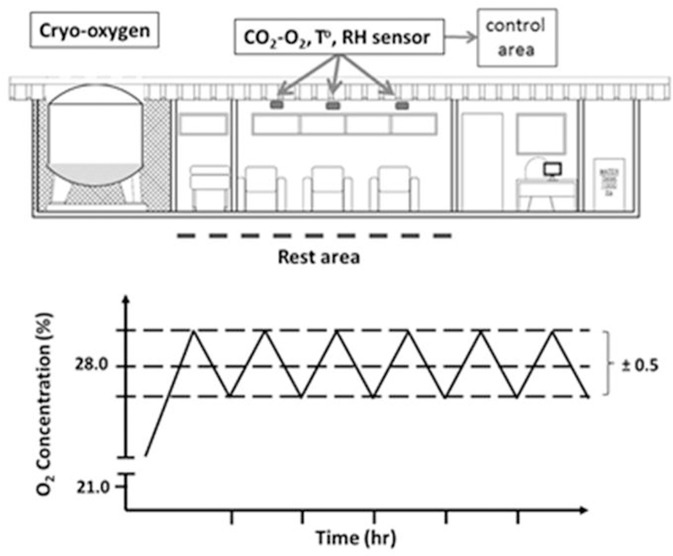
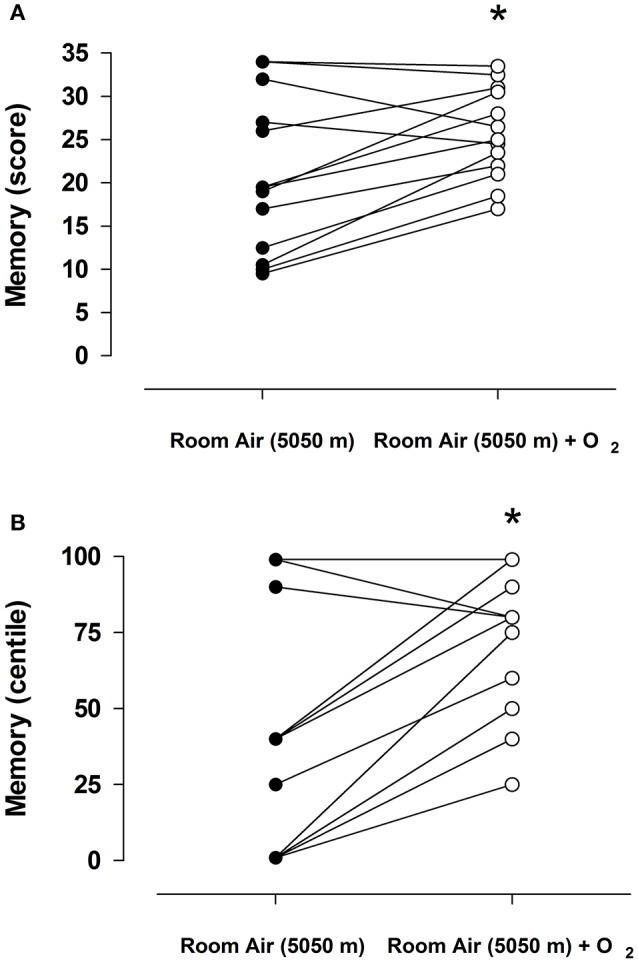
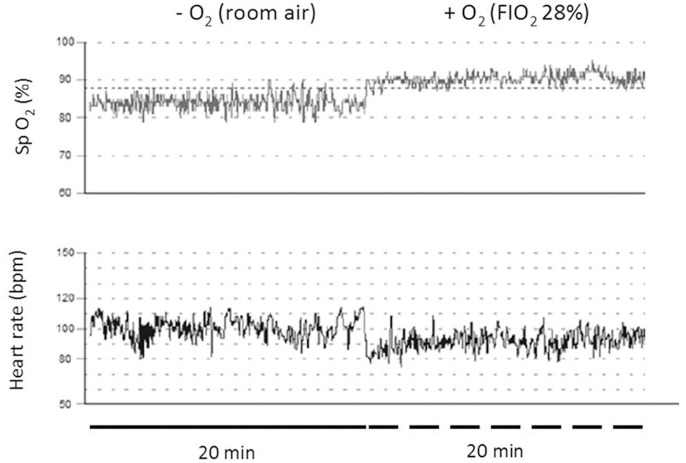
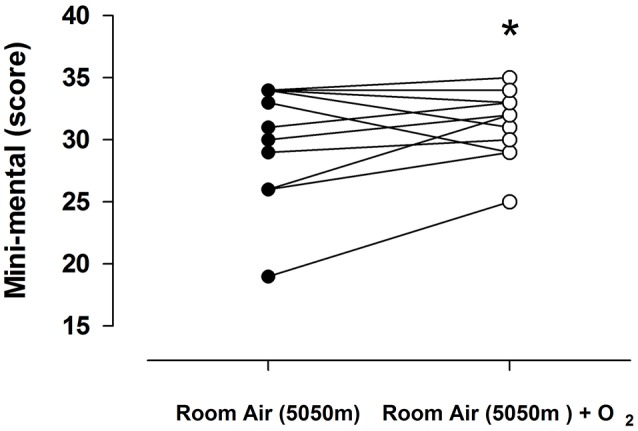
It is estimated that labor activity at high altitudes in Chile will increase from 60,000 to 120,000 workers by the year 2020. Oxygenation of spaces improves the quality of life for workers at high geographic altitudes (<5,000 m). The aim of this study was to determine the effect of a mobile oxygen module system on cardiorespiratory and neuropsychological performance in a population of workers from Atacama Large Millimeter/submillimeter Array (ALMA, 5,050 m) radiotelescope in the Chajnantor Valley, Chile. We evaluated pulse oximetry, systolic and diastolic arterial pressure (SAP/DAP), and performed neuropsychological tests (Mini-Mental State examination, Rey-Osterrieth Complex Figure test) at environmental oxygen conditions (5,050 m), and subsequently in a mobile oxygenation module that increases the fraction of oxygen in order to mimic the higher oxygen partial pressure of lower altitudes (2,900 m). The use of module oxygenation at an altitude of 5,050 m, simulating an altitude of 2,900 m, increased oxygen saturation from 84 ± 0.8 to 91 ± 0.8% ( < 0.00001), decreased heart rate from 90 ± 8 to 77 ± 12 bpm ( < 0.01) and DAP from 96 ± 3 to 87 ± 5 mmHg ( < 0.01). In addition, mental cognitive state of workers (Mini-Mental State Examination) shown an increased from 19 to 31 points ( < 0.02). Furthermore, the Rey-Osterrieth Complex Figure test (memory) shown a significant increase from 35 to 70 ( < 0.0001). The results demonstrate that the use of an oxygen module system at 5,050 m, simulating an altitude equivalent to 2,900 m, by increasing FiO at 28%, significantly improves cardiorespiratory response and enhances neuropsychological performance in workers exposed to an altitude of 5,050 m.
据估计,到2020年,智利高海拔地区的劳动人口将从6万增加到12万。对工作空间进行增氧可改善高海拔地区(<5000米)劳动者的生活质量。本研究的目的是确定移动制氧模块系统对智利查尼亚托山谷阿塔卡马大型毫米波/亚毫米波阵列(ALMA,海拔5050米)射电望远镜工作人员群体心肺功能和神经心理表现的影响。我们在环境氧气条件下(海拔5050米)评估了脉搏血氧饱和度、收缩压和舒张压(SAP/DAP),并进行了神经心理测试(简易精神状态检查、雷-奥斯特里思复杂图形测试),随后在一个移动增氧模块中进行评估,该模块可增加氧气比例,以模拟较低海拔(2900米)时较高的氧分压。在海拔5050米使用模块增氧,模拟海拔2900米,可使血氧饱和度从84±0.8%提高到91±0.8%(<0.00001),心率从90±8次/分钟降至77±12次/分钟(<0.01),舒张压从96±3毫米汞柱降至87±5毫米汞柱(<0.01)。此外,工作人员的精神认知状态(简易精神状态检查)从19分提高到31分(<0.02)。此外,雷-奥斯特里思复杂图形测试(记忆力)从35分显著提高到70分(<0.0001)。结果表明,在海拔5050米使用制氧模块系统,模拟相当于海拔2900米的环境,通过将FiO提高28%,可显著改善心肺反应,并增强暴露于海拔5050米环境中的工作人员的神经心理表现。