Instituto Nacional de Controle de Qualidade em Saúde, Fundação Oswaldo Cruz, Rio de Janeiro, Brazil.
Laboratório de Biologia Molecular e Doenças Endêmicas, Instituto Oswaldo Cruz, Fundação Oswaldo Cruz, Rio de Janeiro, Brazil.
Parasit Vectors. 2018 Apr 10;11(1):233. doi: 10.1186/s13071-018-2699-6.
Several cases of food-borne acute Chagas disease (ACD) have been reported in the Brazilian Amazon so far. Up to 2004, the occurrence of ACD by oral transmission, associated with food consumption, was rare. Recent cases of ACD in Brazil have been attributed to the consumption of juice from the açai palm containing reservoir animals or insect vectors waste, infected with Trypanosoma cruzi. This study aimed to determine the T. cruzi contamination rate and to genotype the parasite in food samples prepared from açai, which are commercialized in Rio de Janeiro and the Pará States in Brazil.
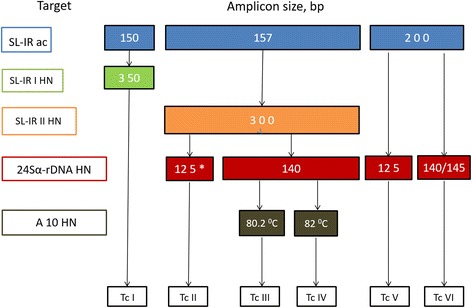
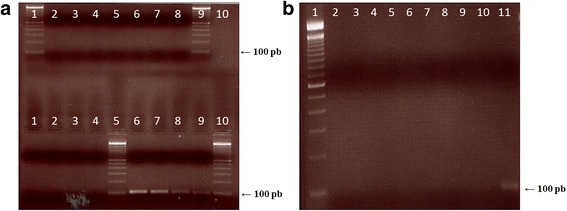
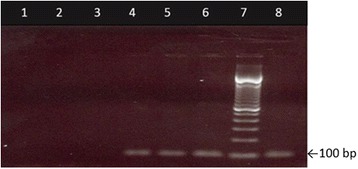
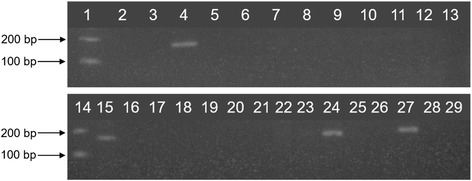
The amplificability of DNA extracted from açai samples, and T. cruzi and Triatominae detection were performed by conventional PCR. Molecular characterization was done by multilocus PCR analysis, to determine the parasite discrete type units (DTUs) based on the size of PCR products in agarose gels, using the intergenic region of the spliced leader (SL), 24 Sα rDNA and nuclear fragment A10 as targets.
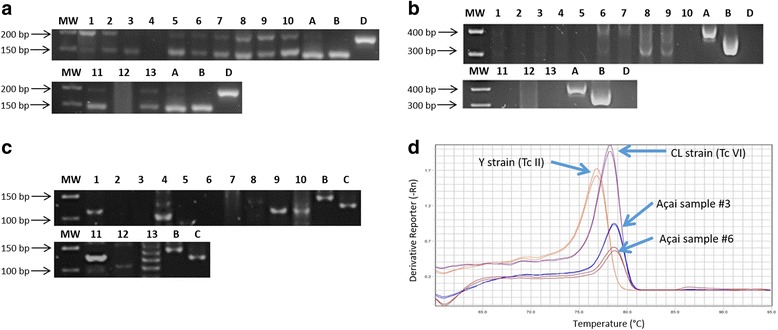
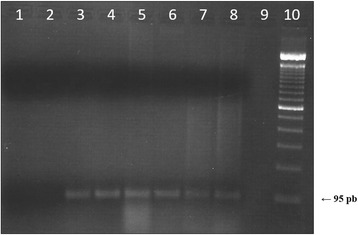
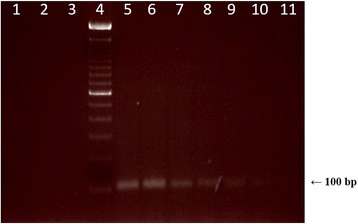
From the 140 samples of açai-based products analyzed, T. cruzi DNA was detected in 14 samples (10%); triatomine DNA was detected in one of these 14 samples. The parasite genotyping demonstrated that food samples containing açai showed a mixture of T. cruzi DTUs with TcIII, TcV and TcI prevailing.
In this study, the molecular detection and identification of T. cruzi from açai-based manufactured food samples, was performed for the first time. Although parasite DNA is a marker of possible contamination during food manufacturing, our findings do not indicate that açai is a source of Chagas disease via oral transmission per se, as live parasites were not investigated. Nevertheless, a molecular approach could be a powerful tool in the epidemiological investigation of outbreaks, supporting previous evidence that açai-based food can be contaminated with T. cruzi. Furthermore, both food quality control and assessment of good manufacturing practices involving açai-based products can be improved, assuring the safety of açai products.
迄今为止,在巴西亚马孙地区已报告了几起因食用受污染食物而导致的急性恰加斯病(Chagas disease,ACD)病例。截至 2004 年,经口传播的 ACD 病例(与食物摄入相关)较为罕见。巴西近期发生的 ACD 病例被归因于食用了含有储存动物或昆虫媒介废物的、受克氏锥虫(Trypanosoma cruzi)感染的巴西莓果汁。本研究旨在检测巴西莓制备的食物样本中 T. cruzi 的污染率和寄生虫基因型。
采用常规 PCR 检测从巴西莓样本中提取的 DNA 的扩增能力以及 T. cruzi 和锥蝽的存在。采用多位点 PCR 分析进行分子特征分析,根据琼脂糖凝胶中 PCR 产物的大小确定离散型单位(discrete typing units,DTUs),以种间转录间隔区(spliced leader,SL)、24Sα rDNA 和核片段 A10 作为靶标。
从分析的 140 份基于巴西莓的产品样本中,有 14 份样本(10%)检测到 T. cruzi DNA;在这 14 份样本中有 1 份样本检测到锥蝽 DNA。寄生虫基因分型表明,含有巴西莓的食物样本中存在 T. cruzi DTUs 混合,其中 TcIII、TcV 和 TcI 占主导地位。
本研究首次对基于巴西莓的加工食品样本中 T. cruzi 的分子检测和鉴定进行了研究。尽管寄生虫 DNA 是食品生产过程中可能受到污染的标志物,但我们的研究结果并不表明巴西莓本身是经口传播的恰加斯病的传染源,因为没有调查活寄生虫的存在。然而,分子方法可能是暴发疫情流行病学调查的有力工具,支持了之前的证据,即巴西莓食品可能受到 T. cruzi 的污染。此外,还可以改进巴西莓产品的质量控制和良好生产规范评估,以确保巴西莓产品的安全性。