Rojo de la Vega Montserrat, Zhang Donna D, Wondrak Georg T
Department of Pharmacology and Toxicology, College of Pharmacy, University of Arizona, Tucson, AZ, United States.
The University of Arizona Cancer Center, University of Arizona, Tucson, AZ, United States.
Front Pharmacol. 2018 Mar 27;9:287. doi: 10.3389/fphar.2018.00287. eCollection 2018.
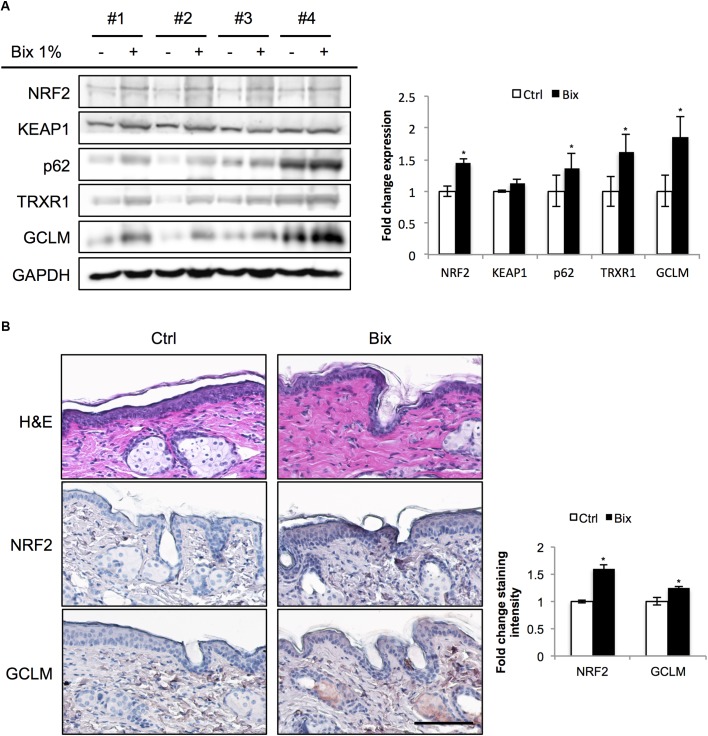
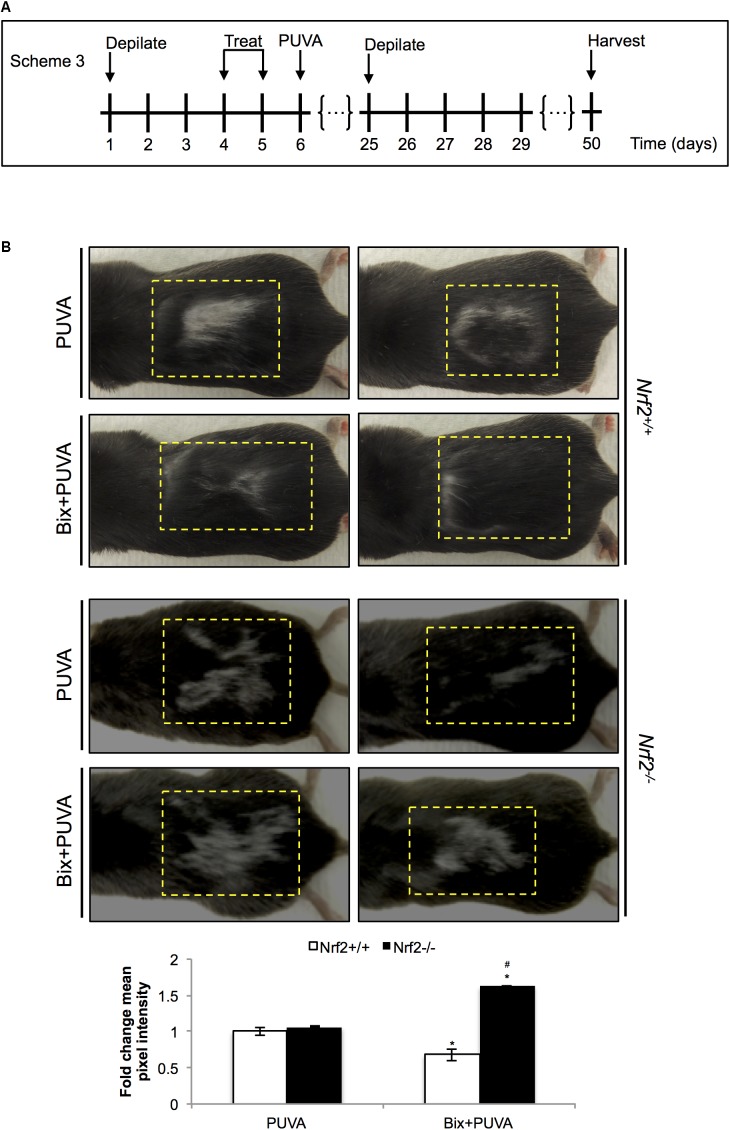
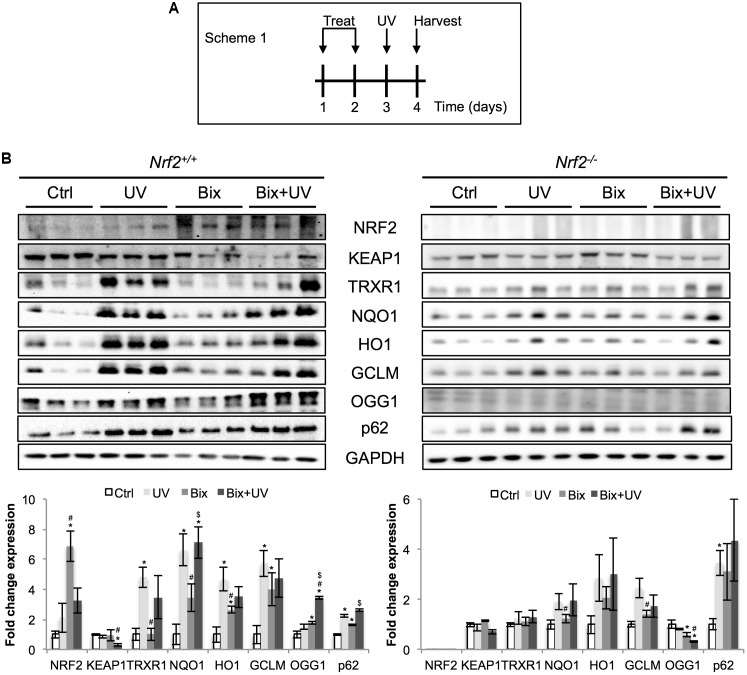
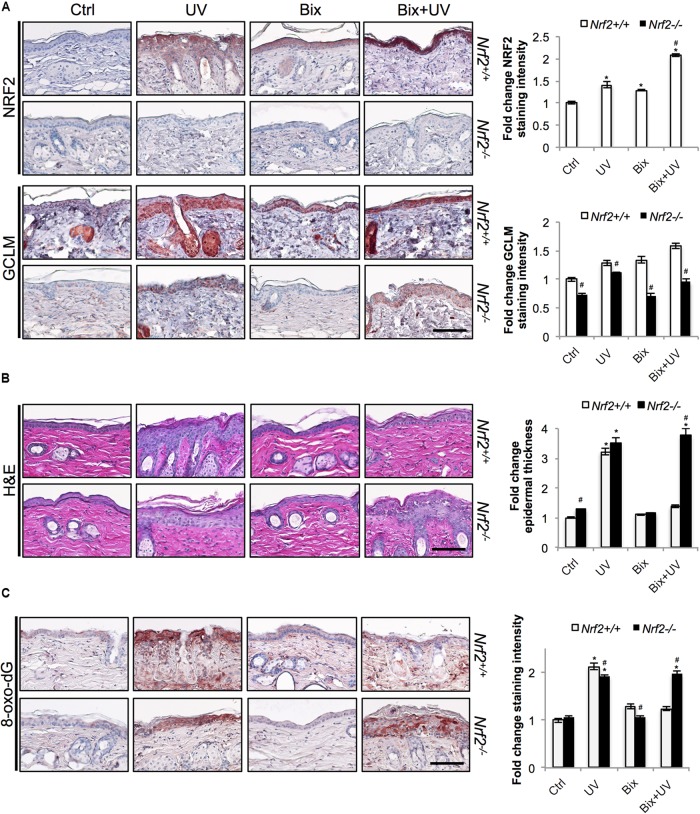
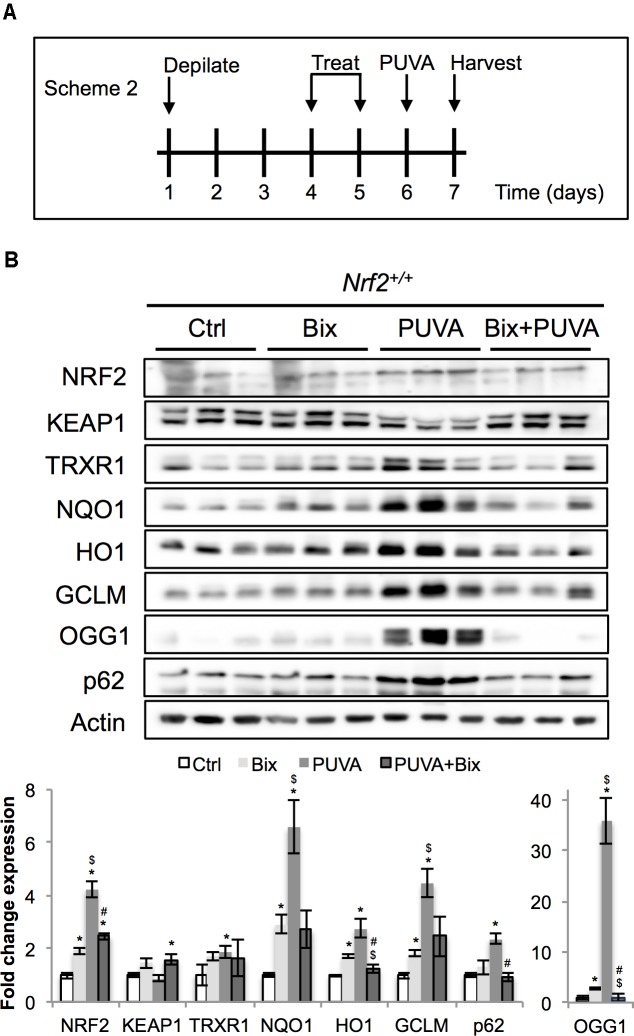
Environmental exposure to solar ultraviolet (UV) radiation causes acute photodamage, premature aging, and skin cancer, attributable to UV-induced genotoxic, oxidative, and inflammatory stress. The transcription factor NRF2 [nuclear factor erythroid 2 (E2)-related factor 2] is the master regulator of the cellular antioxidant response protecting skin against various environmental stressors including UV radiation and electrophilic pollutants. NRF2 in epidermal keratinocytes can be activated using natural chemopreventive compounds such as the apocarotenoid bixin, an FDA-approved food additive and cosmetic ingredient from the seeds of the achiote tree (). Here, we tested the feasibility of topical use of bixin for NRF2-dependent skin photoprotection in two genetically modified mouse models [SKH1 and C57BL/6J ( versus )]. First, we observed that a bixin formulation optimized for topical NRF2 activation suppresses acute UV-induced photodamage in but not SKH1 mice, a photoprotective effect indicated by reduced epidermal hyperproliferation and oxidative DNA damage. Secondly, it was demonstrated that topical bixin suppresses PUVA (psoralen + UVA)-induced hair graying in but not C57BL/6J mice. Collectively, this research provides the first evidence that topical application of bixin can protect against UV-induced photodamage and PUVA-induced loss of hair pigmentation through NRF2 activation. Topical NRF2 activation using bixin may represent a novel strategy for human skin photoprotection, potentially complementing conventional sunscreen-based approaches.
环境暴露于太阳紫外线(UV)辐射会导致急性光损伤、过早衰老和皮肤癌,这归因于紫外线诱导的基因毒性、氧化应激和炎症应激。转录因子NRF2 [核因子红细胞2(E2)相关因子2] 是细胞抗氧化反应的主要调节因子,可保护皮肤免受包括紫外线辐射和亲电污染物在内的各种环境应激源的影响。表皮角质形成细胞中的NRF2可以使用天然化学预防化合物激活,例如阿朴胡萝卜素类化合物胭脂树橙,它是一种美国食品药品监督管理局(FDA)批准的食品添加剂和来自胭脂树种子的化妆品成分。在此,我们在两种转基因小鼠模型 [SKH1和C57BL/6J( 与 )] 中测试了局部使用胭脂树橙进行NRF2依赖性皮肤光保护的可行性。首先,我们观察到一种针对局部NRF2激活优化的胭脂树橙制剂可抑制 但不能抑制SKH1小鼠急性紫外线诱导的光损伤,表皮过度增殖减少和氧化性DNA损伤表明了这种光保护作用。其次,已证明局部使用胭脂树橙可抑制 但不能抑制C57BL/6J小鼠的补骨脂素加紫外线A(PUVA)诱导的毛发变白。总的来说,这项研究首次提供了证据,表明局部应用胭脂树橙可通过激活NRF2预防紫外线诱导的光损伤和PUVA诱导的毛发色素沉着丧失。使用胭脂树橙进行局部NRF2激活可能代表一种人类皮肤光保护的新策略,可能补充基于传统防晒霜的方法。