Department of Biomedical Engineering, Texas A&M University, College Station, TX 77843.
Department of Molecular and Cellular Medicine, Institute of Regenerative Medicine, Texas A&M Health Science Center, College Station, TX 77843.
Proc Natl Acad Sci U S A. 2018 Apr 24;115(17):E3905-E3913. doi: 10.1073/pnas.1716164115. Epub 2018 Apr 11.
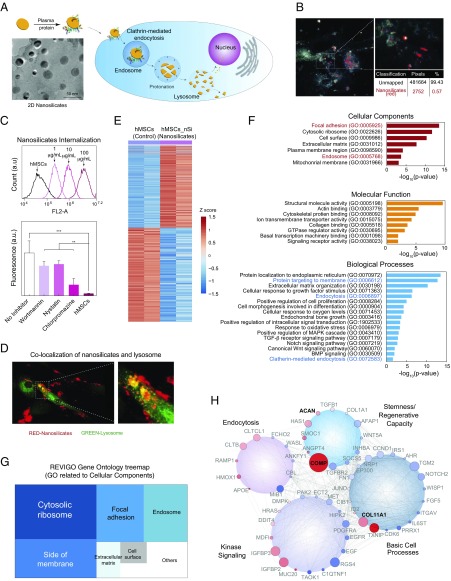
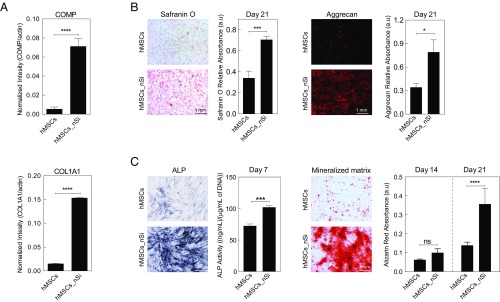
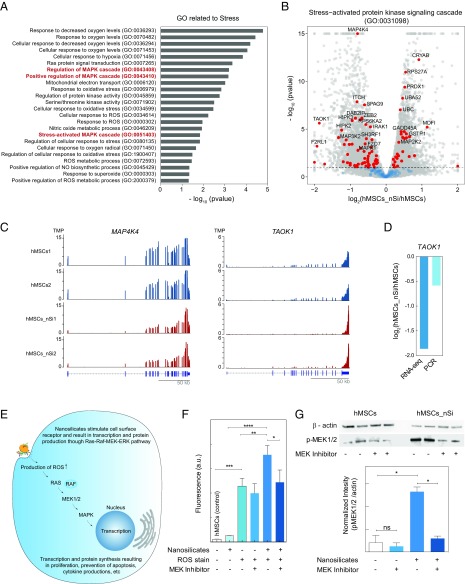
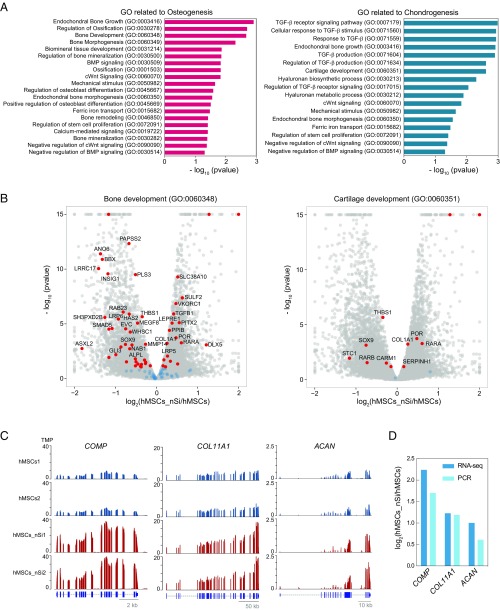
Two-dimensional nanomaterials, an ultrathin class of materials such as graphene, nanoclays, transition metal dichalcogenides (TMDs), and transition metal oxides (TMOs), have emerged as a new generation of materials due to their unique properties relative to macroscale counterparts. However, little is known about the transcriptome dynamics following exposure to these nanomaterials. Here, we investigate the interactions of 2D nanosilicates, a layered clay, with human mesenchymal stem cells (hMSCs) at the whole-transcriptome level by high-throughput sequencing (RNA-seq). Analysis of cell-nanosilicate interactions by monitoring changes in transcriptome profile uncovered key biophysical and biochemical cellular pathways triggered by nanosilicates. A widespread alteration of genes was observed due to nanosilicate exposure as more than 4,000 genes were differentially expressed. The change in mRNA expression levels revealed clathrin-mediated endocytosis of nanosilicates. Nanosilicate attachment to the cell membrane and subsequent cellular internalization activated stress-responsive pathways such as mitogen-activated protein kinase (MAPK), which subsequently directed hMSC differentiation toward osteogenic and chondrogenic lineages. This study provides transcriptomic insight on the role of surface-mediated cellular signaling triggered by nanomaterials and enables development of nanomaterials-based therapeutics for regenerative medicine. This approach in understanding nanomaterial-cell interactions illustrates how change in transcriptomic profile can predict downstream effects following nanomaterial treatment.
二维纳米材料是一类超薄材料,如石墨烯、纳米粘土、过渡金属二卤化物(TMDs)和过渡金属氧化物(TMOs),由于其具有相对于宏观材料的独特性质,因此成为新一代材料。然而,对于这些纳米材料暴露后的转录组动态变化知之甚少。在这里,我们通过高通量测序(RNA-seq)在全转录组水平上研究了二维纳米硅酸盐(一种层状粘土)与人类间充质干细胞(hMSC)的相互作用。通过监测转录组谱的变化来分析细胞-纳米硅酸盐的相互作用,揭示了纳米硅酸盐触发的关键生物物理和生化细胞途径。由于纳米硅酸盐的暴露,观察到超过 4000 个基因的表达水平发生了广泛变化,导致基因的广泛改变。mRNA 表达水平的变化揭示了纳米硅酸盐通过网格蛋白介导的内吞作用。纳米硅酸盐与细胞膜的结合和随后的细胞内化激活了应激反应途径,如丝裂原活化蛋白激酶(MAPK),随后促使 hMSC 向成骨和成软骨谱系分化。本研究提供了关于表面介导的细胞信号触发的纳米材料作用的转录组见解,并为再生医学的基于纳米材料的治疗方法的发展提供了依据。这种理解纳米材料-细胞相互作用的方法说明了转录组谱的变化如何预测纳米材料处理后的下游效应。