Department of Chemistry, Technische Universität München, Lichtenbergstr. 4, Garching, Germany
J R Soc Interface. 2018 Apr;15(141). doi: 10.1098/rsif.2017.0916.
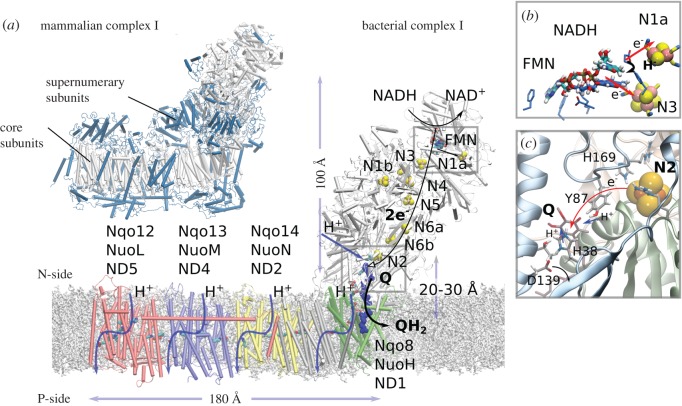
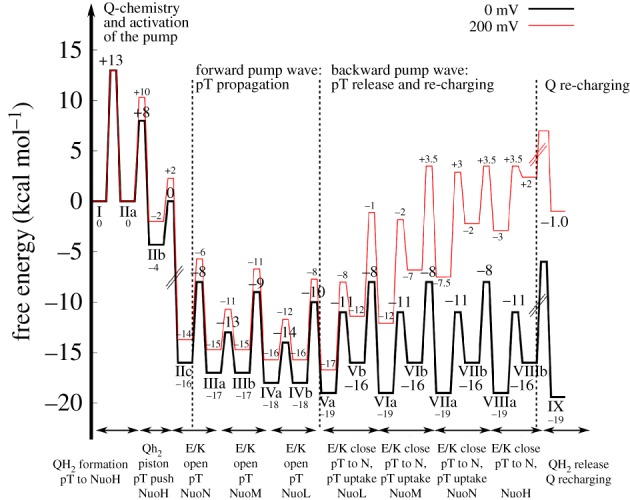
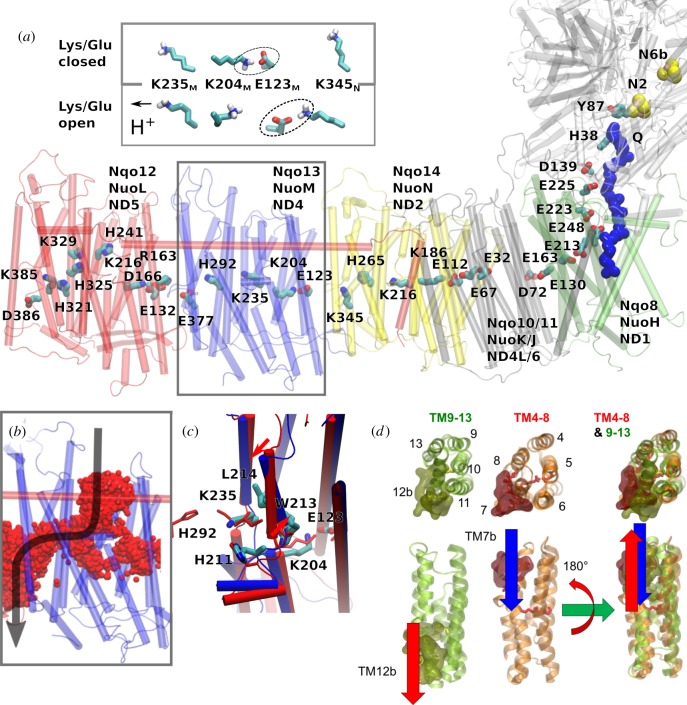
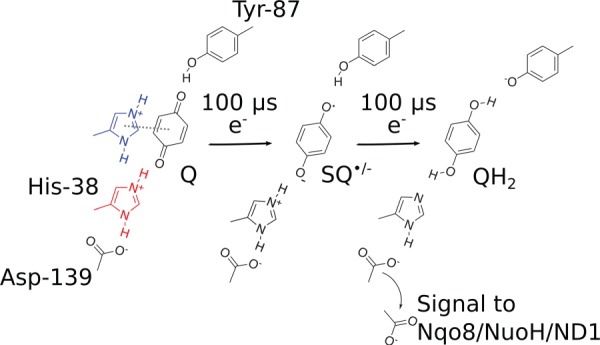
Biological energy conversion is driven by efficient enzymes that capture, store and transfer protons and electrons across large distances. Recent advances in structural biology have provided atomic-scale blueprints of these types of remarkable molecular machinery, which together with biochemical, biophysical and computational experiments allow us to derive detailed energy transduction mechanisms for the first time. Here, I present one of the most intricate and least understood types of biological energy conversion machinery, the respiratory complex I, and how its redox-driven proton-pump catalyses charge transfer across approximately 300 Å distances. After discussing the functional elements of complex I, a putative mechanistic model for its effect is presented, and functional parallels are drawn to other redox- and light-driven ion pumps.
生物能量转换是由高效的酶驱动的,这些酶能够在较大的距离内捕获、存储和传递质子和电子。结构生物学的最新进展为这些非凡的分子机器提供了原子尺度的蓝图,这些蓝图与生化、生物物理和计算实验一起,使我们首次能够推导出详细的能量转导机制。在这里,我展示了最复杂和最不为人理解的生物能量转换机制之一,即呼吸复合物 I,以及它的氧化还原驱动质子泵如何催化大约 300Å 距离的电荷转移。在讨论了复合物 I 的功能元件之后,提出了一个其作用的假设机制模型,并与其他氧化还原和光驱动的离子泵进行了功能类比。