Department of Physiology, Institute of Basic Medical Sciences, Khyber Medical University, Peshawar, Pakistan.
McGovern Institute for Brain Research & Department of Brain and Cognitive Sciences, 77 Massachusetts Ave, Cambridge, MA, 02139, USA.
Transl Psychiatry. 2018 Apr 11;8(1):74. doi: 10.1038/s41398-018-0135-5.
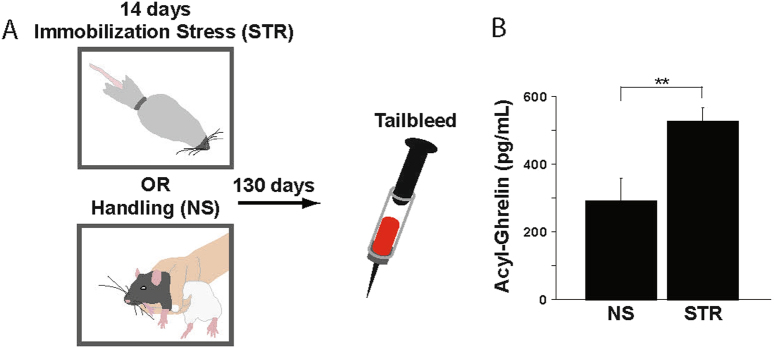
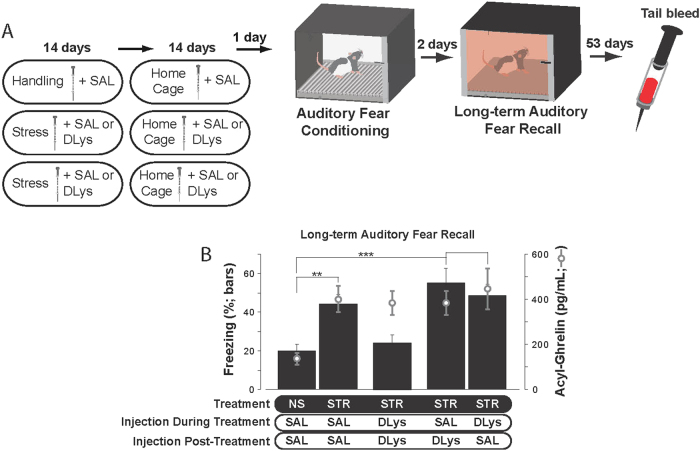
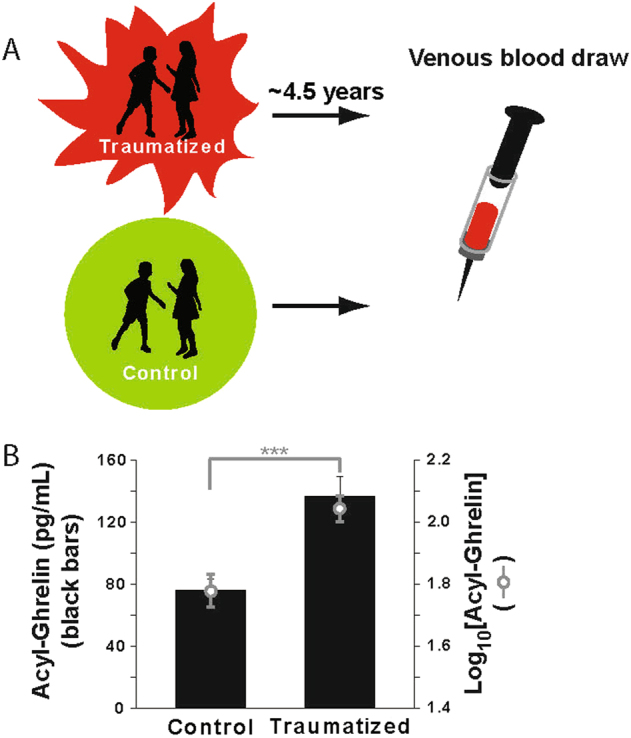
Prolonged stressor exposure in adolescence enhances the risk of developing stress-sensitive mental illnesses, including posttraumatic stress disorder (PTSD), for many years following exposure cessation, but the biological underpinnings of this long-term vulnerability are unknown. We show that severe stressor exposure increased circulating levels of the hormone acyl-ghrelin in adolescent rats for at least 130 days and in adolescent humans for at least 4.5 years. Using a rodent model of longitudinal PTSD vulnerability in which rodents with a history of stressor exposure during adolescence display enhanced fear in response to fear conditioning administered weeks after stressor exposure ends, we show that systemic delivery of a ghrelin receptor antagonist for 4 weeks surrounding stressor exposure (2 weeks during and 2 weeks following) prevented stress-enhanced fear memory. These data suggest that protracted exposure to elevated acyl-ghrelin levels mediates a persistent vulnerability to stress-enhanced fear after stressor exposure ends.
青春期长时间暴露于应激源会增加患应激敏感型精神疾病的风险,包括创伤后应激障碍(PTSD),这种风险在应激源暴露停止后的多年内都存在,但这种长期脆弱性的生物学基础尚不清楚。我们发现,严重的应激源暴露会使青春期大鼠的循环激素酰基-ghrelin 水平至少升高 130 天,使青春期人类的循环激素酰基-ghrelin 水平至少升高 4.5 年。我们使用一种纵向 PTSD 易感性的啮齿动物模型,该模型中,在青春期经历应激源暴露的啮齿动物在应激源暴露结束数周后,对恐惧条件反射的反应表现出增强的恐惧,结果表明,在应激源暴露期间(2 周)及之后(2 周)进行四周的全身性给予 ghrelin 受体拮抗剂的治疗可以预防应激增强的恐惧记忆。这些数据表明,延长暴露于升高的酰基-ghrelin 水平会导致应激源暴露结束后对应激增强的恐惧产生持续的脆弱性。