• 文献检索
  • 文档翻译
  • 深度研究
  • 学术资讯
  • Suppr Zotero 插件Zotero 插件
  • 邀请有礼
  • 套餐&价格
  • 历史记录
应用&插件
Suppr Zotero 插件Zotero 插件浏览器插件Mac 客户端Windows 客户端微信小程序
定价
高级版会员购买积分包购买API积分包
服务
文献检索文档翻译深度研究API 文档MCP 服务
关于我们
关于 Suppr公司介绍联系我们用户协议隐私条款
关注我们

Suppr 超能文献

核心技术专利:CN118964589B侵权必究
粤ICP备2023148730 号-1Suppr @ 2026

文献检索

告别复杂PubMed语法,用中文像聊天一样搜索,搜遍4000万医学文献。AI智能推荐,让科研检索更轻松。

立即免费搜索

文件翻译

保留排版,准确专业,支持PDF/Word/PPT等文件格式,支持 12+语言互译。

免费翻译文档

深度研究

AI帮你快速写综述,25分钟生成高质量综述,智能提取关键信息,辅助科研写作。

立即免费体验

基于卷积神经网络的面部寻常痤疮自动诊断方法。

An Automatic Diagnosis Method of Facial Acne Vulgaris Based on Convolutional Neural Network.

机构信息

Key Laboratory for Biomedical Engineering of Ministry of Education, Zhejiang University, HangZhou, 310027, China.

出版信息

Sci Rep. 2018 Apr 11;8(1):5839. doi: 10.1038/s41598-018-24204-6.

DOI:10.1038/s41598-018-24204-6
PMID:29643449
原文链接:https://pmc.ncbi.nlm.nih.gov/articles/PMC5895595/
Abstract

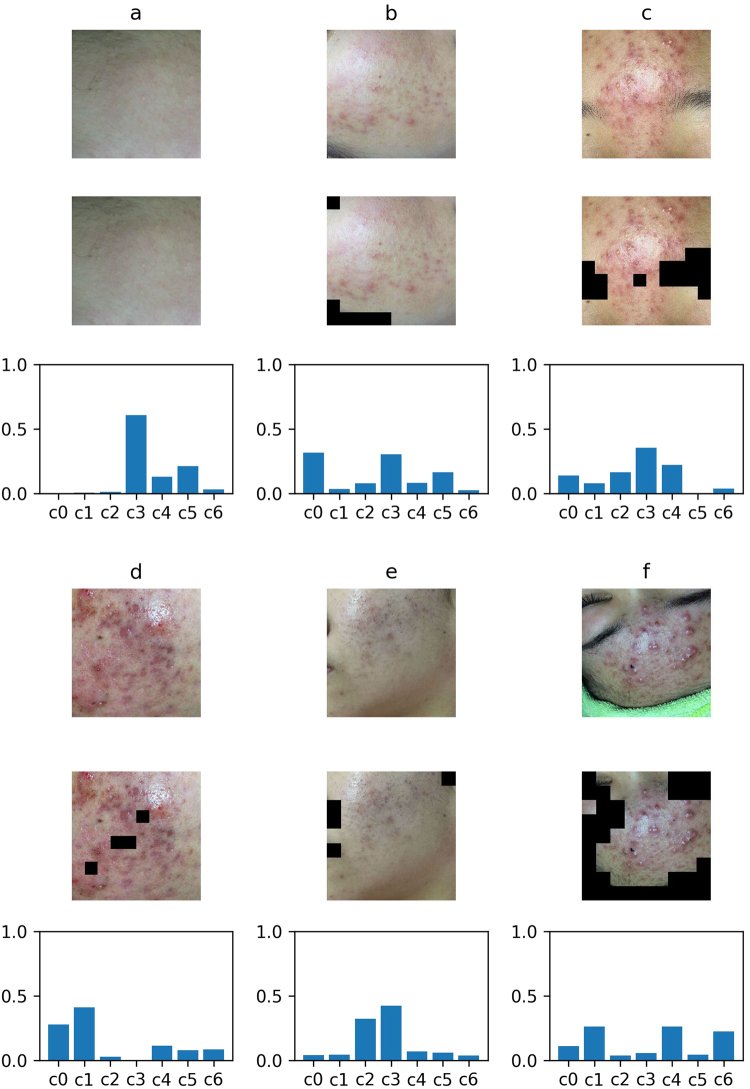
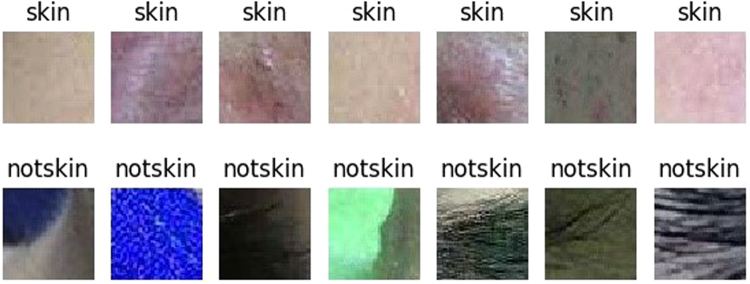
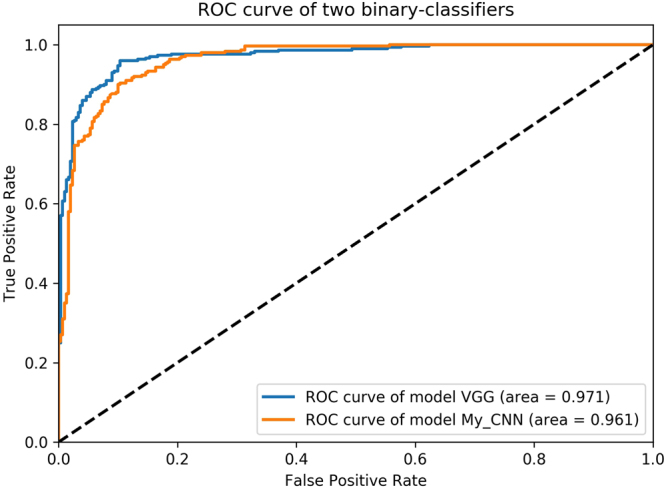
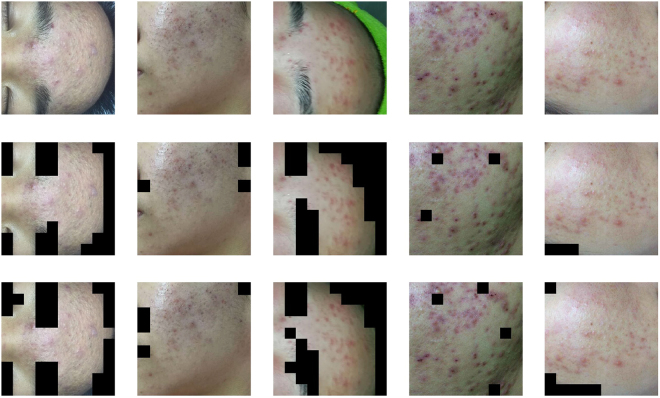
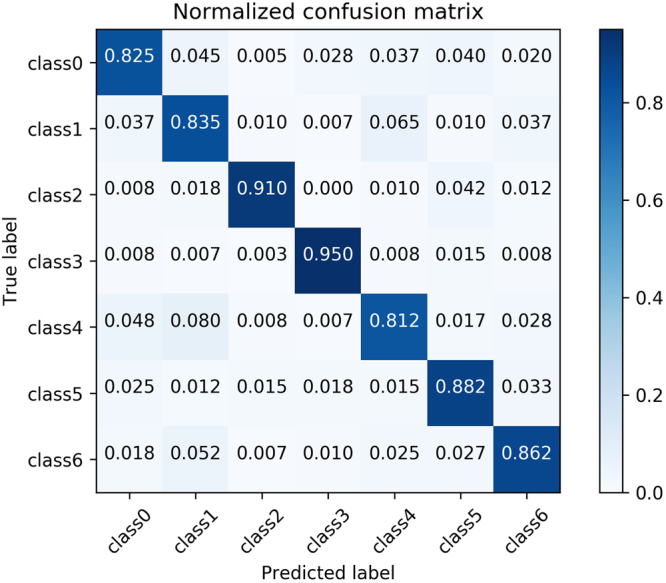
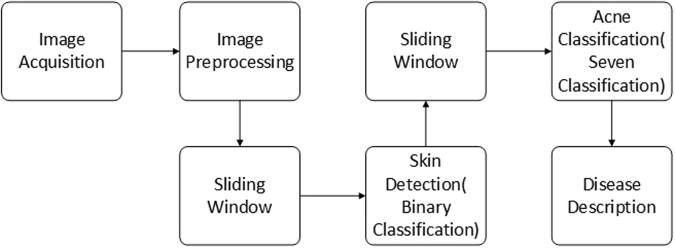
In this paper, we present a new automatic diagnosis method for facial acne vulgaris which is based on convolutional neural networks (CNNs). To overcome the shortcomings of previous methods which were the inability to classify enough types of acne vulgaris. The core of our method is to extract features of images based on CNNs and achieve classification by classifier. A binary-classifier of skin-and-non-skin is used to detect skin area and a seven-classifier is used to achieve the classification task of facial acne vulgaris and healthy skin. In the experiments, we compare the effectiveness of our CNN and the VGG16 neural network which is pre-trained on the ImageNet data set. We use a ROC curve to evaluate the performance of binary-classifier and use a normalized confusion matrix to evaluate the performance of seven-classifier. The results of our experiments show that the pre-trained VGG16 neural network is effective in extracting features from facial acne vulgaris images. And the features are very useful for the follow-up classifiers. Finally, we try applying the classifiers both based on the pre-trained VGG16 neural network to assist doctors in facial acne vulgaris diagnosis.

摘要

在本文中,我们提出了一种基于卷积神经网络(CNN)的新的面部寻常痤疮自动诊断方法。为了克服以前的方法的缺点,这些方法无法对足够类型的寻常痤疮进行分类。我们方法的核心是基于 CNN 提取图像的特征,并通过分类器实现分类。使用二分类器(皮肤和非皮肤)来检测皮肤区域,并用七分类器来实现面部寻常痤疮和健康皮肤的分类任务。在实验中,我们比较了我们的 CNN 和预训练在 ImageNet 数据集上的 VGG16 神经网络的有效性。我们使用 ROC 曲线来评估二分类器的性能,并使用归一化混淆矩阵来评估七分类器的性能。实验结果表明,预训练的 VGG16 神经网络在从面部寻常痤疮图像中提取特征方面非常有效,并且这些特征对于后续的分类器非常有用。最后,我们尝试将基于预训练的 VGG16 神经网络的分类器应用于辅助医生进行面部寻常痤疮诊断。
https://cdn.ncbi.nlm.nih.gov/pmc/blobs/7602/5895595/5a8630ea7e25/41598_2018_24204_Fig8_HTML.jpg
https://cdn.ncbi.nlm.nih.gov/pmc/blobs/7602/5895595/c52af81bc4fb/41598_2018_24204_Fig1_HTML.jpg
https://cdn.ncbi.nlm.nih.gov/pmc/blobs/7602/5895595/083d62156469/41598_2018_24204_Fig2_HTML.jpg
https://cdn.ncbi.nlm.nih.gov/pmc/blobs/7602/5895595/77aea5f53fa5/41598_2018_24204_Fig3_HTML.jpg
https://cdn.ncbi.nlm.nih.gov/pmc/blobs/7602/5895595/1c476a31f4f8/41598_2018_24204_Fig4_HTML.jpg
https://cdn.ncbi.nlm.nih.gov/pmc/blobs/7602/5895595/77865f733850/41598_2018_24204_Fig5_HTML.jpg
https://cdn.ncbi.nlm.nih.gov/pmc/blobs/7602/5895595/3eaf255713d4/41598_2018_24204_Fig6_HTML.jpg
https://cdn.ncbi.nlm.nih.gov/pmc/blobs/7602/5895595/e8b4d902a2d4/41598_2018_24204_Fig7_HTML.jpg
https://cdn.ncbi.nlm.nih.gov/pmc/blobs/7602/5895595/5a8630ea7e25/41598_2018_24204_Fig8_HTML.jpg
https://cdn.ncbi.nlm.nih.gov/pmc/blobs/7602/5895595/c52af81bc4fb/41598_2018_24204_Fig1_HTML.jpg
https://cdn.ncbi.nlm.nih.gov/pmc/blobs/7602/5895595/083d62156469/41598_2018_24204_Fig2_HTML.jpg
https://cdn.ncbi.nlm.nih.gov/pmc/blobs/7602/5895595/77aea5f53fa5/41598_2018_24204_Fig3_HTML.jpg
https://cdn.ncbi.nlm.nih.gov/pmc/blobs/7602/5895595/1c476a31f4f8/41598_2018_24204_Fig4_HTML.jpg
https://cdn.ncbi.nlm.nih.gov/pmc/blobs/7602/5895595/77865f733850/41598_2018_24204_Fig5_HTML.jpg
https://cdn.ncbi.nlm.nih.gov/pmc/blobs/7602/5895595/3eaf255713d4/41598_2018_24204_Fig6_HTML.jpg
https://cdn.ncbi.nlm.nih.gov/pmc/blobs/7602/5895595/e8b4d902a2d4/41598_2018_24204_Fig7_HTML.jpg
https://cdn.ncbi.nlm.nih.gov/pmc/blobs/7602/5895595/5a8630ea7e25/41598_2018_24204_Fig8_HTML.jpg

相似文献

1
An Automatic Diagnosis Method of Facial Acne Vulgaris Based on Convolutional Neural Network.基于卷积神经网络的面部寻常痤疮自动诊断方法。
Sci Rep. 2018 Apr 11;8(1):5839. doi: 10.1038/s41598-018-24204-6.
2
Automated grading of acne vulgaris by deep learning with convolutional neural networks.深度学习卷积神经网络自动分级痤疮。
Skin Res Technol. 2020 Mar;26(2):187-192. doi: 10.1111/srt.12794. Epub 2019 Sep 29.
3
Discriminating solitary cysts from soft tissue lesions in mammography using a pretrained deep convolutional neural network.使用预训练的深度卷积神经网络在乳腺钼靶摄影中区分孤立性囊肿与软组织病变。
Med Phys. 2017 Mar;44(3):1017-1027. doi: 10.1002/mp.12110.
4
Co-trained convolutional neural networks for automated detection of prostate cancer in multi-parametric MRI.基于多参数 MRI 的协同训练卷积神经网络在前列腺癌自动检测中的应用
Med Image Anal. 2017 Dec;42:212-227. doi: 10.1016/j.media.2017.08.006. Epub 2017 Aug 24.
5
Enhanced classifier training to improve precision of a convolutional neural network to identify images of skin lesions.通过增强分类器训练提高卷积神经网络识别皮肤病变图像的精度。
PLoS One. 2019 Jun 24;14(6):e0218713. doi: 10.1371/journal.pone.0218713. eCollection 2019.
6
Novel techniques for enhancement and segmentation of acne vulgaris lesions.寻常痤疮皮损增强与分割的新技术。
Skin Res Technol. 2014 Aug;20(3):322-31. doi: 10.1111/srt.12122. Epub 2013 Dec 12.
7
Binary tissue classification on wound images with neural networks and bayesian classifiers.基于神经网络和贝叶斯分类器的伤口图像二进制组织分类。
IEEE Trans Med Imaging. 2010 Feb;29(2):410-27. doi: 10.1109/TMI.2009.2033595. Epub 2009 Oct 13.
8
Automatic anatomical classification of esophagogastroduodenoscopy images using deep convolutional neural networks.使用深度卷积神经网络对食管胃十二指肠镜图像进行自动解剖分类。
Sci Rep. 2018 May 14;8(1):7497. doi: 10.1038/s41598-018-25842-6.
9
A pre-trained convolutional neural network based method for thyroid nodule diagnosis.一种基于预训练卷积神经网络的甲状腺结节诊断方法。
Ultrasonics. 2017 Jan;73:221-230. doi: 10.1016/j.ultras.2016.09.011. Epub 2016 Sep 12.
10
Comparing different classifiers for automatic age estimation.比较用于自动年龄估计的不同分类器。
IEEE Trans Syst Man Cybern B Cybern. 2004 Feb;34(1):621-8. doi: 10.1109/tsmcb.2003.817091.

引用本文的文献

1
Artificial Intelligence in the Assessment and Grading of Acne Vulgaris: A Systematic Review.人工智能在寻常痤疮评估与分级中的应用:一项系统评价
J Pers Med. 2025 Jun 6;15(6):238. doi: 10.3390/jpm15060238.
2
Transforming Aesthetic Dermatology: The Role of Artificial Intelligence in Skin Health.变革性美学皮肤病学:人工智能在皮肤健康中的作用。
Dermatol Ther (Heidelb). 2025 Jun 22. doi: 10.1007/s13555-025-01459-2.
3
Acne Detection Based on Reconstructed Hyperspectral Images.基于重建高光谱图像的痤疮检测

本文引用的文献

1
LRSSLMDA: Laplacian Regularized Sparse Subspace Learning for MiRNA-Disease Association prediction.LRSSLMDA:用于miRNA-疾病关联预测的拉普拉斯正则化稀疏子空间学习
PLoS Comput Biol. 2017 Dec 18;13(12):e1005912. doi: 10.1371/journal.pcbi.1005912. eCollection 2017 Dec.
2
HAMDA: Hybrid Approach for MiRNA-Disease Association prediction.HAMDA:一种 miRNA-疾病关联预测的混合方法。
J Biomed Inform. 2017 Dec;76:50-58. doi: 10.1016/j.jbi.2017.10.014. Epub 2017 Oct 31.
3
MicroRNAs and complex diseases: from experimental results to computational models.
J Imaging. 2024 Jul 23;10(8):174. doi: 10.3390/jimaging10080174.
4
Artificial Intelligence: A Snapshot of Its Application in Chronic Inflammatory and Autoimmune Skin Diseases.人工智能:其在慢性炎症性和自身免疫性皮肤病中的应用概述
Life (Basel). 2024 Apr 16;14(4):516. doi: 10.3390/life14040516.
5
Advancements in acne detection: application of the CenterNet network in smart dermatology.痤疮检测的进展:CenterNet网络在智能皮肤病学中的应用。
Front Med (Lausanne). 2024 Mar 25;11:1344314. doi: 10.3389/fmed.2024.1344314. eCollection 2024.
6
Automated Facial Acne Lesion Detecting and Counting Algorithm for Acne Severity Evaluation and Its Utility in Assisting Dermatologists.自动化面部痤疮皮损检测与计数算法在痤疮严重程度评估及其辅助皮肤科医生中的应用。
Am J Clin Dermatol. 2023 Jul;24(4):649-659. doi: 10.1007/s40257-023-00777-5. Epub 2023 May 9.
7
Artificial Intelligence in Dermatology Image Analysis: Current Developments and Future Trends.皮肤病学图像分析中的人工智能:当前进展与未来趋势。
J Clin Med. 2022 Nov 18;11(22):6826. doi: 10.3390/jcm11226826.
8
Acne Detection by Ensemble Neural Networks.基于集成神经网络的痤疮检测。
Sensors (Basel). 2022 Sep 9;22(18):6828. doi: 10.3390/s22186828.
9
Automatic Acne Object Detection and Acne Severity Grading Using Smartphone Images and Artificial Intelligence.利用智能手机图像和人工智能进行痤疮目标自动检测及痤疮严重程度分级
Diagnostics (Basel). 2022 Aug 3;12(8):1879. doi: 10.3390/diagnostics12081879.
10
Diagnosing Onychomycosis: What's New?甲癣的诊断:有哪些新进展?
J Fungi (Basel). 2022 Apr 29;8(5):464. doi: 10.3390/jof8050464.
微小 RNA 与复杂疾病:从实验结果到计算模型。
Brief Bioinform. 2019 Mar 22;20(2):515-539. doi: 10.1093/bib/bbx130.
4
PBMDA: A novel and effective path-based computational model for miRNA-disease association prediction.PBMDA:一种用于miRNA-疾病关联预测的新型有效基于路径的计算模型。
PLoS Comput Biol. 2017 Mar 24;13(3):e1005455. doi: 10.1371/journal.pcbi.1005455. eCollection 2017 Mar.
5
Long non-coding RNAs and complex diseases: from experimental results to computational models.长链非编码RNA与复杂疾病:从实验结果到计算模型
Brief Bioinform. 2017 Jul 1;18(4):558-576. doi: 10.1093/bib/bbw060.
6
Receiver Operating Characteristic (ROC) Curve Analysis for Medical Diagnostic Test Evaluation.用于医学诊断测试评估的受试者工作特征(ROC)曲线分析。
Caspian J Intern Med. 2013 Spring;4(2):627-35.
7
Novel human lncRNA-disease association inference based on lncRNA expression profiles.基于 lncRNA 表达谱的新型人类 lncRNA-疾病关联推断。
Bioinformatics. 2013 Oct 15;29(20):2617-24. doi: 10.1093/bioinformatics/btt426. Epub 2013 Sep 2.
8
Epidemiology of acne vulgaris.寻常痤疮的流行病学。
Br J Dermatol. 2013 Mar;168(3):474-85. doi: 10.1111/bjd.12149.
9
Acne vulgaris.寻常痤疮。
Lancet. 2012 Jan 28;379(9813):361-72. doi: 10.1016/S0140-6736(11)60321-8. Epub 2011 Aug 29.
10
Estimation of the Youden Index and its associated cutoff point.尤登指数及其相关截断点的估计。
Biom J. 2005 Aug;47(4):458-72. doi: 10.1002/bimj.200410135.