Berlin Institute for Medical Systems Biology, Max Delbrück Center for Molecular Medicine, Berlin, Germany.
DFG-Center for Regenerative Therapies Dresden, Technische Universität Dresden, Dresden, Germany.
Nat Biotechnol. 2018 Jun;36(5):469-473. doi: 10.1038/nbt.4124. Epub 2018 Apr 9.
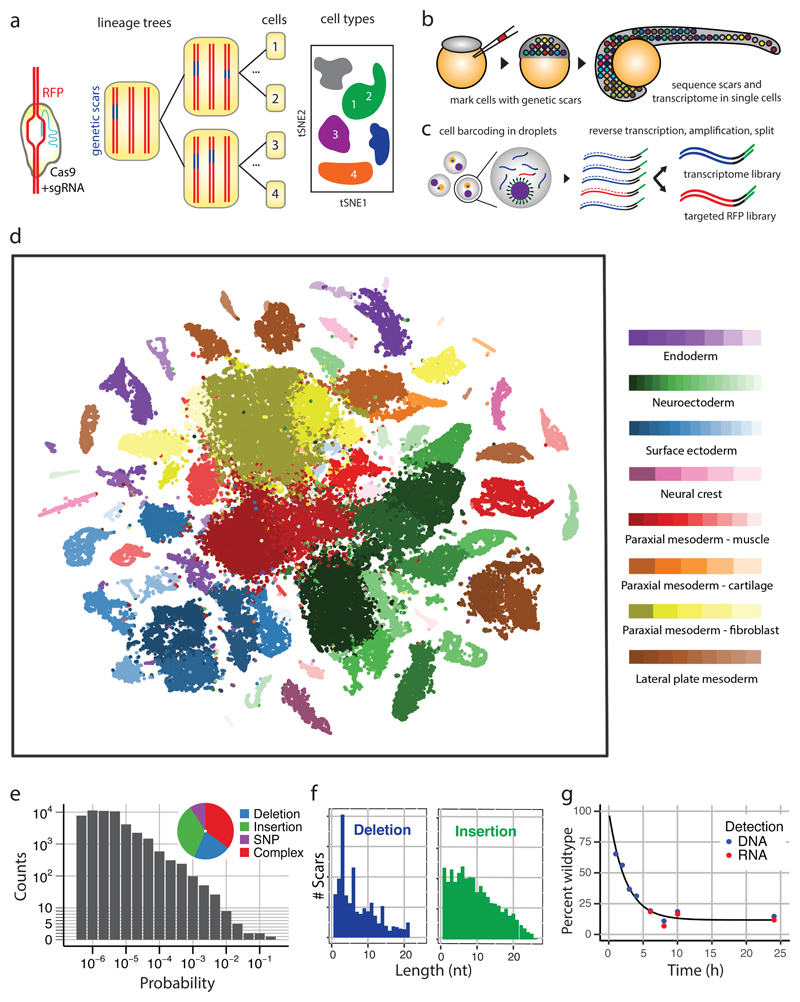
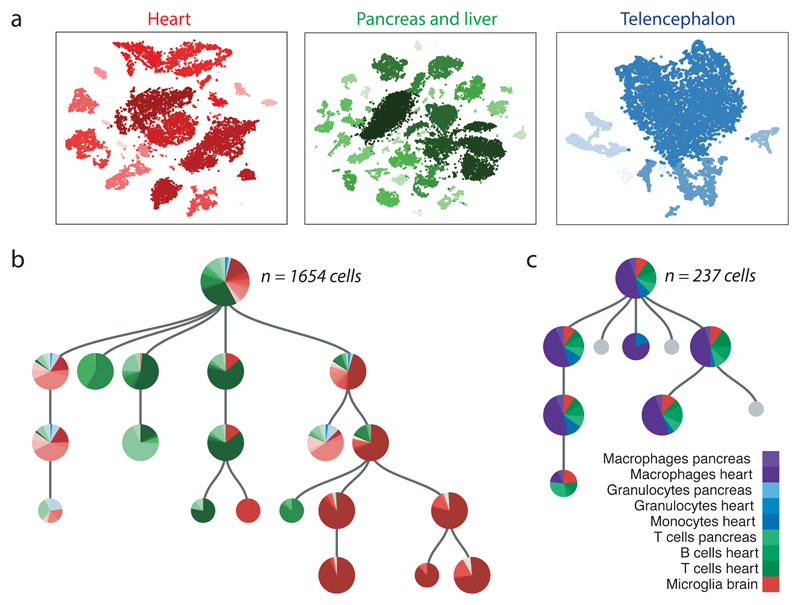
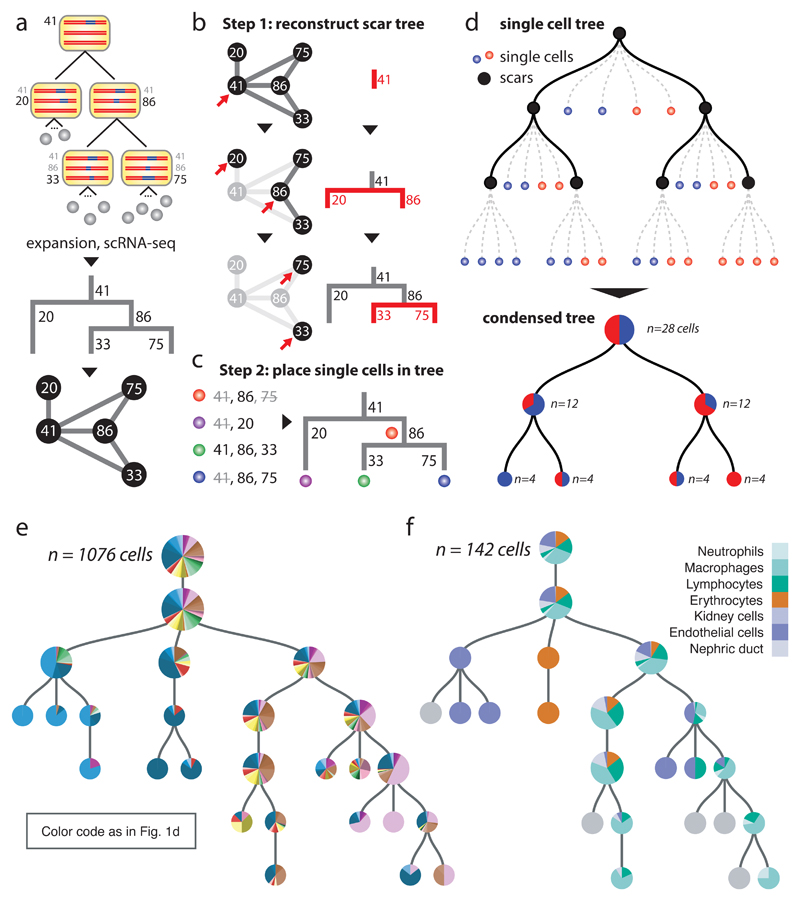
A key goal of developmental biology is to understand how a single cell is transformed into a full-grown organism comprising many different cell types. Single-cell RNA-sequencing (scRNA-seq) is commonly used to identify cell types in a tissue or organ. However, organizing the resulting taxonomy of cell types into lineage trees to understand the developmental origin of cells remains challenging. Here we present LINNAEUS (lineage tracing by nuclease-activated editing of ubiquitous sequences)-a strategy for simultaneous lineage tracing and transcriptome profiling in thousands of single cells. By combining scRNA-seq with computational analysis of lineage barcodes, generated by genome editing of transgenic reporter genes, we reconstruct developmental lineage trees in zebrafish larvae, and in heart, liver, pancreas, and telencephalon of adult fish. LINNAEUS provides a systematic approach for tracing the origin of novel cell types, or known cell types under different conditions.
发育生物学的一个主要目标是了解单个细胞如何转变为包含许多不同细胞类型的完全成熟的生物体。单细胞 RNA 测序(scRNA-seq)常用于鉴定组织或器官中的细胞类型。然而,将所得细胞类型的分类法组织成谱系树以了解细胞的发育起源仍然具有挑战性。本文中,我们提出了 LINNAEUS(通过核酸酶激活的普遍序列编辑进行谱系追踪)-一种在数千个单细胞中同时进行谱系追踪和转录组分析的策略。通过 scRNA-seq 与通过转基因报告基因的基因组编辑生成的谱系条码的计算分析相结合,我们在斑马鱼幼虫以及成年鱼的心脏、肝脏、胰腺和端脑中重建了发育谱系树。LINNAEUS 为追踪新型细胞类型的起源,或在不同条件下的已知细胞类型提供了一种系统的方法。