Department of Biological Sciences, National University of Singapore, Singapore; National University of Singapore Graduate School for Integrative Sciences and Engineering, National University of Singapore, Singapore.
Department of Biological Sciences, National University of Singapore, Singapore.
Neoplasia. 2018 May;20(5):533-542. doi: 10.1016/j.neo.2018.02.002. Epub 2018 Apr 9.
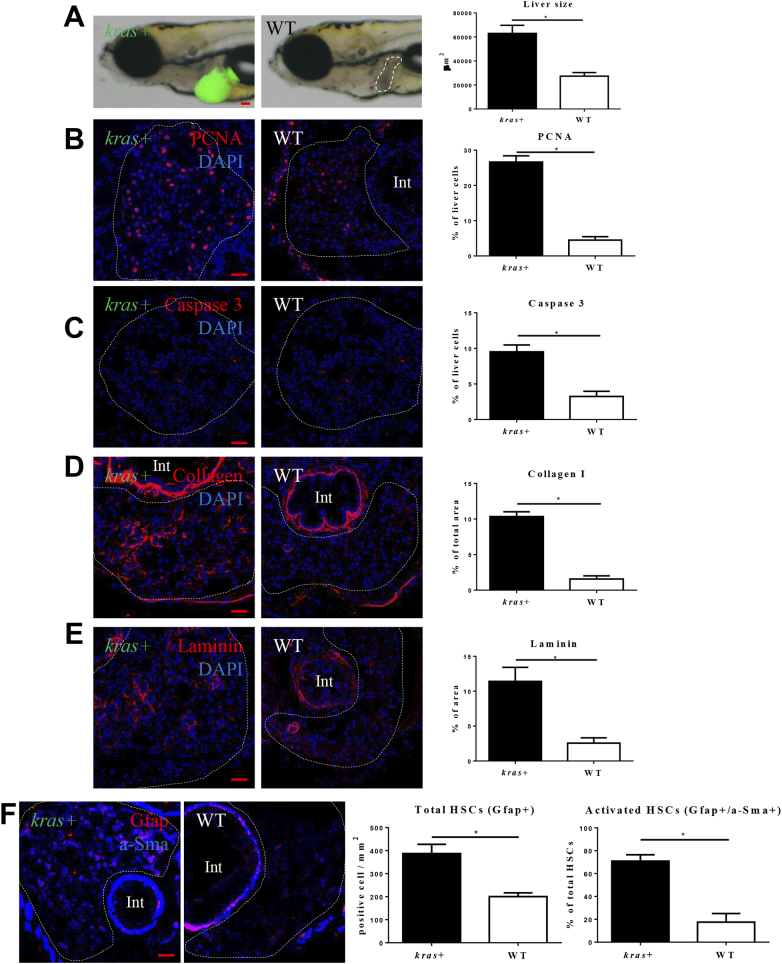
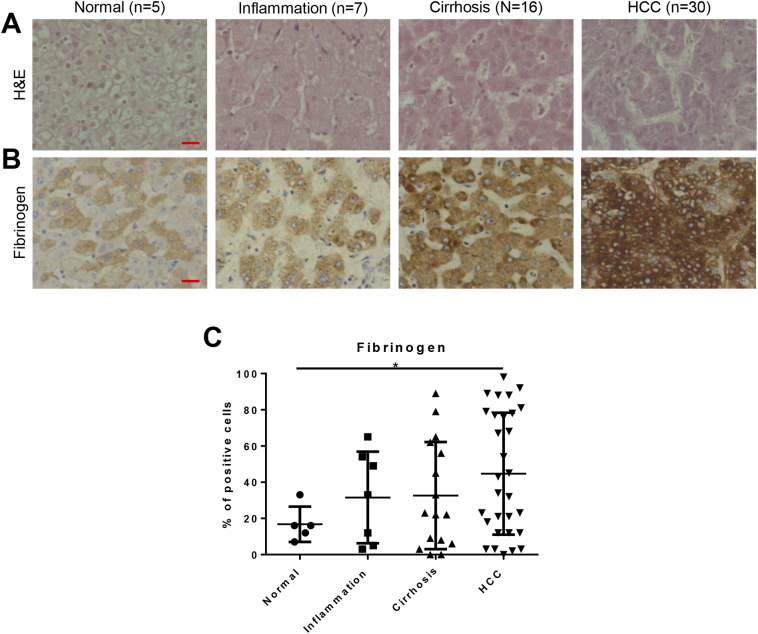
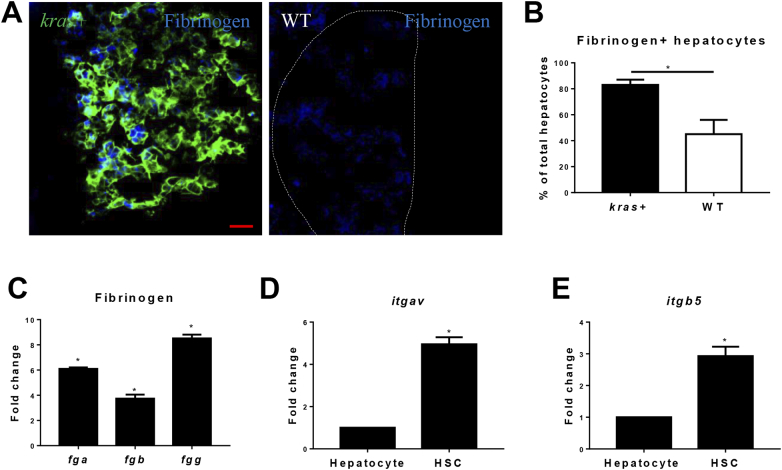
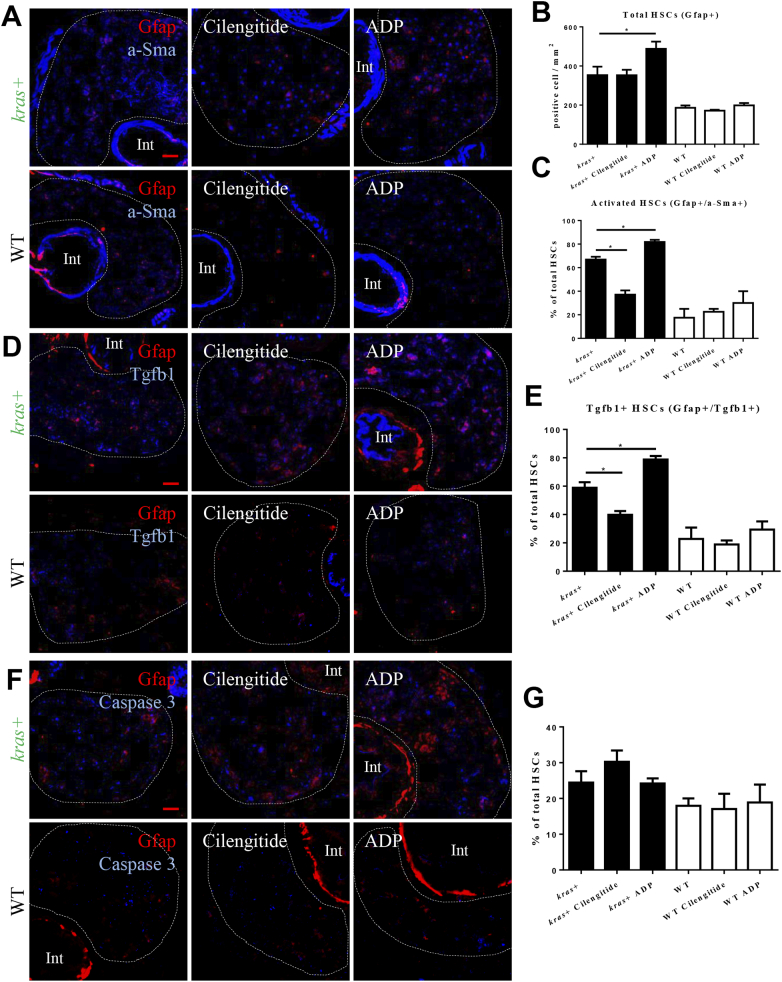
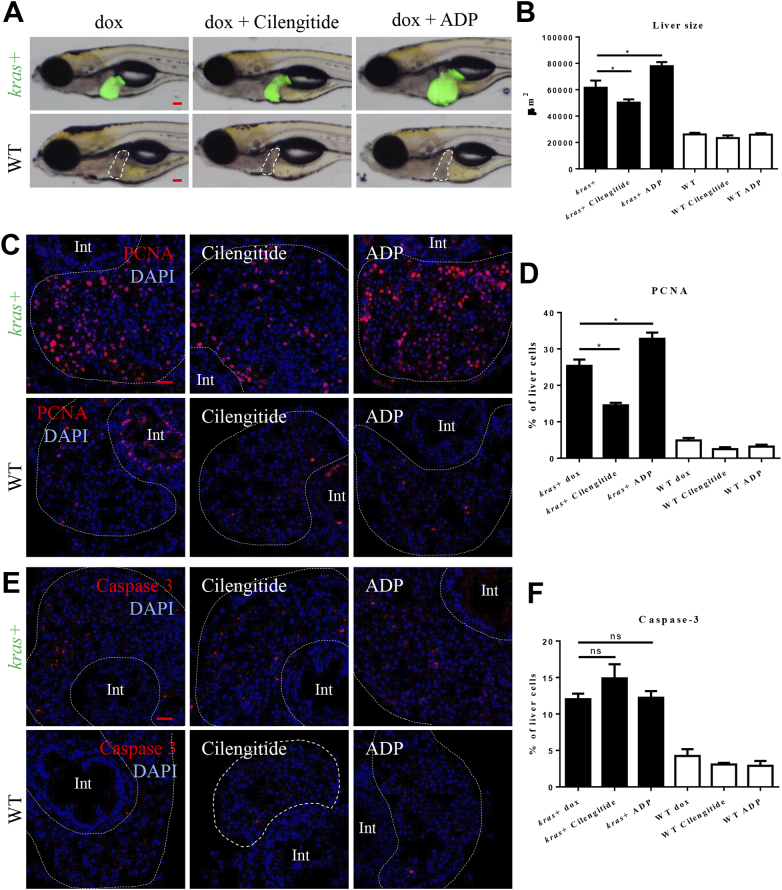
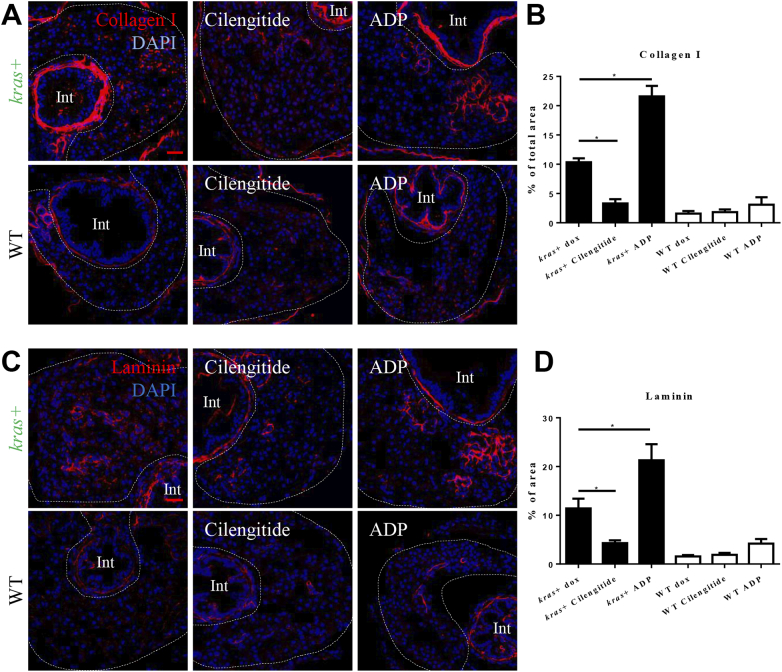
Hepatocellular carcinoma (HCC) is one of the most common cancers and it usually develops from a background of liver fibrosis or inflammation. The crosstalk between tumor cells and stromal cells plays an important and stimulating role during tumor progression. Previously we found in a kras-induced zebrafish HCC model that oncogenic hepatocytes activate hepatic stellate cells (HSCs) by up-regulation of serotonin and activate neutrophils and macrophages by up-regulation of cortisol. In the present study, we found a novel signaling transduction mechanism between oncogenic hepatocytes and HSCs. After kras induction, fibrinogen was up-regulated in oncogenic hepatocytes. We reasoned that fibrinogen may bind to integrin αvβ5 on HSCs to activate HSCs. Consistent with this notion, pharmaceutical treatment using an antagonist of integrin αvβ5, cilengitide, significantly blocked HSC activation and function, accompanied by attenuated proliferation of oncogenic hepatocytes and progression of liver fibrosis. On the contrary, adenosine 5'-diphosphate, an agonist of αvβ5, activated HSCs significantly that further stimulated the tumor progression and liver fibrosis. Interestingly, in human liver disease samples, we detected an increased level of fibrinogen during tumor progression which indicated the potential role of fibrinogen signaling in HCC progression. Thus, we concluded a novel interaction between oncogenic hepatocytes and HSCs through the fibrinogen related pathway in both the zebrafish HCC model and human liver disease samples.
肝细胞癌(HCC)是最常见的癌症之一,通常由肝纤维化或炎症的背景发展而来。肿瘤细胞与基质细胞之间的串扰在肿瘤进展中起着重要的刺激作用。以前,我们在 kras 诱导的斑马鱼 HCC 模型中发现,致癌性肝细胞通过上调血清素激活肝星状细胞(HSCs),并通过上调皮质醇激活中性粒细胞和巨噬细胞。在本研究中,我们发现了致癌性肝细胞与 HSCs 之间的一种新的信号转导机制。在 kras 诱导后,纤维蛋白原在致癌性肝细胞中上调。我们推测纤维蛋白原可能通过结合 HSCs 上的整合素αvβ5 来激活 HSCs。这一观点与使用整合素αvβ5 拮抗剂 cilengitide 的药物治疗一致,它显著阻断了 HSC 的激活和功能,同时伴有致癌性肝细胞增殖和肝纤维化的减弱。相反,整合素αvβ5 的激动剂 adenosine 5'-diphosphate 显著激活了 HSCs,进一步刺激了肿瘤的进展和肝纤维化。有趣的是,在人类肝病样本中,我们在肿瘤进展过程中检测到纤维蛋白原水平升高,这表明纤维蛋白原信号在 HCC 进展中具有潜在作用。因此,我们得出结论,在斑马鱼 HCC 模型和人类肝病样本中,致癌性肝细胞与 HSCs 之间存在一种新的通过纤维蛋白原相关途径的相互作用。