Nottingham National Centre for Transgender Health, Nottingham, UK.
Institute of Mental Health, University of Nottingham, Room B12, B Floor, Innovation Park, Triumph Road, Nottingham, NG7 2TU, UK.
J Autism Dev Disord. 2018 Dec;48(12):3984-3994. doi: 10.1007/s10803-018-3557-2.
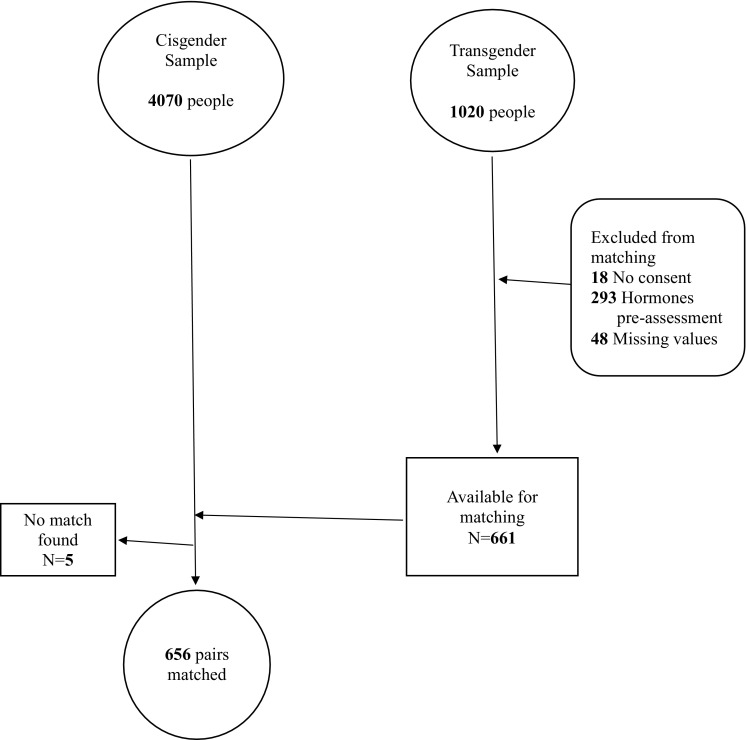
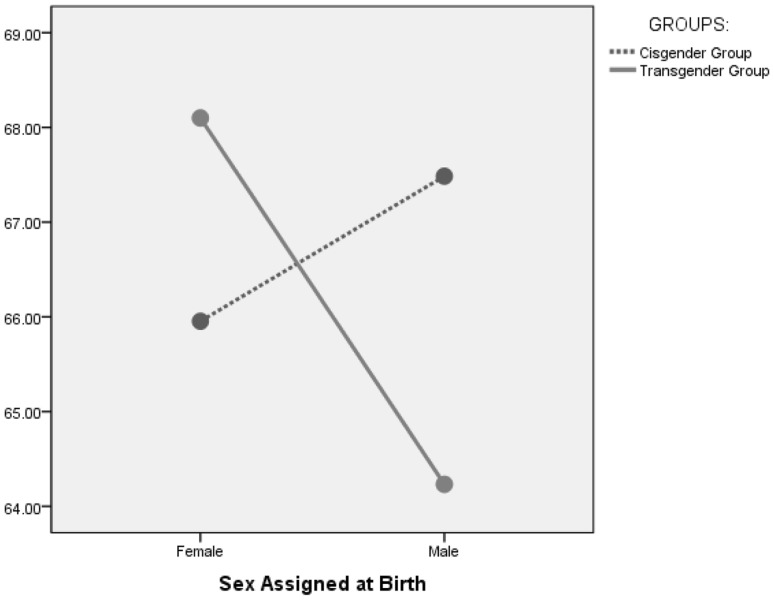
The present study aimed to compare prevalence of autistic traits measured by the self-reported autism spectrum quotient-short (AQ-short) in a transgender clinical population (n = 656) matched by age and sex assigned at birth to a cisgender community sample. Results showed that transgender and cisgender people reported similar levels of possible autistic caseness. Transgender people assigned female were more likely to have clinically significant autistic traits compared to any other group. No difference was found between those assigned male. High AQ scores may not be indicative of the presence of an autism spectrum condition as the difference between groups mainly related to social behaviours; such scores may be a reflection of transgender people's high social anxiety levels due to negative past experiences.
本研究旨在比较通过自报告自闭症谱系商数-短(AQ-short)测量的自闭症特征在跨性别临床人群(n=656)中的患病率,该人群按出生时分配的年龄和性别与顺性别社区样本相匹配。结果表明,跨性别者和顺性别者报告的可能自闭症病例水平相似。与其他任何群体相比,被分配为女性的跨性别者更有可能表现出明显的自闭症特征。被分配为男性的则没有差异。高 AQ 分数可能不能说明存在自闭症谱系障碍,因为组间差异主要与社交行为有关;这种分数可能反映了由于过去的负面经历,跨性别者的社交焦虑水平较高。