Department of Neurology, Leiden University Medical Center, PO BOX 9600, 2300 RC, Leiden, The Netherlands.
Department of Neurology, Haaglanden Medical Center, The Hague, The Netherlands.
J Neurooncol. 2018 Sep;139(2):359-368. doi: 10.1007/s11060-018-2868-7. Epub 2018 Apr 16.
Recently, it has been shown that at group level, patients with limited brain metastases treated with stereotactic radiotherapy (SRT) maintain their pre-treatment levels of neurocognitive functioning (NCF) and health-related quality of life (HRQoL). The aim of this study was to evaluate NCF and HRQoL changes over time at the individual patient level.
NCF (seven domains assessed with a standardized test battery) and HRQoL (eight predetermined scales assessed with the EORTC QLQ-C30 and BN20 questionnaires) were measured prior to SRT and at 3 and/or 6 months follow-up. Changes in NCF and HRQoL were evaluated at (1) a domain/scale level and (2) patient level.
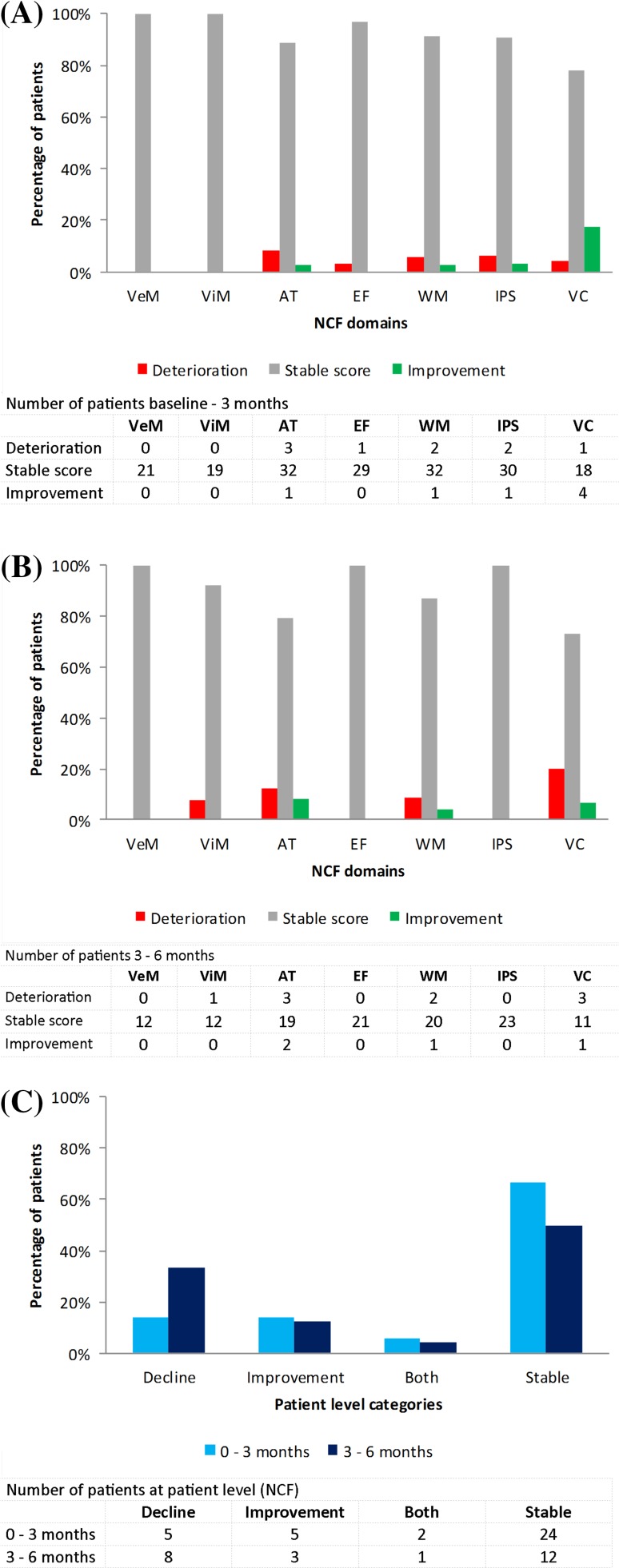
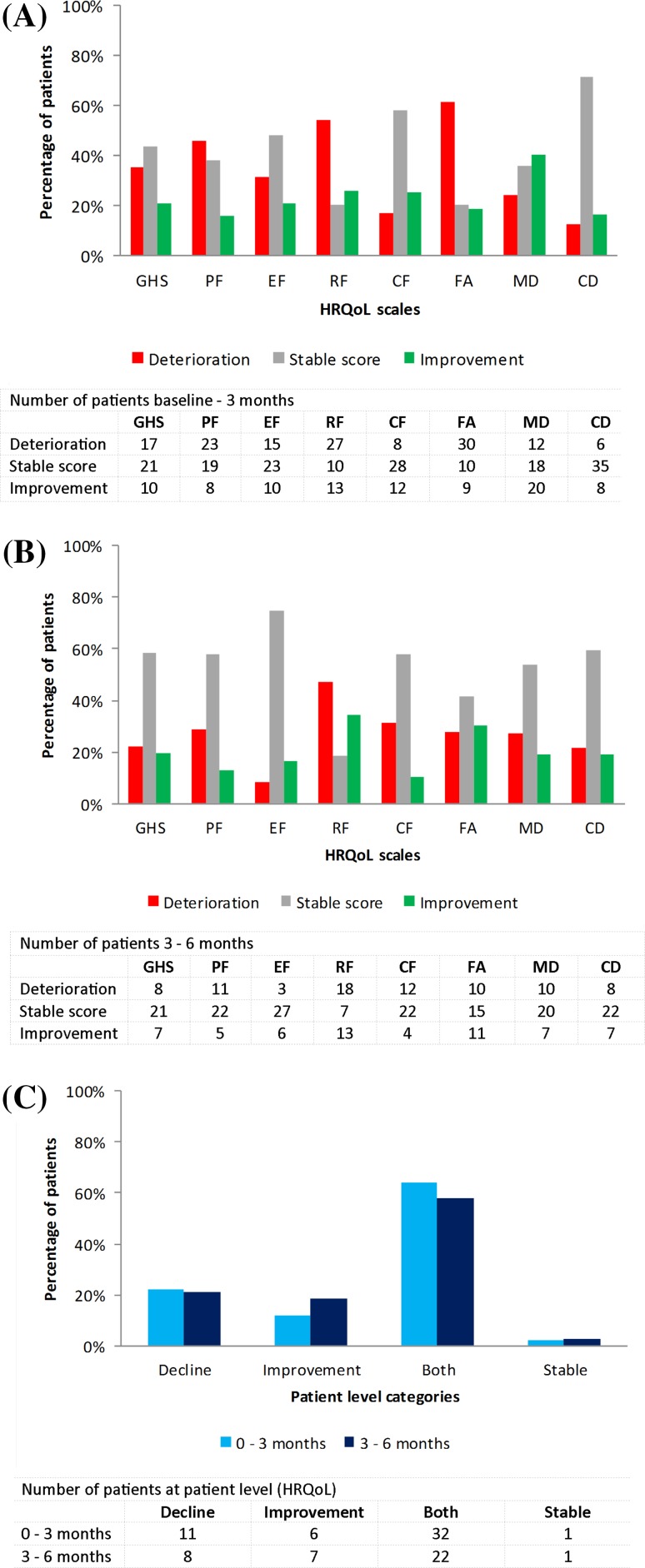
A total of 55 patients were examined, of which the majority showed stable NCF 3 months after SRT, on both the domain level (78-100% of patients) and patient level (67% of patients). This was different for HRQoL, where deterioration in the different scales was observed in 12-61% of patients, stable scores in 20-71%, and improvement in 16-40%, 3 months after SRT. At patient level, most patients (64%) showed both improvement and deterioration in different HRQoL scales. Results were similar between 3 and 6 months after SRT.
In line with results at group level, most brain oligometastases patients with ≥ 6 months follow-up and treated with SRT maintained their pre-treatment level of NCF during this period. By contrast, changes in HRQoL scores differed considerably at domain and patient level, despite stable HRQoL scores at group level.
最近的研究表明,在群体水平上,接受立体定向放射治疗(SRT)的局限性脑转移患者保持了治疗前的神经认知功能(NCF)和健康相关生活质量(HRQoL)水平。本研究的目的是评估个体患者水平上随时间的 NCF 和 HRQoL 变化。
在 SRT 之前以及 3 个月和/或 6 个月随访时,使用标准化测试组合评估 NCF(七个领域)和 HRQoL(EORTC QLQ-C30 和 BN20 问卷中的八个预定量表)。在(1)领域/量表水平和(2)患者水平评估 NCF 和 HRQoL 的变化。
共检查了 55 例患者,其中大多数患者在 SRT 后 3 个月的 NCF 保持稳定,无论是在域水平(78-100%的患者)还是在患者水平(67%的患者)。这与 HRQoL 不同,在 SRT 后 3 个月,不同量表的恶化在 12-61%的患者中观察到,稳定评分在 20-71%,改善评分在 16-40%。在患者水平上,大多数患者(64%)在不同的 HRQoL 量表中都显示出改善和恶化。3 个月和 6 个月后的结果相似。
与群体水平的结果一致,在接受 SRT 治疗并随访时间≥6 个月的大多数脑寡转移患者在此期间保持了治疗前的 NCF 水平。相比之下,尽管在群体水平上 HRQoL 评分稳定,但在域和患者水平上,HRQoL 评分的变化差异很大。