Weber Kristina, Hemmings Rob, Koch Armin
Institute for Biostatistics, Hannover Medical School, Hanover, Germany.
MHRA, London, UK.
Pharm Stat. 2018 Jul;17(4):329-341. doi: 10.1002/pst.1862. Epub 2018 Apr 17.
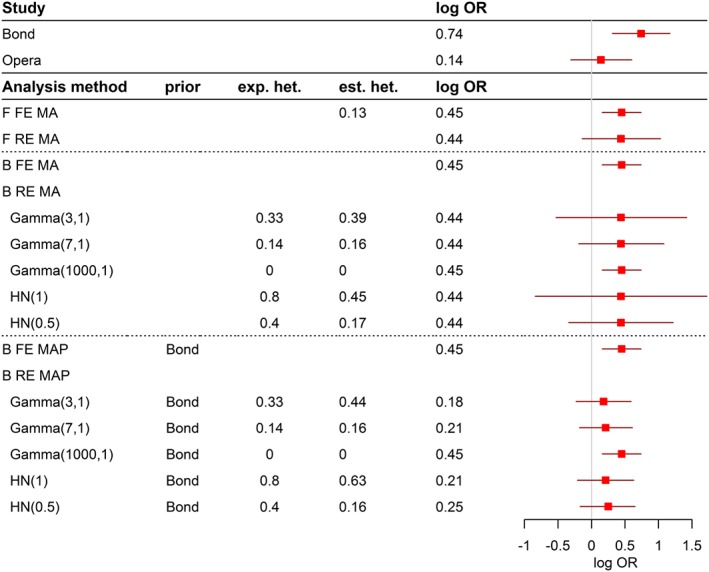
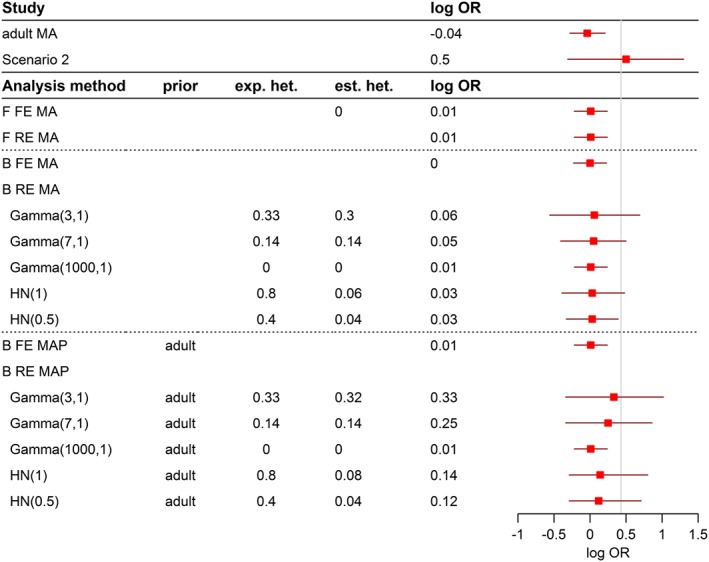
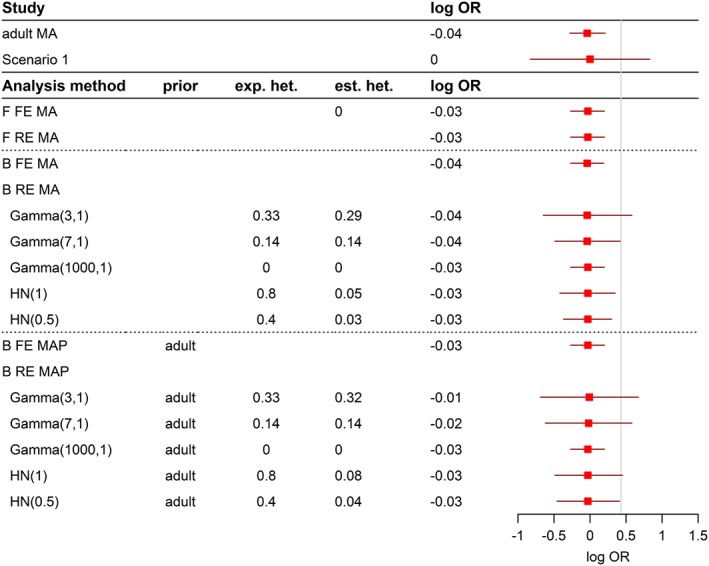
A common challenge for the development of drugs in rare diseases and special populations, eg, paediatrics, is the small numbers of patients that can be recruited into clinical trials. Extrapolation can be used to support development and licensing in paediatrics through the structured integration of available data in adults and prospectively generated data in paediatrics to derive conclusions that support licensing decisions in the target paediatric population. In this context, Bayesian analyses have been proposed to obtain formal proof of efficacy of a new drug or therapeutic principle by using additional information (data, opinion, or expectation), expressed through a prior distribution. However, little is said about the impact of the prior assumptions on the evaluation of outcome and prespecified strategies for decision-making as required in the regulatory context. On the basis of examples, we explore the use of data-based Bayesian meta-analytic-predictive methods and compare these approaches with common frequentist and Bayesian meta-analysis models. Noninformative efficacy prior distributions usually do not change the conclusions irrespective of the chosen analysis method. However, if heterogeneity is considered, conclusions are highly dependent on the heterogeneity prior. When using informative efficacy priors based on previous study data in combination with heterogeneity priors, these may completely determine conclusions irrespective of the data generated in the target population. Thus, it is important to understand the impact of the prior assumptions and ensure that prospective trial data in the target population have an appropriate chance, to change prior belief to avoid trivial and potentially erroneous conclusions.
罕见病及特殊人群(如儿科)药物研发面临的一个常见挑战是,能够纳入临床试验的患者数量较少。外推法可用于支持儿科药物的研发和许可,方法是将成人现有数据与儿科前瞻性生成的数据进行结构化整合,以得出支持目标儿科人群许可决策的结论。在此背景下,有人提出采用贝叶斯分析,通过使用以先验分布表示的额外信息(数据、观点或期望),来获得新药或治疗原则有效性的正式证据。然而,对于先验假设对结果评估的影响以及监管背景下所需的预先指定的决策策略,却鲜有提及。基于实例,我们探讨了基于数据的贝叶斯元分析预测方法的应用,并将这些方法与常见的频率论和贝叶斯元分析模型进行比较。无论选择何种分析方法,无信息的疗效先验分布通常不会改变结论。然而,如果考虑异质性,结论将高度依赖于异质性先验。当基于先前研究数据使用有信息的疗效先验与异质性先验相结合时,这些可能会完全决定结论,而不管目标人群中产生的数据如何。因此,了解先验假设的影响并确保目标人群中的前瞻性试验数据有适当机会改变先验信念,以避免得出琐碎且可能错误的结论,这一点很重要。