School of Statistics, Dongbei University of Finance and Economics, Dalian 116025, China.
Faculty of Engineering and Information Technology, University of Technology, Sydney, NSW 2007, Australia.
Int J Environ Res Public Health. 2018 Apr 17;15(4):780. doi: 10.3390/ijerph15040780.
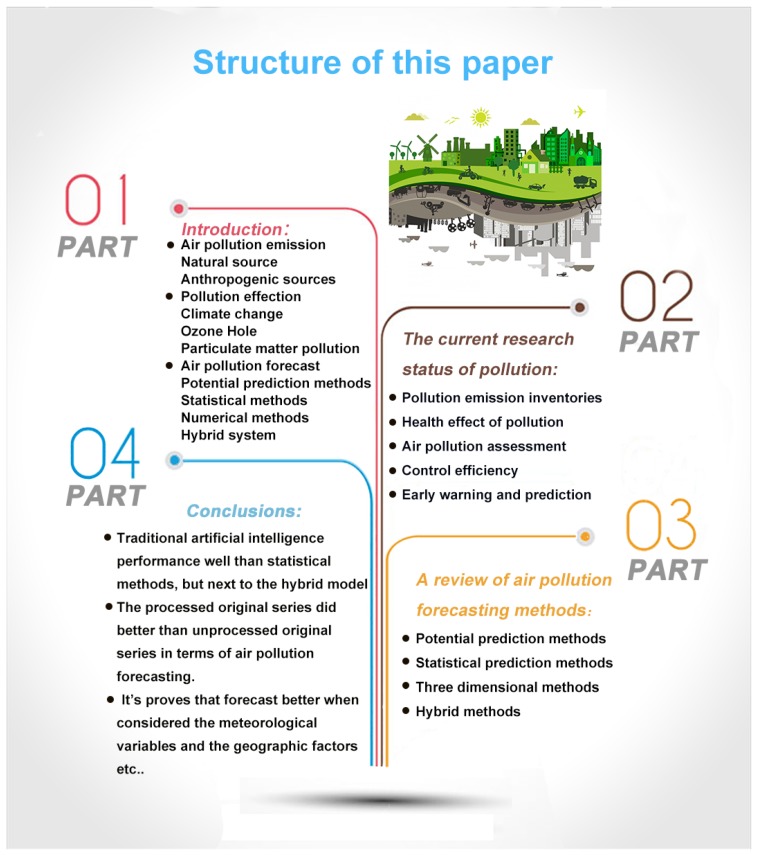
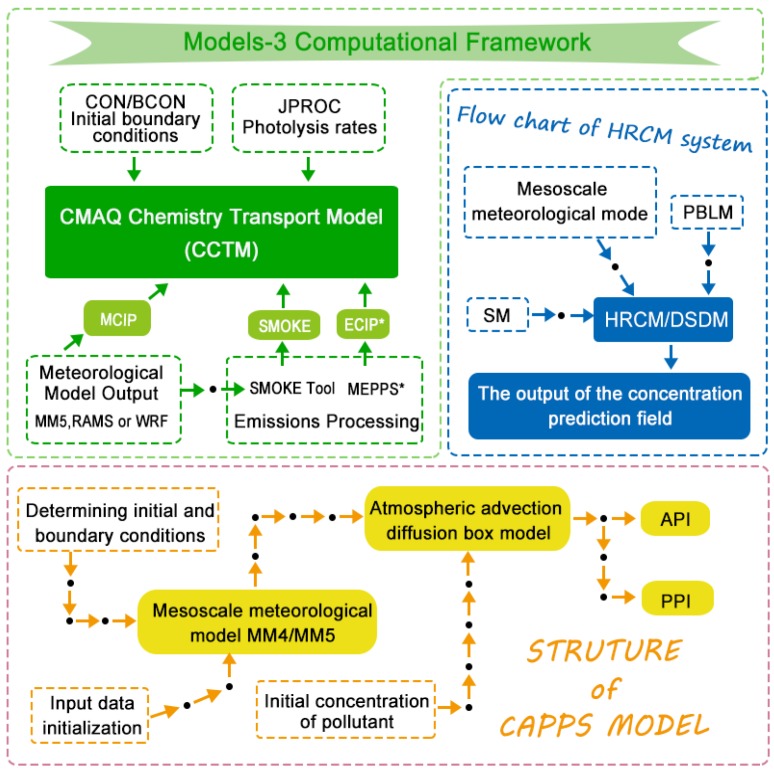
Air pollution is defined as a phenomenon harmful to the ecological system and the normal conditions of human existence and development when some substances in the atmosphere exceed a certain concentration. In the face of increasingly serious environmental pollution problems, scholars have conducted a significant quantity of related research, and in those studies, the forecasting of air pollution has been of paramount importance. As a precaution, the air pollution forecast is the basis for taking effective pollution control measures, and accurate forecasting of air pollution has become an important task. Extensive research indicates that the methods of air pollution forecasting can be broadly divided into three classical categories: statistical forecasting methods, artificial intelligence methods, and numerical forecasting methods. More recently, some hybrid models have been proposed, which can improve the forecast accuracy. To provide a clear perspective on air pollution forecasting, this study reviews the theory and application of those forecasting models. In addition, based on a comparison of different forecasting methods, the advantages and disadvantages of some methods of forecasting are also provided. This study aims to provide an overview of air pollution forecasting methods for easy access and reference by researchers, which will be helpful in further studies.
空气污染被定义为当大气中的某些物质超过一定浓度时,对生态系统和人类生存与发展的正常条件有害的现象。面对日益严重的环境污染问题,学者们进行了大量相关研究,在这些研究中,空气污染的预测至关重要。作为预防措施,空气污染预测是采取有效污染控制措施的基础,准确的空气污染预测已成为一项重要任务。大量研究表明,空气污染预测的方法大致可以分为三类:统计预测方法、人工智能方法和数值预测方法。最近,提出了一些混合模型,可以提高预测精度。为了清楚地了解空气污染预测,本研究综述了这些预测模型的理论和应用。此外,基于对不同预测方法的比较,还提供了一些预测方法的优缺点。本研究旨在为研究人员提供空气污染预测方法的概述,以便于访问和参考,这将有助于进一步的研究。