Kironji Antony Gatebe, Hodkinson Peter, de Ramirez Sarah Stewart, Anest Trisha, Wallis Lee, Razzak Junaid, Jenson Alexander, Hansoti Bhakti
Johns Hopkins School of Medicine, Baltimore, MD, USA.
Division of Emergency Medicine, University of Cape Town, Cape Town, South Africa.
BMC Health Serv Res. 2018 Apr 19;18(1):291. doi: 10.1186/s12913-018-3091-0.
Out-of-hospital emergency care (OHEC), also known as prehospital care, has been shown to reduce morbidity and mortality from serious illness. We sought to summarize literature for low and low-middle income countries to identify barriers to and key interventions for OHEC delivery.
We performed a systematic review of the peer reviewed literature from January 2005 to March 2015 in PubMed, Embase, Cochrane, and Web of Science. All articles referencing research from low and low-middle income countries addressing OHEC, emergency medical services, or transport/transfer of patients were included. We identified themes in the literature to form six categories of OHEC barriers. Data were collected using an electronic form and results were aggregated to produce a descriptive summary.
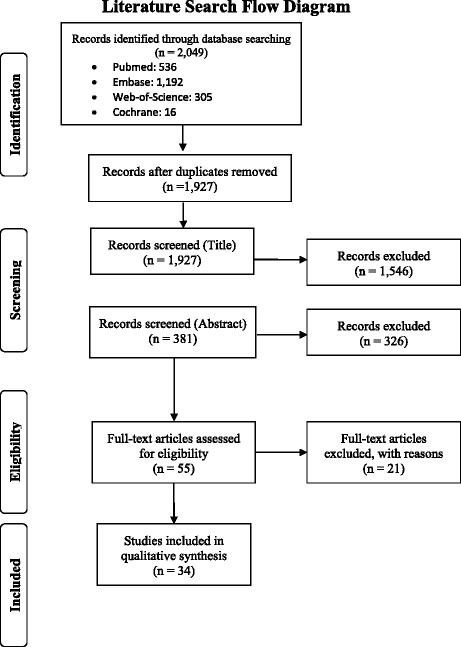
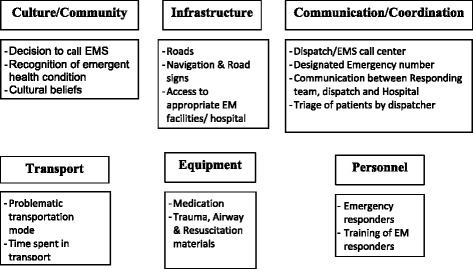
A total 1927 titles were identified, 31 of which met inclusion criteria. Barriers to OHEC were divided into six categories that included: culture/community, infrastructure, communication/coordination, transport, equipment and personnel. Lack of transportation was a common problem, with 55% (17/31) of articles reporting this as a hindrance to OHEC. Ambulances were the most commonly mentioned (71%, 22/31) mode of transporting patients. However, many patients still relied on alternative means of transportation such as hired cars, and animal drawn carts. Sixty-one percent (19/31) of articles identified a lack of skilled personnel as a key barrier, with 32% (10/31) of OHEC being delivered by laypersons without formal training. Forty percent (12/31) of the systems identified in the review described a uniform access phone number for emergency medical service activation.
Policy makers and researchers seeking to improve OHEC in low and low-middle income countries should focus on increasing the availability of transport and trained providers while improving patient access to the OHEC system. The review yielded articles with a primary focus in Africa, highlighting a need for future research in diverse geographic areas.
院外急救护理(OHEC),也称为院前护理,已被证明可降低重症疾病的发病率和死亡率。我们试图总结低收入和中低收入国家的文献,以确定院外急救护理实施的障碍和关键干预措施。
我们对2005年1月至2015年3月在PubMed、Embase、Cochrane和科学网中经过同行评审的文献进行了系统综述。所有引用来自低收入和中低收入国家关于院外急救护理、紧急医疗服务或患者转运/转移研究的文章均被纳入。我们确定了文献中的主题,形成了六类院外急救护理障碍。使用电子表格收集数据,并汇总结果以生成描述性总结。
共识别出1927个标题,其中31个符合纳入标准。院外急救护理的障碍分为六类,包括:文化/社区、基础设施、沟通/协调、交通、设备和人员。交通匮乏是一个常见问题,55%(17/31)的文章将此报告为院外急救护理的障碍。救护车是最常被提及的(71%,22/31)患者转运方式。然而,许多患者仍依赖其他交通方式,如租车和畜力车。61%(19/31)的文章将缺乏技术人员确定为关键障碍,32%(10/31)的院外急救护理由未经正规培训的非专业人员提供。综述中确定的40%(12/31)的系统描述了用于激活紧急医疗服务的统一接入电话号码。
寻求改善低收入和中低收入国家院外急救护理的政策制定者和研究人员应专注于增加交通和训练有素的提供者的可用性,同时改善患者对院外急救护理系统的接入。该综述产生的文章主要集中在非洲,突出了未来在不同地理区域进行研究的必要性。