Müller Pavel, Ignatz Elisabeth, Kiontke Stephan, Brettel Klaus, Essen Lars-Oliver
Institute for Integrative Biology of the Cell (I2BC) , CEA , CNRS , Univ. Paris-Sud , Université Paris-Saclay , 91198 , Gif-sur-Yvette cedex , France . Email:
Department of Chemistry , LOEWE Center for Synthetic Microbiology , Philipps University , 35032 Marburg , Germany . Email:
Chem Sci. 2017 Dec 11;9(5):1200-1212. doi: 10.1039/c7sc03969g. eCollection 2018 Feb 7.
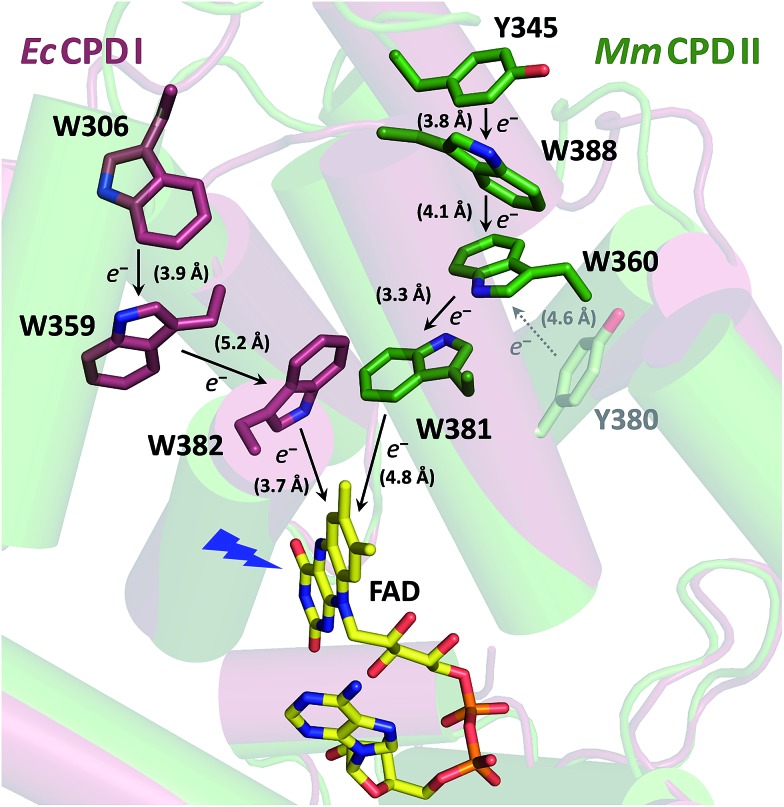
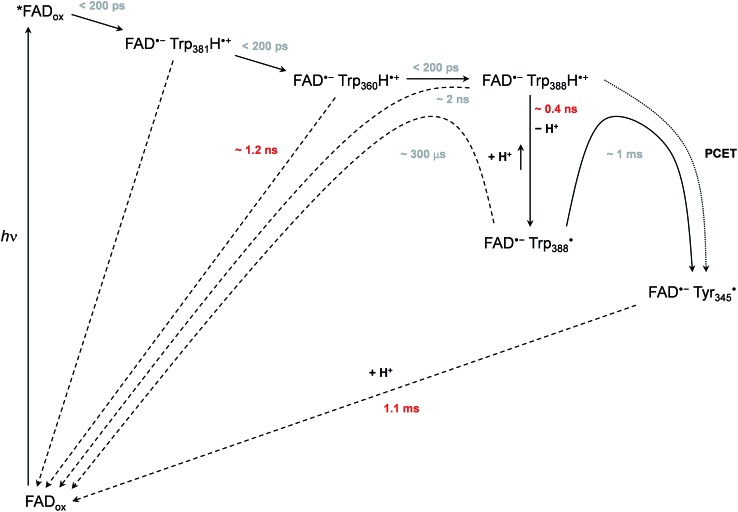
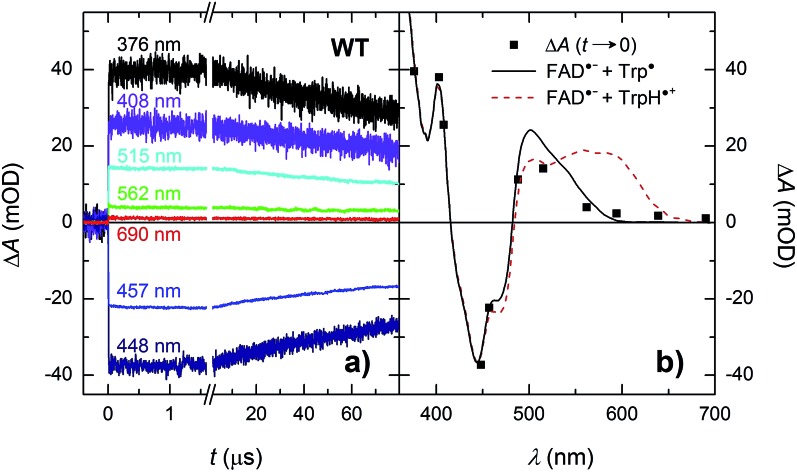
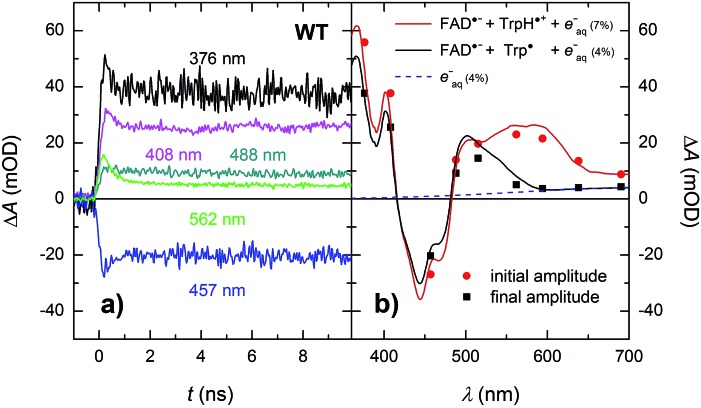
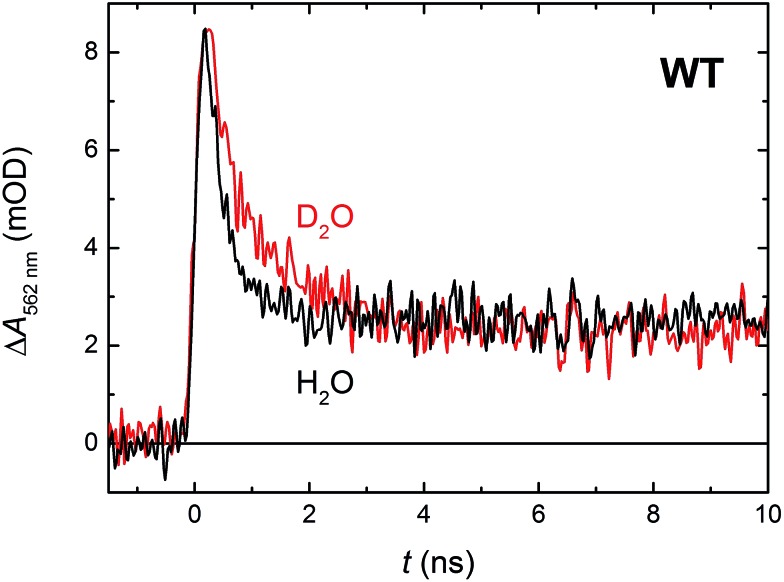
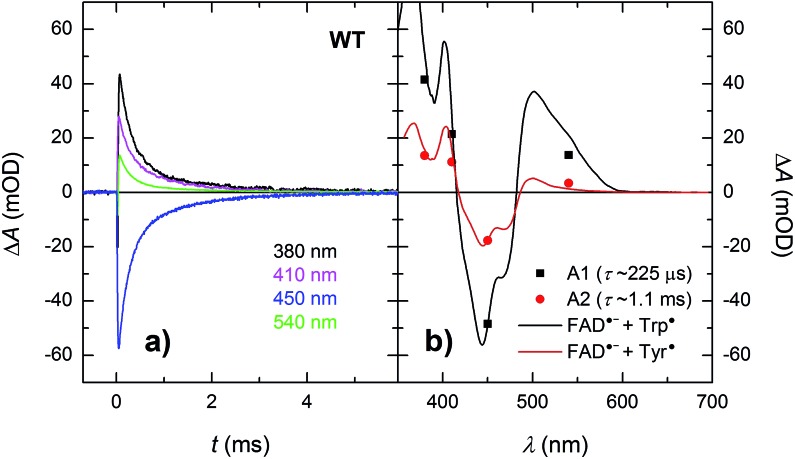
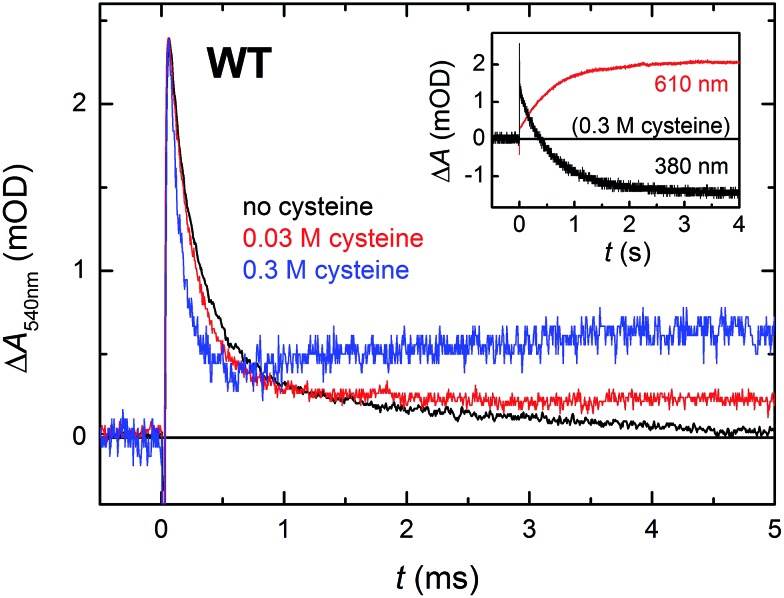
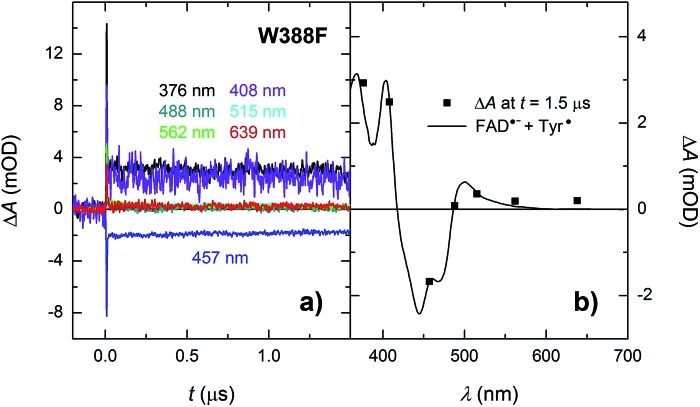
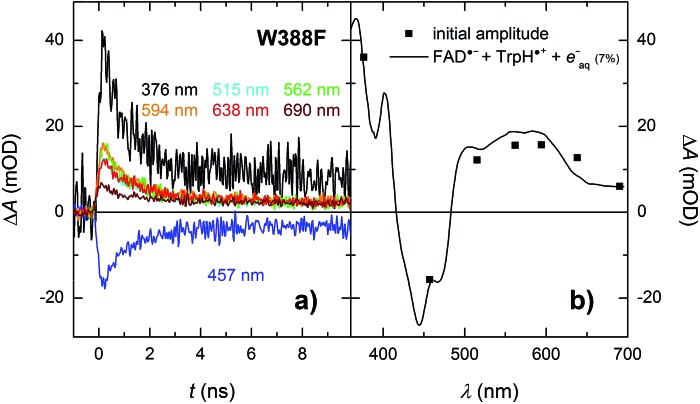
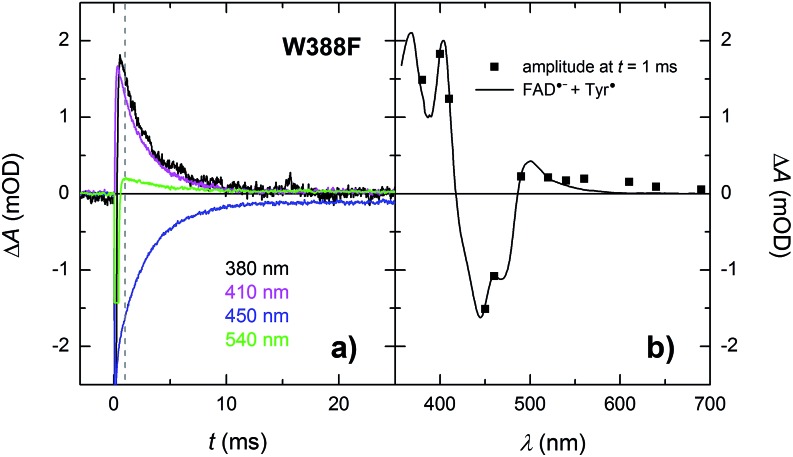
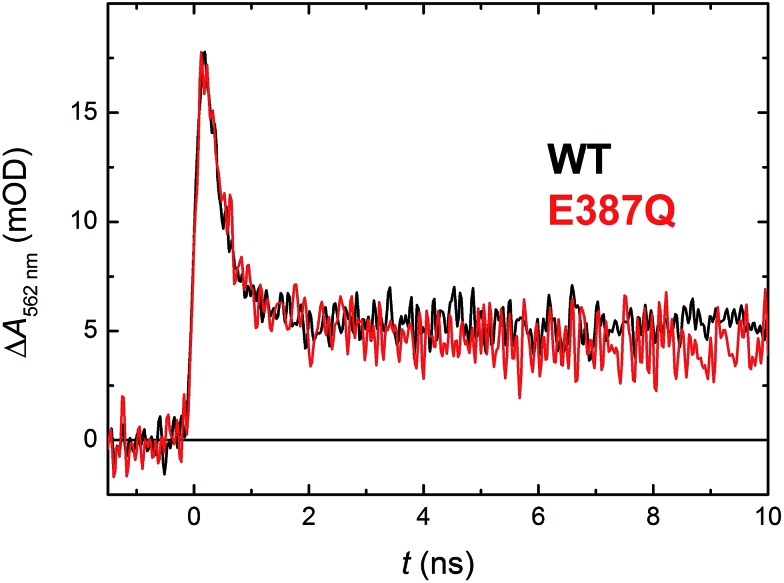
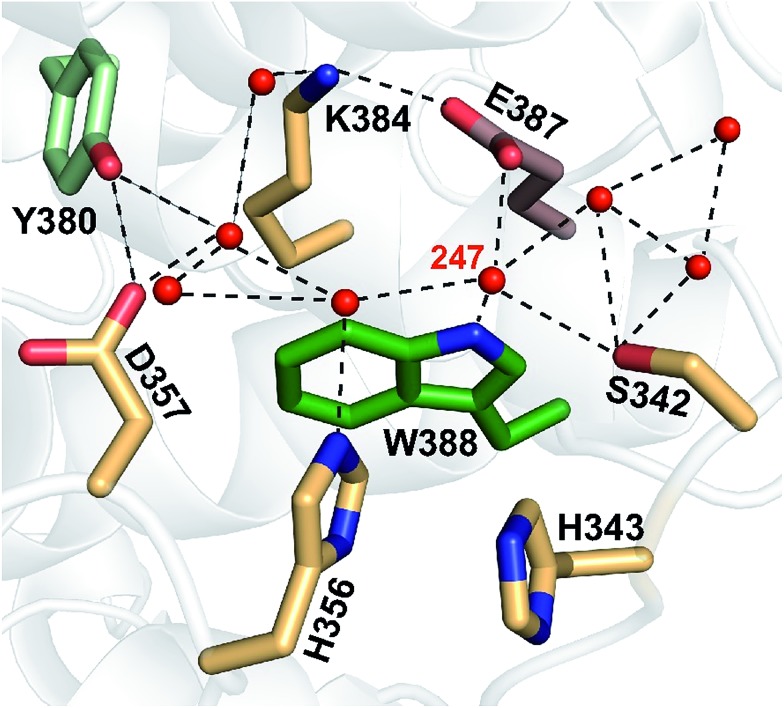
Class II DNA photolyases are flavoenzymes occurring in both prokaryotes and eukaryotes including higher plants and animals. Despite considerable structural deviations from the well-studied class I DNA photolyases, they share the main biological function, namely light-driven repair of the most common UV-induced lesions in DNA, the cyclobutane pyrimidine dimers (CPDs). For DNA repair activity, photolyases require the fully reduced flavin adenine dinucleotide cofactor, FADH, which can be obtained from oxidized or semi-reduced FAD by a process called photoactivation. Using transient absorption spectroscopy, we have examined the initial electron and proton transfer reactions leading to photoactivation of the class II DNA photolyase from . Upon photoexcitation, FAD is reduced a distinct (class II-specific) chain of three tryptophans, giving rise to an FAD˙ TrpH˙ radical pair. The distal TrpH˙ deprotonates to Trp˙ in 350 ps, , by three orders of magnitude faster than TrpH˙ in aqueous solution or in any previously studied photolyase. We identified a class II-specific cluster of protein-bound water molecules ideally positioned to serve as the primary proton acceptor. The high rate of TrpH˙ deprotonation counters futile radical pair recombination and ensures efficient photoactivation.
II类DNA光解酶是一种黄素酶,存在于原核生物和真核生物中,包括高等植物和动物。尽管与研究充分的I类DNA光解酶在结构上有很大差异,但它们具有相同的主要生物学功能,即光驱动修复DNA中最常见的紫外线诱导损伤——环丁烷嘧啶二聚体(CPD)。对于DNA修复活性,光解酶需要完全还原的黄素腺嘌呤二核苷酸辅因子FADH,它可以通过一种称为光激活的过程从氧化型或半还原型FAD中获得。我们使用瞬态吸收光谱法研究了导致来自[具体来源未给出]的II类DNA光解酶光激活的初始电子和质子转移反应。光激发后,FAD通过一条由三个色氨酸组成的独特(II类特异性)链被还原,产生一个FAD˙TrpH˙自由基对。远端的TrpH˙在350皮秒内去质子化为Trp˙,比水溶液中或之前研究过的任何光解酶中的TrpH˙快三个数量级。我们确定了一组II类特异性的与蛋白质结合的水分子簇,其位置理想,可作为主要质子受体。TrpH˙的高去质子化速率可对抗无效的自由基对重组,并确保有效的光激活。