Scheurich Rebecca, Zamm Anna, Palmer Caroline
Sequence Production Laboratory, Department of Psychology, McGill University, Montreal, QC, Canada.
Front Psychol. 2018 Apr 6;9:458. doi: 10.3389/fpsyg.2018.00458. eCollection 2018.
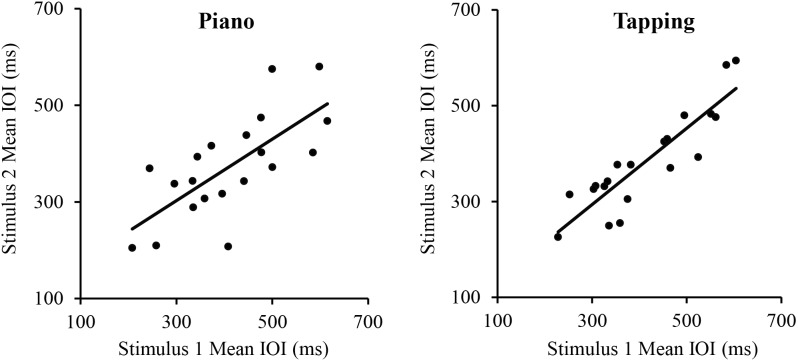
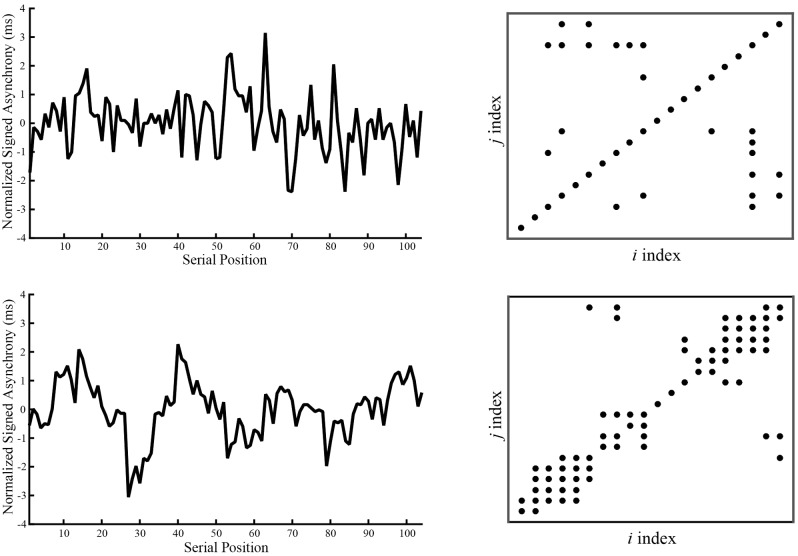
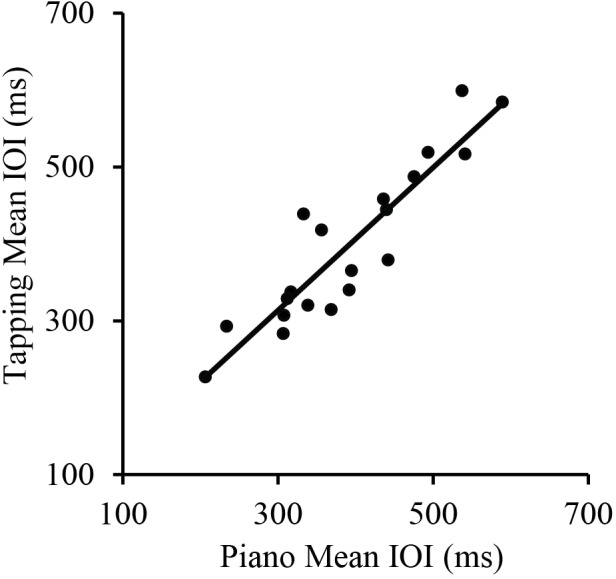
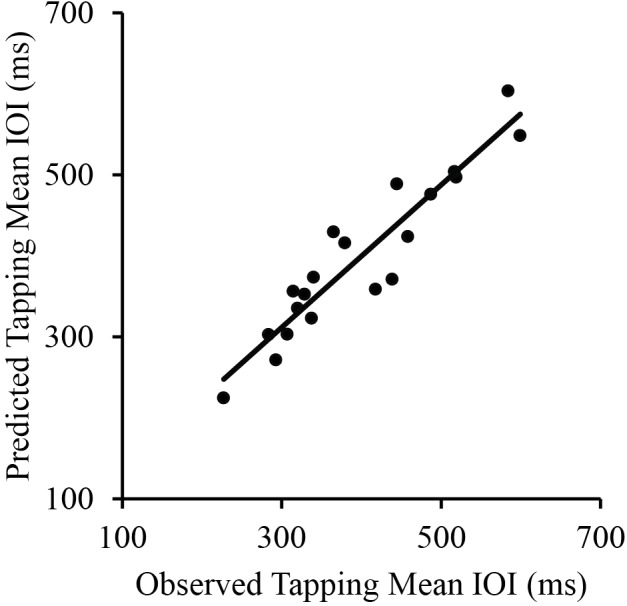
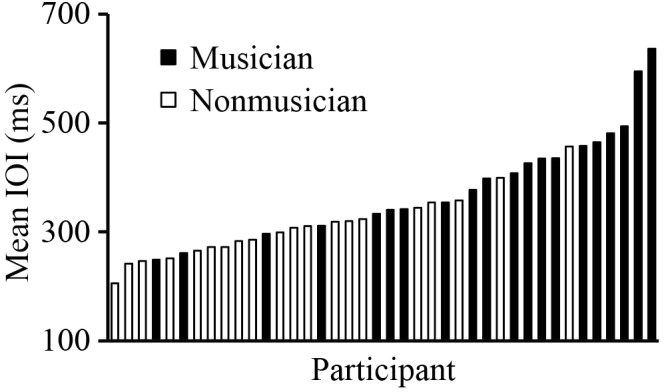
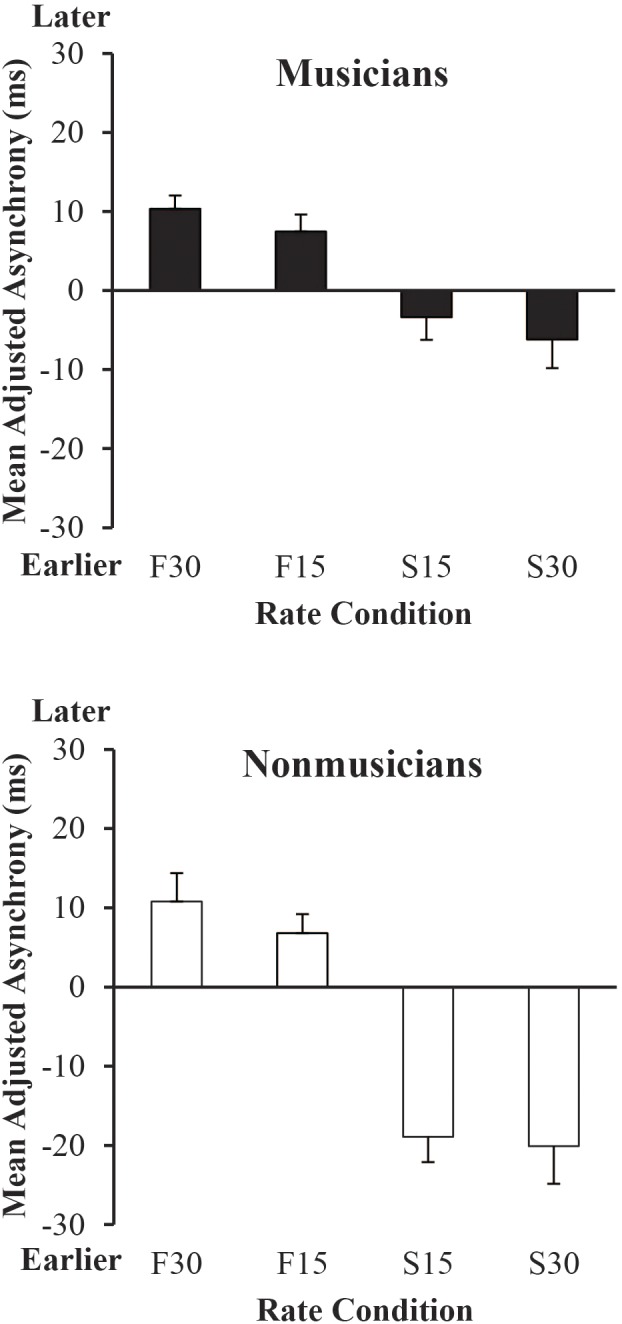
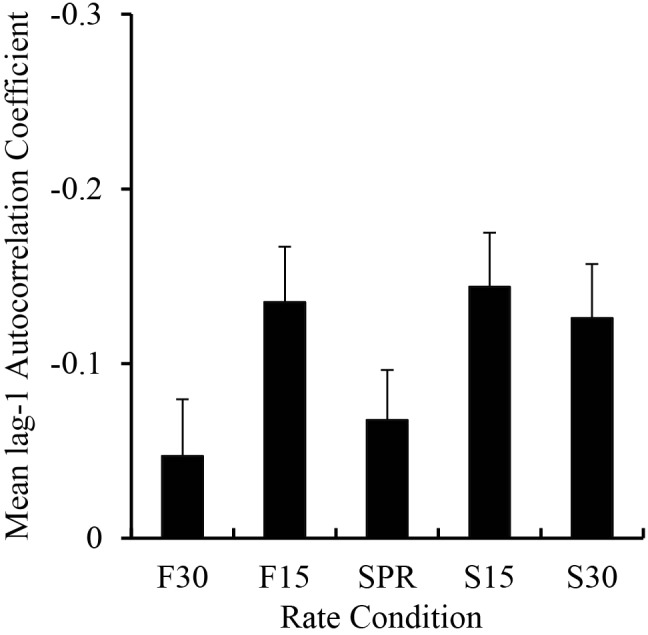
The ability to flexibly adapt one's behavior is critical for social tasks such as speech and music performance, in which individuals must coordinate the timing of their actions with others. Natural movement frequencies, also called spontaneous rates, constrain synchronization accuracy between partners during duet music performance, whereas musical training enhances synchronization accuracy. We investigated the combined influences of these factors on the flexibility with which individuals can synchronize their actions with sequences at different rates. First, we developed a novel musical task capable of measuring spontaneous rates in both musicians and non-musicians in which participants tapped the rhythm of a familiar melody while hearing the corresponding melody tones. The novel task was validated by similar measures of spontaneous rates generated by piano performance and by the tapping task from the same pianists. We then implemented the novel task with musicians and non-musicians as they synchronized tapping of a familiar melody with a metronome at their spontaneous rates, and at rates proportionally slower and faster than their spontaneous rates. Musicians synchronized more flexibly across rates than non-musicians, indicated by greater synchronization accuracy. Additionally, musicians showed greater engagement of error correction mechanisms than non-musicians. Finally, differences in flexibility were characterized by more recurrent (repetitive) and patterned synchronization in non-musicians, indicative of greater temporal rigidity.
灵活调整自身行为的能力对于诸如演讲和音乐表演等社交任务至关重要,在这些任务中,个体必须与他人协调自身行动的时间。自然运动频率,也称为自发速率,在二重奏音乐表演中会限制搭档之间的同步精度,而音乐训练则能提高同步精度。我们研究了这些因素对个体以不同速率与序列同步行动的灵活性的综合影响。首先,我们开发了一种新颖的音乐任务,能够测量音乐家和非音乐家的自发速率,在该任务中,参与者在听到相应旋律音调的同时敲击熟悉旋律的节奏。通过钢琴演奏产生的自发速率的类似测量以及同一钢琴家的敲击任务,验证了该新颖任务。然后,我们让音乐家和非音乐家执行该新颖任务,他们以各自的自发速率,以及比自发速率成比例地慢和快的速率,与节拍器同步敲击熟悉的旋律。音乐家在不同速率下的同步比非音乐家更灵活,这表现为更高的同步精度。此外,音乐家比非音乐家表现出更强的错误纠正机制参与度。最后,灵活性的差异表现为非音乐家的同步更频繁(重复)且有规律,这表明其时间刚性更强。