Centre in Regenerative Medicine, Institute of Health and Biomedical Innovation, Queensland University of Technology, Brisbane 4059, Australia.
Charles Wolfson Center for Reconstructive Surgery, Royal Free Hospital, London, NW3 2QG, UK.
Dis Model Mech. 2018 Apr 23;11(4):dmm033084. doi: 10.1242/dmm.033084.
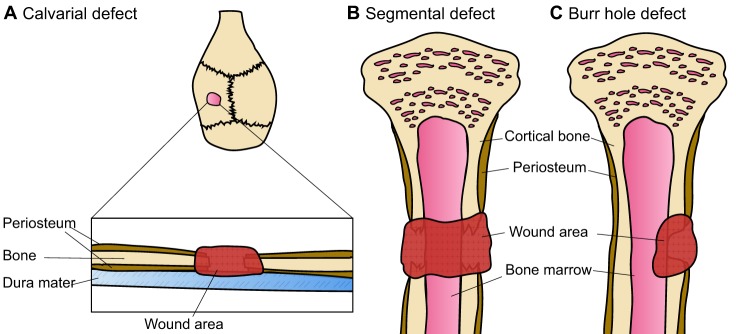
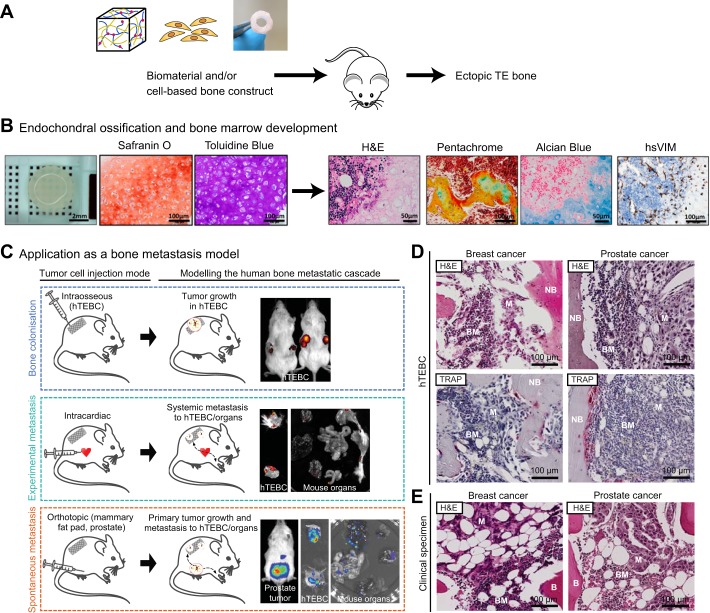
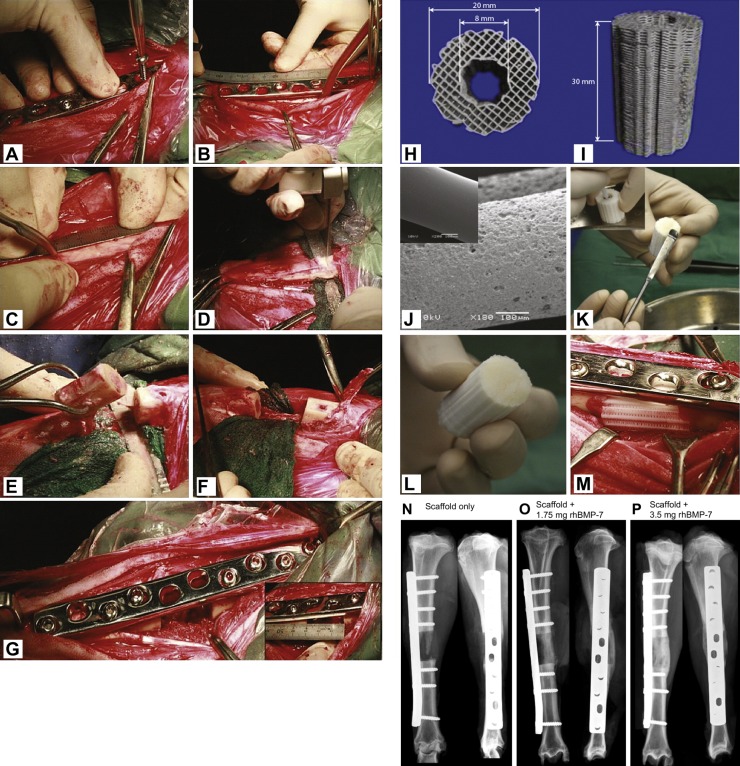
Tissue engineering and its clinical application, regenerative medicine, are instructing multiple approaches to aid in replacing bone loss after defects caused by trauma or cancer. In such cases, bone formation can be guided by engineered biodegradable and nonbiodegradable scaffolds with clearly defined architectural and mechanical properties informed by evidence-based research. With the ever-increasing expansion of bone tissue engineering and the pioneering research conducted to date, preclinical models are becoming a necessity to allow the engineered products to be translated to the clinic. In addition to creating smart bone scaffolds to mitigate bone loss, the field of tissue engineering and regenerative medicine is exploring methods to treat primary and secondary bone malignancies by creating models that mimic the clinical disease manifestation. This Review gives an overview of the preclinical testing in animal models used to evaluate bone regeneration concepts. Immunosuppressed rodent models have shown to be successful in mimicking bone malignancy via the implantation of human-derived cancer cells, whereas large animal models, including pigs, sheep and goats, are being used to provide an insight into bone formation and the effectiveness of scaffolds in induced tibial or femoral defects, providing clinically relevant similarity to human cases. Despite the recent progress, the successful translation of bone regeneration concepts from the bench to the bedside is rooted in the efforts of different research groups to standardise and validate the preclinical models for bone tissue engineering approaches.
组织工程及其临床应用,即再生医学,正在指导多种方法来帮助因创伤或癌症导致的缺损后骨缺失的修复。在这种情况下,可以通过工程化的可生物降解和不可生物降解的支架来引导骨形成,这些支架具有明确的结构和机械性能,并基于循证研究提供信息。随着骨组织工程的不断扩展和迄今为止开展的开创性研究,临床前模型已成为必要,以使工程产品能够转化为临床应用。除了制造智能骨支架来减轻骨丢失外,组织工程和再生医学领域还在探索通过创建模拟临床疾病表现的模型来治疗原发性和继发性骨恶性肿瘤的方法。本文综述了用于评估骨再生概念的临床前动物模型测试。免疫抑制性啮齿动物模型已成功地通过植入人源癌细胞来模拟骨恶性肿瘤,而大型动物模型,包括猪、绵羊和山羊,正被用于深入了解骨形成以及支架在诱导性胫骨或股骨缺损中的有效性,为人类病例提供了具有临床相关性的相似性。尽管最近取得了进展,但将骨再生概念从实验室成功转化为临床应用,关键在于不同研究小组努力使骨组织工程方法的临床前模型标准化和验证。