Key Laboratory of Xiamen City for Plant Introduction and Quarantine and Plant Products, Xiamen Overseas Chinese Subtropical Plant Introduction Garden, Xiamen, Fujian 361002, P.R. China.
Key Laboratory of Fujian Province for Physiology and Biochemistry of Subtropical Plant, Fujian Institute of Subtropical Botany, Xiamen, Fujian 361006, P.R. China.
Oncol Rep. 2018 Jun;39(6):2545-2552. doi: 10.3892/or.2018.6396. Epub 2018 Apr 23.
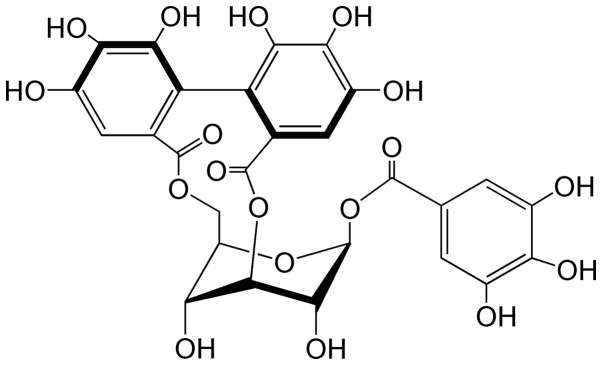
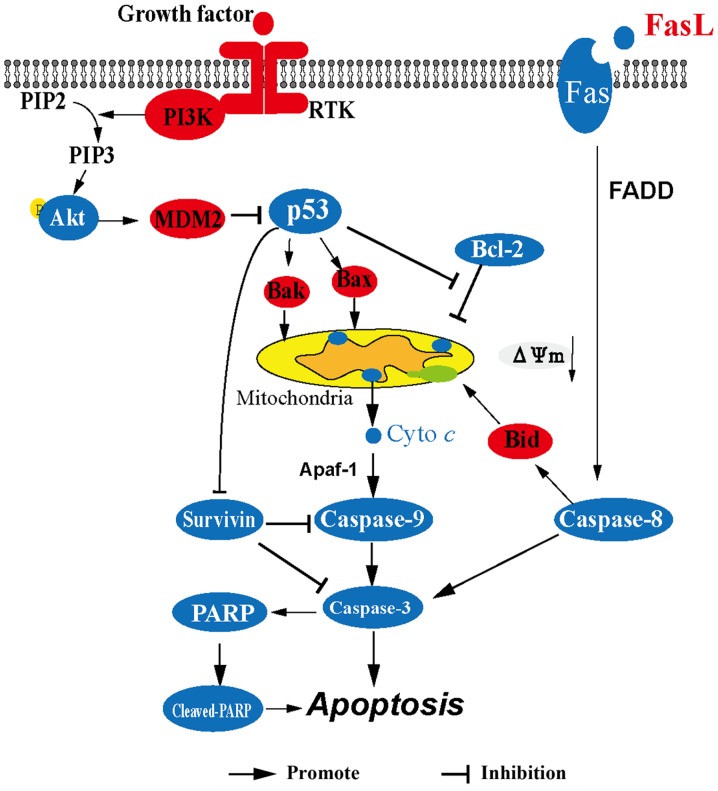
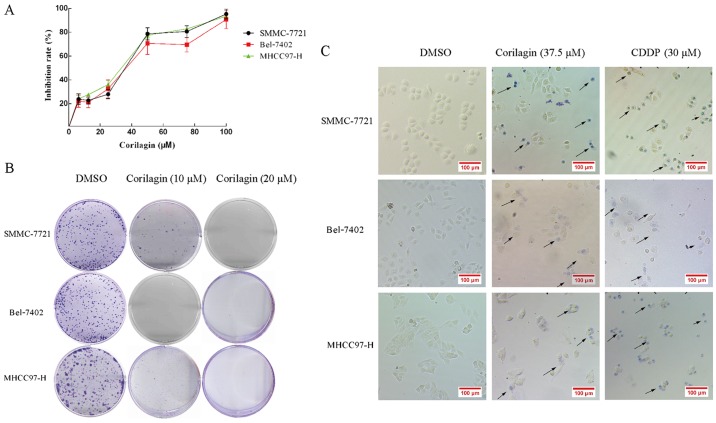
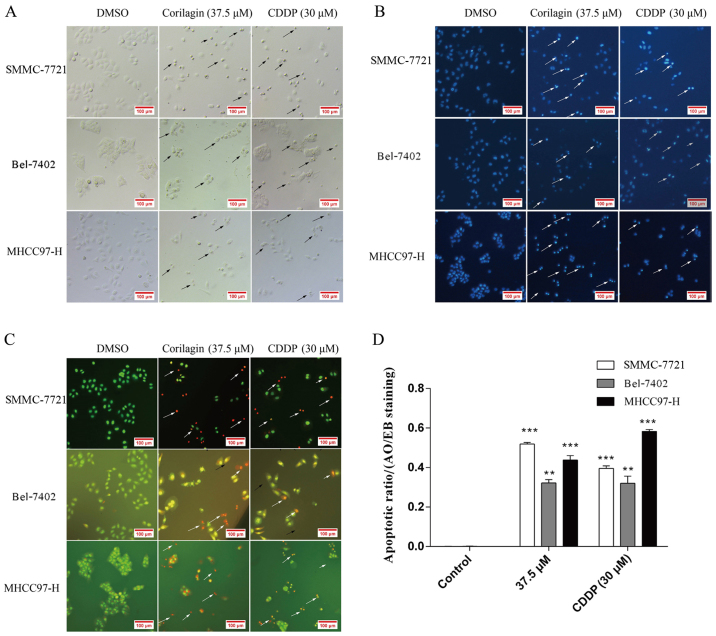
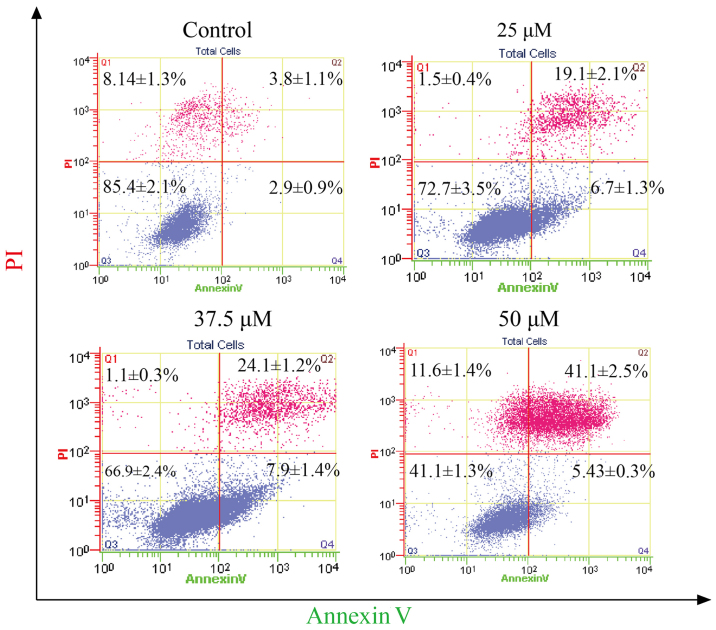
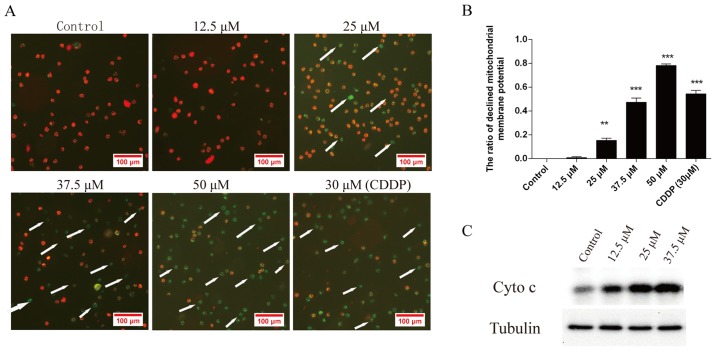
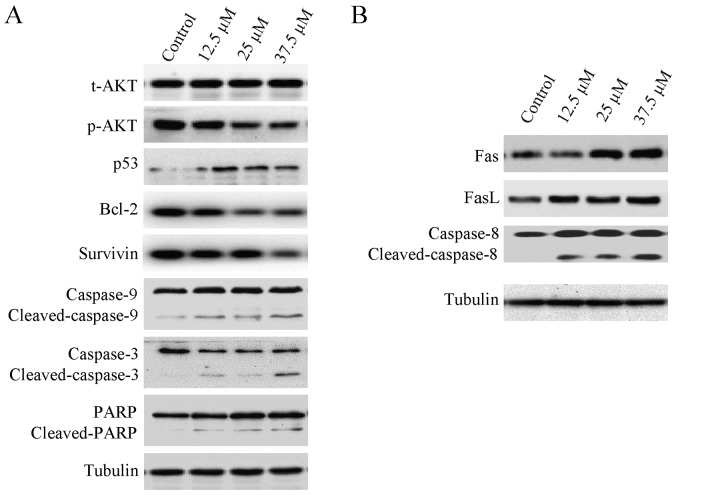
Corilagin, a gallotannin, is one of the major active components of many ethnopharmacological plants and exhibits antitumor, anti-inflammatory and antioxidative properties. In recent years, corilagin has provoked much attention due to its antitumor activity, yet the mechanisms attributed to its anticancer actions are largely unknown. In our previous research, our group reported that corilagin could inhibit the proliferation of hepatocellular carcinoma (HCC) cells by inducing G2/M phase arrest. In the present study, observation of the morphological changes showed that corilagin induced the apoptosis of HCC cells as determined by AO/EB and Hoechst 33258 staining assays. Furthermore, flow cytometric analysis was carried out to calculate the apoptotic rate which was 24.1% following treatment with corilagin (37.5 µM). At the molecular level, mitochondrial membrane potential assay and western blot analysis showed that the mitochondrial transmembrane potential was reduced and the rate of release of cytochrome c was increased, which led to the activation of caspase-9, caspase-3 and cleavage of PARP in the cytoplasm indicating activation of the mitochondrial apoptotic pathway. Moreover, following treatment with corilagin, we noted upregulation of Fas and FasL and activation of caspase-8 which represented activation of the death receptor pathway, and we also observed downregulation of Bcl-2 and survivin which was also attributed to the antitumor effect of corilagin. These results suggest that corilagin significantly induced the apoptosis of HCC cells through both the mitochondrial apoptotic pathway and the death receptor pathway, and corilagin is a potential complementary anticancer herbal drug for HCC therapy.
鞣花酸是一种棓单宁,是许多民族药理学植物的主要活性成分之一,具有抗肿瘤、抗炎和抗氧化作用。近年来,鞣花酸因其抗肿瘤活性而备受关注,但导致其抗癌作用的机制在很大程度上尚不清楚。在我们之前的研究中,我们的研究小组报告说,鞣花酸可以通过诱导 G2/M 期阻滞来抑制肝癌 (HCC) 细胞的增殖。在本研究中,形态观察表明,鞣花酸诱导 HCC 细胞凋亡,通过 AO/EB 和 Hoechst 33258 染色实验测定。此外,通过流式细胞术分析计算凋亡率,鞣花酸(37.5µM)处理后凋亡率为 24.1%。在分子水平上,线粒体膜电位测定和 Western blot 分析表明,线粒体跨膜电位降低,细胞色素 c 释放增加,导致细胞质中 caspase-9、caspase-3 的激活和 PARP 的裂解,表明线粒体凋亡途径的激活。此外,用鞣花酸处理后,我们观察到 Fas 和 FasL 的上调以及 caspase-8 的激活,这代表了死亡受体途径的激活,同时我们还观察到 Bcl-2 和 survivin 的下调,这也归因于鞣花酸的抗肿瘤作用。这些结果表明,鞣花酸通过线粒体凋亡途径和死亡受体途径显著诱导 HCC 细胞凋亡,鞣花酸是 HCC 治疗的一种有潜力的互补抗癌草药。