Departamento de Ecología y Biología Animal, Universidade de Vigo, 36310, Vigo, Spain.
Instituto de Ciencias del Mar, Consejo Superior de Investigaciones Científicas, Passeig Maritim de la Barceloneta 37-49, 08003, Barcelona, Spain.
ISME J. 2018 Jun;12(7):1836-1845. doi: 10.1038/s41396-018-0105-1. Epub 2018 Apr 25.
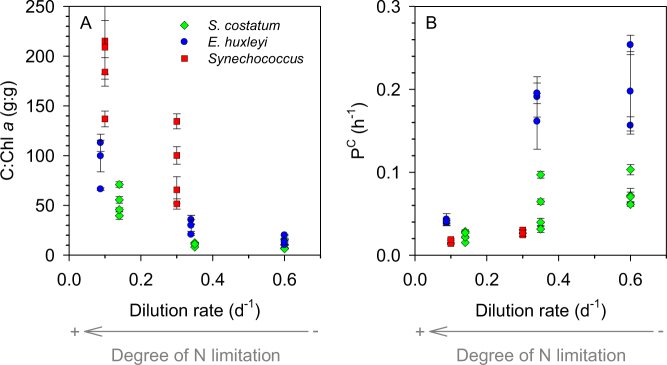
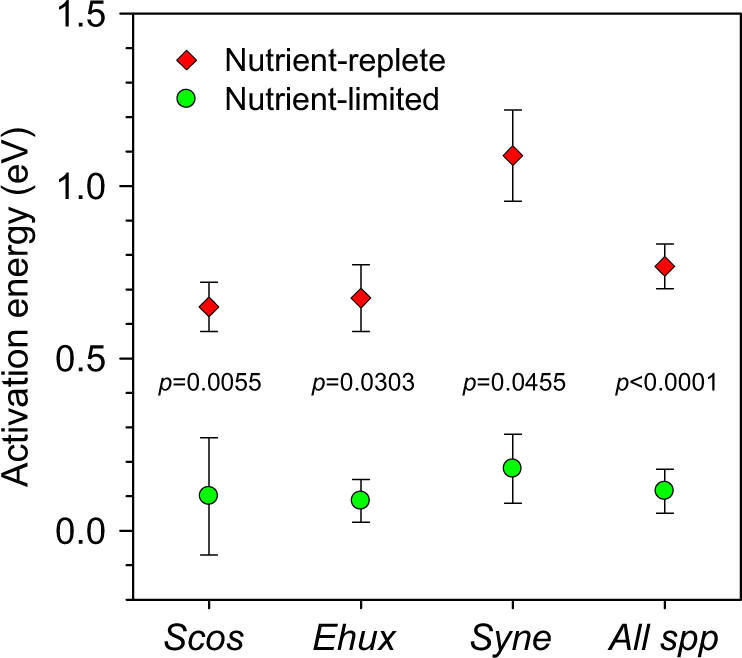
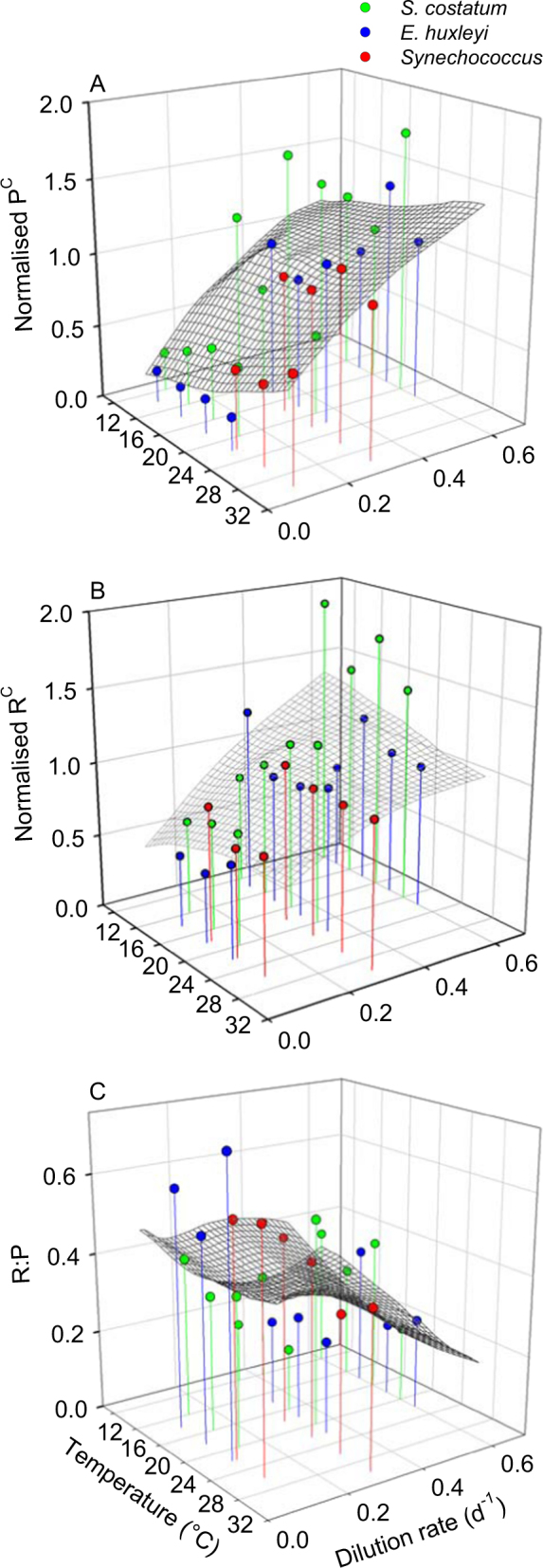
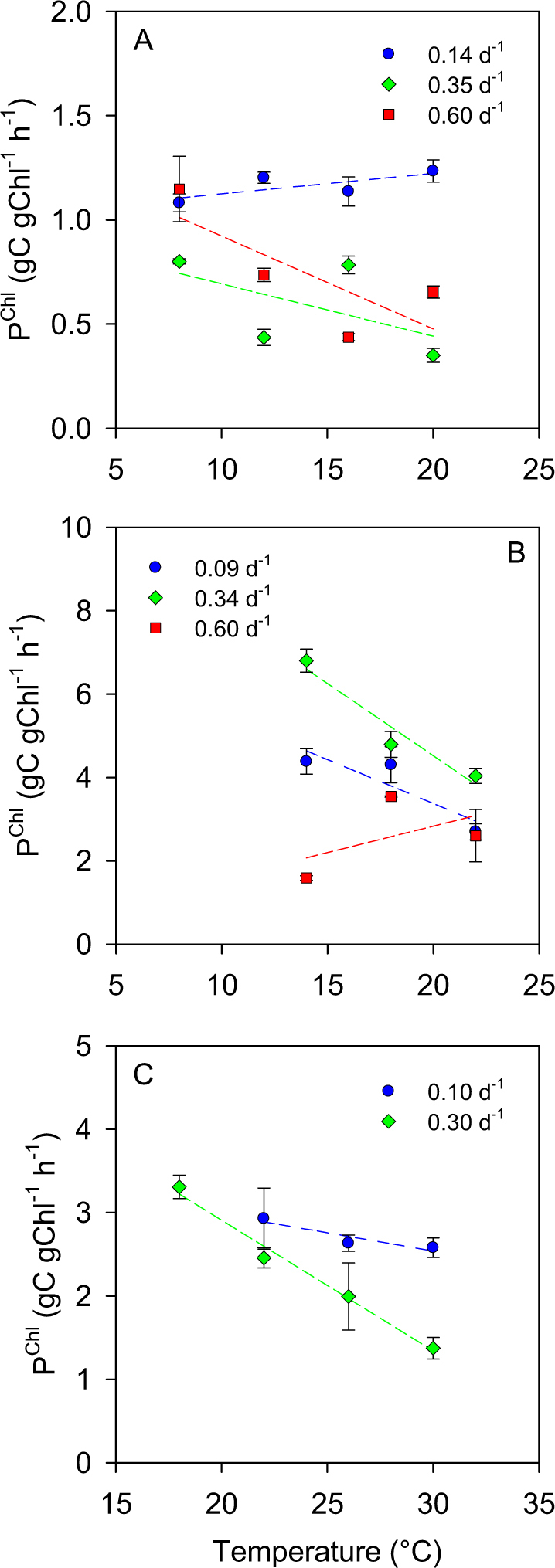
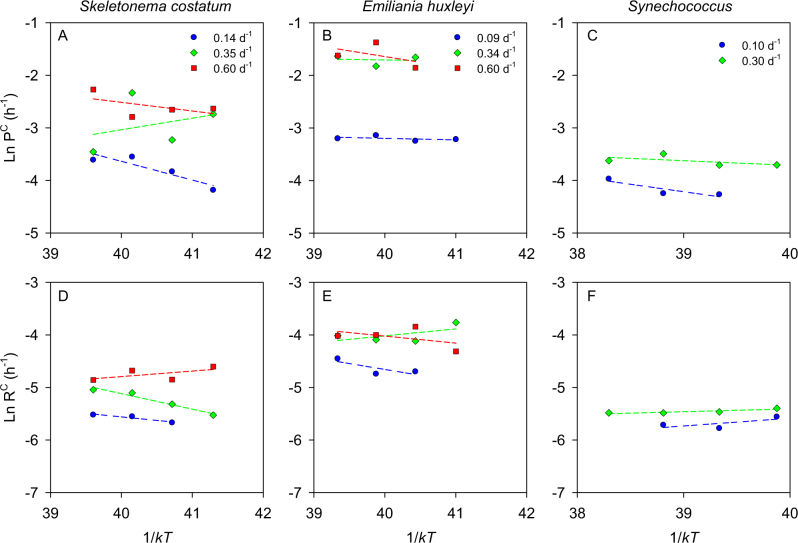
Climate warming has the potential to alter ecosystem function through temperature-dependent changes in individual metabolic rates. The temperature sensitivity of phytoplankton metabolism is especially relevant, since these microorganisms sustain marine food webs and are major drivers of biogeochemical cycling. Phytoplankton metabolic rates increase with temperature when nutrients are abundant, but it is unknown if the same pattern applies under nutrient-limited growth conditions, which prevail over most of the ocean. Here we use continuous cultures of three cosmopolitan and biogeochemically relevant species (Synechococcus sp., Skeletonema costatum and Emiliania huxleyi) to determine the temperature dependence (activation energy, E) of metabolism under different degrees of nitrogen (N) limitation. We show that both CO fixation and respiration rates increase with N supply but are largely insensitive to temperature. E of photosynthesis (0.11 ± 0.06 eV, mean ± SE) and respiration (0.04 ± 0.17 eV) under N-limited growth is significantly smaller than E of growth rate under nutrient-replete conditions (0.77 ± 0.06 eV). The reduced temperature dependence of metabolic rates under nutrient limitation can be explained in terms of enzyme kinetics, because both maximum reaction rates and half-saturation constants increase with temperature. Our results suggest that the direct, stimulating effect of rising temperatures upon phytoplankton metabolic rates will be circumscribed to ecosystems with high-nutrient availability.
气候变暖有可能通过个体代谢率随温度的变化来改变生态系统功能。浮游植物代谢的温度敏感性尤其重要,因为这些微生物维持着海洋食物网,是生物地球化学循环的主要驱动因素。在营养丰富的情况下,浮游植物的代谢率随温度升高而增加,但在氮(N)限制生长条件下,情况是否相同尚不清楚,因为这种条件在海洋中普遍存在。在这里,我们使用三种全球分布且具有生物地球化学意义的物种(聚球藻、骨条藻和海链藻)的连续培养物来确定不同氮限制程度下代谢的温度依赖性(激活能,E)。我们表明,CO2 固定和呼吸速率都随氮供应而增加,但对温度基本不敏感。在氮限制生长条件下,光合作用(0.11 ± 0.06 eV,平均值 ± SE)和呼吸作用(0.04 ± 0.17 eV)的 E 明显小于营养充足条件下生长率的 E(0.77 ± 0.06 eV)。在营养限制下,代谢率的温度依赖性降低可以用酶动力学来解释,因为最大反应速率和半饱和常数都随温度升高而增加。我们的研究结果表明,气温升高对浮游植物代谢率的直接刺激作用将局限于高营养供应的生态系统。