Grinstein Mor, Dingwall Heather L, Shah Rishita R, Capellini Terence D, Galloway Jenna L
Center for Regenerative Medicine, Department of Orthopaedic Surgery, Massachusetts General Hospital, Harvard Medical School, Boston, MA, USA.
Department of Human Evolutionary Biology, Harvard University, Cambridge, MA, USA.
PeerJ. 2018 Apr 24;6:e4664. doi: 10.7717/peerj.4664. eCollection 2018.
Mechanistic understanding of tendon molecular and cellular biology is crucial toward furthering our abilities to design new therapies for tendon and ligament injuries and disease. Recent transcriptomic and epigenomic studies in the field have harnessed the power of mouse genetics to reveal new insights into tendon biology. However, many mouse studies pool tendon tissues or use amplification methods to perform RNA analysis, which can significantly increase the experimental costs and limit the ability to detect changes in expression of low copy transcripts.
Single Achilles tendons were harvested from uninjured, contralateral injured, and wild type mice between three and five months of age, and RNA was extracted. RNA Integrity Number (RIN) and concentration were determined, and RT-qPCR gene expression analysis was performed.
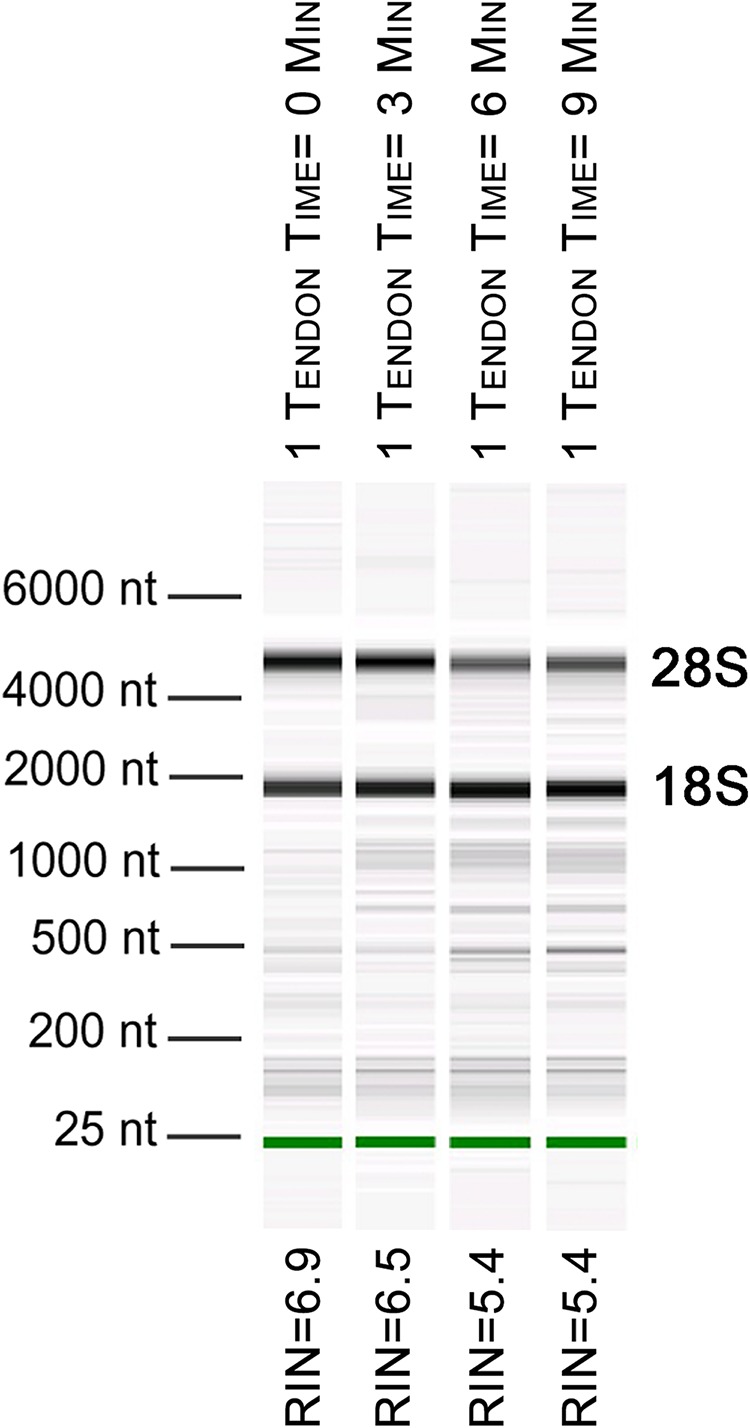
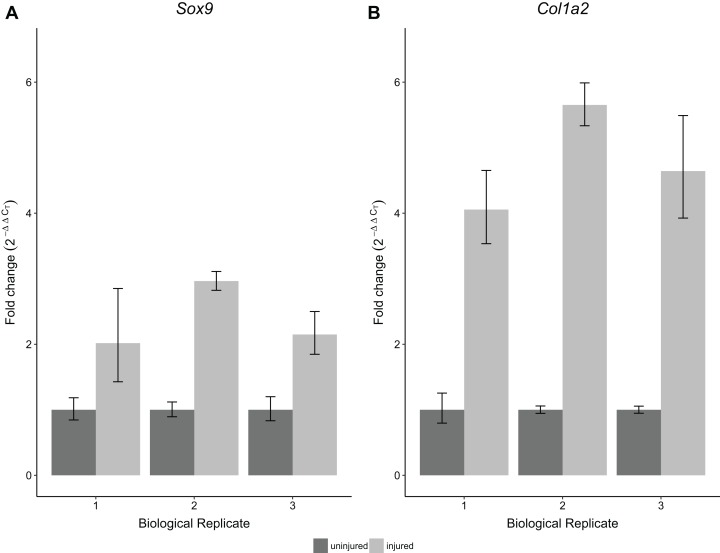
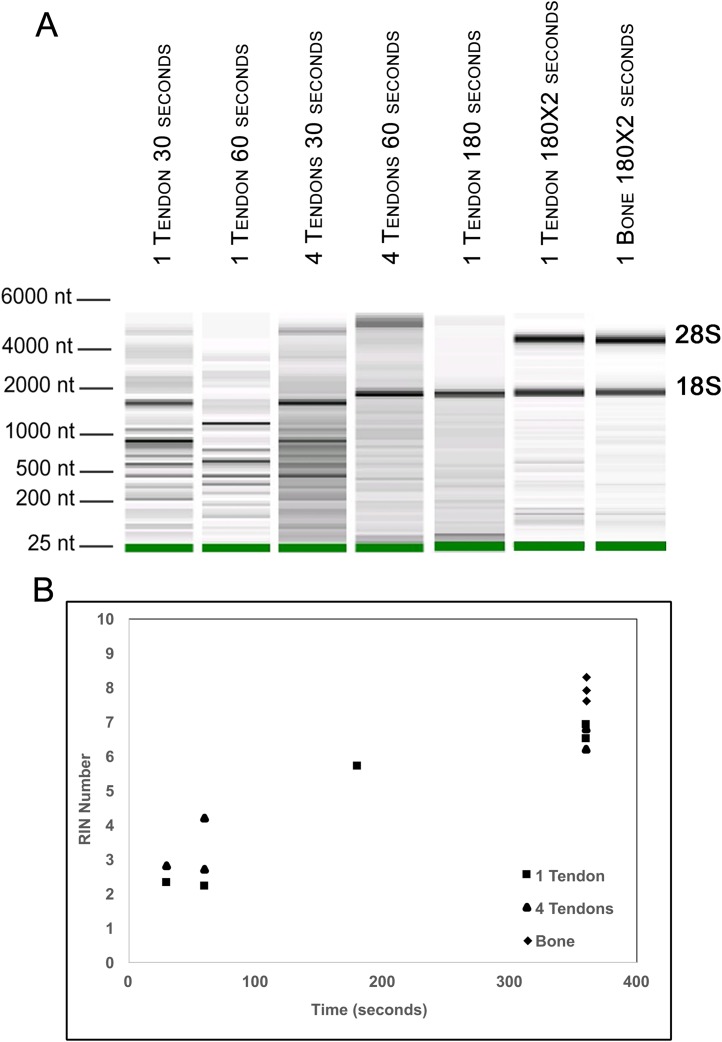
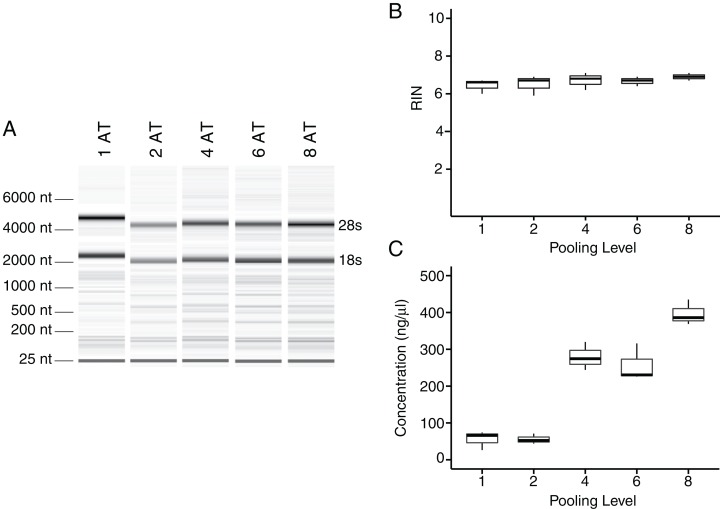
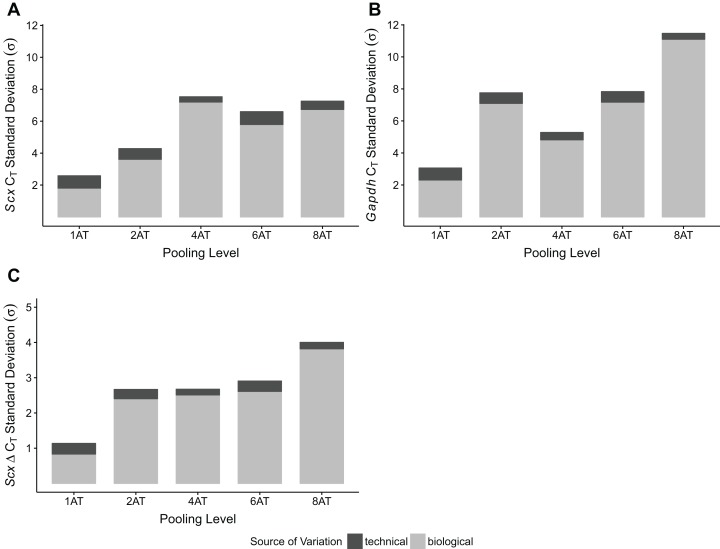
After testing several RNA extraction approaches on single adult mouse Achilles tendons, we developed a protocol that was successful at obtaining high RIN and sufficient concentrations suitable for RNA analysis. We found that the RNA quality was sensitive to the time between tendon harvest and homogenization, and the RNA quality and concentration was dependent on the duration of homogenization. Using this method, we demonstrate that analysis of gene expression in single mouse tendons reduces the biological variation caused by pooling tendons from multiple mice. We also show successful use of this approach to analyze and gene expression changes in injured compared with uninjured control tendons.
Our work presents a robust, cost-effective, and straightforward method to extract high quality RNA from a single adult mouse Achilles tendon at sufficient amounts for RT-qPCR as well as RNA-seq. We show this can reduce variation and decrease the overall costs associated with experiments. This approach can also be applied to other skeletal tissues, as well as precious human samples.
对肌腱分子和细胞生物学的机制理解对于提高我们设计肌腱和韧带损伤及疾病新疗法的能力至关重要。该领域最近的转录组学和表观基因组学研究利用小鼠遗传学的力量揭示了肌腱生物学的新见解。然而,许多小鼠研究将肌腱组织汇集在一起或使用扩增方法进行RNA分析,这会显著增加实验成本并限制检测低拷贝转录本表达变化的能力。
从3至5个月大的未受伤、对侧受伤和野生型小鼠中采集单根跟腱,并提取RNA。测定RNA完整性数值(RIN)和浓度,并进行RT-qPCR基因表达分析。
在对单根成年小鼠跟腱测试了几种RNA提取方法后,我们开发了一种方案,该方案成功获得了高RIN和适合RNA分析的足够浓度。我们发现RNA质量对肌腱采集与匀浆之间的时间敏感,并且RNA质量和浓度取决于匀浆持续时间。使用这种方法,我们证明对单根小鼠肌腱中的基因表达进行分析可减少因汇集多只小鼠的肌腱而导致的生物学变异。我们还展示了成功使用这种方法来分析与未受伤对照肌腱相比受伤肌腱中的 和 基因表达变化。
我们的工作提出了一种强大、经济高效且直接的方法,可从单根成年小鼠跟腱中提取足够量的高质量RNA用于RT-qPCR以及RNA测序。我们表明这可以减少变异并降低与实验相关的总体成本。这种方法也可应用于其他骨骼组织以及珍贵的人类样本。