Morais Faustino Bruno Miguel, Gomes Diogo, Faria Jaime, Juntunen Taneli, Gaspar Guilherme, Bianchi Catarina, Almeida António, Marques Ana, Tittonen Ilkka, Ferreira Isabel
CENIMAT/I3N, Departamento de Ciência dos Materiais, Faculdade de Ciências e Tecnologia, Universidade Nova de Lisboa, Caparica, 2829-516, Portugal.
Department of Electronics and Nanoengineering, Aalto University, P.O. Box 13500, FI-00076, Aalto, Finland.
Sci Rep. 2018 May 2;8(1):6867. doi: 10.1038/s41598-018-25106-3.
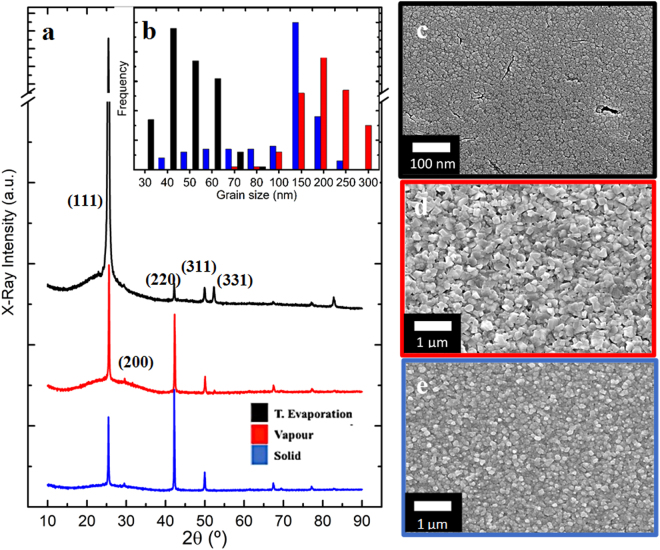
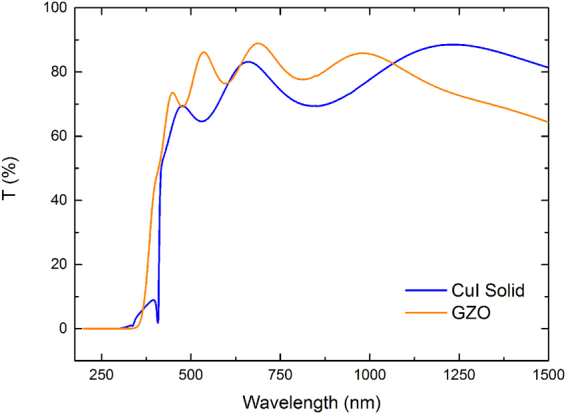
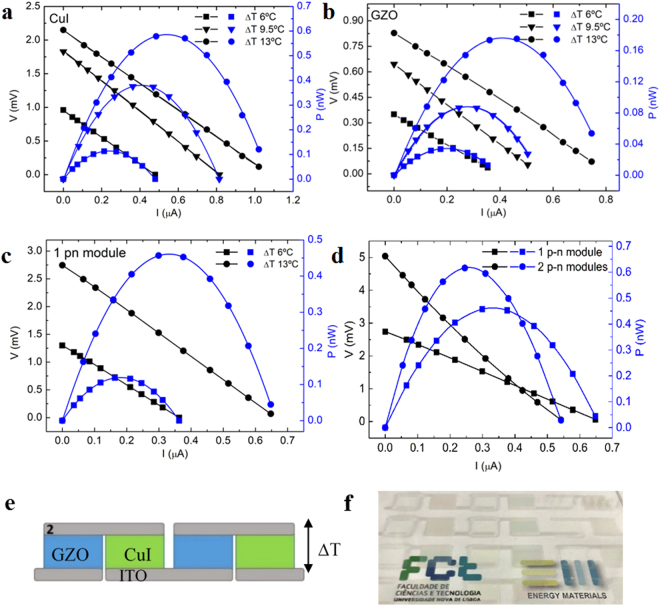
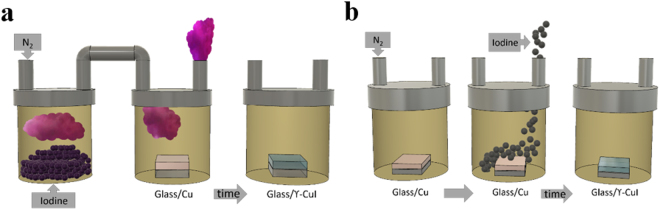
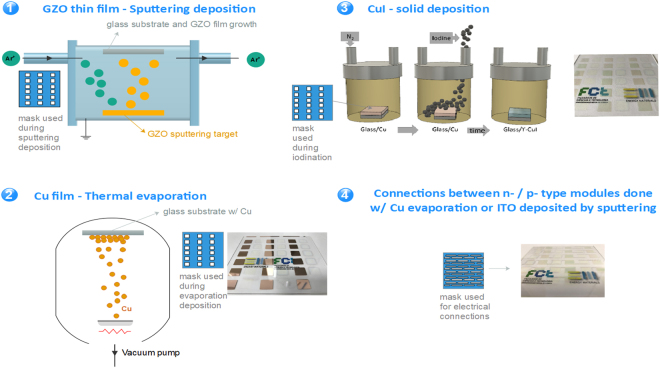
Developments in thermoelectric (TE) transparent p-type materials are scarce and do not follow the trend of the corresponding n-type materials - a limitation of the current transparent thermoelectric devices. P-type thermoelectric thin films of CuI have been developed by three different methods in order to maximise optical transparency (>70% in the visible range), electrical (σ = 1.1 × 10 Sm) and thermoelectric properties (ZT = 0.22 at 300 K). These have been applied in the first planar fully transparent p-n type TE modules where gallium-doped zinc oxide (GZO) thin films were used as the n-type element and indium thin oxide (ITO) thin films as electrodes. A thorough study of power output in single elements and p-n modules electrically connected in series and thermally connected in parallel is inclosed. This configuration allows for a whole range of highly transparent thermoelectric applications.
热电(TE)透明p型材料的发展较为稀缺,且未跟上相应n型材料的发展趋势——这是当前透明热电器件的一个局限。为了实现最大光学透明度(可见光范围内>70%)、电学性能(σ = 1.1×10 Sm)和热电性能(300 K时ZT = 0.22),通过三种不同方法制备了CuI的p型热电薄膜。这些薄膜已应用于首个平面全透明p-n型TE模块中,其中掺镓氧化锌(GZO)薄膜用作n型元件,氧化铟锡(ITO)薄膜用作电极。文中还对串联电连接和并联热连接的单元素及p-n模块的功率输出进行了全面研究。这种配置适用于一系列高度透明的热电应用。