Department of Biomedical Informatics, Harvard Medical School, Boston, MA, USA; Equal contributions.
Department of Biomedical Informatics, Harvard Medical School, Boston, MA, USA; Bioinformatics and Integrative Genomics PhD Program, Harvard Medical School, Boston, MA, USA; Equal contributions.
Trends Genet. 2018 Jul;34(7):545-557. doi: 10.1016/j.tig.2018.04.003. Epub 2018 May 3.
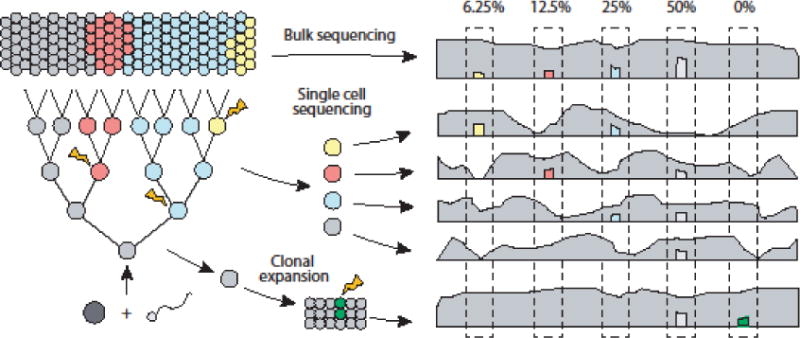
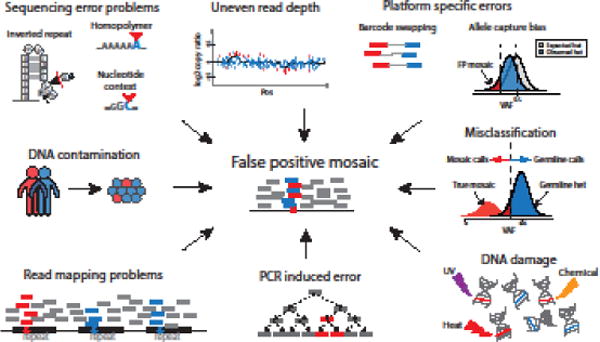
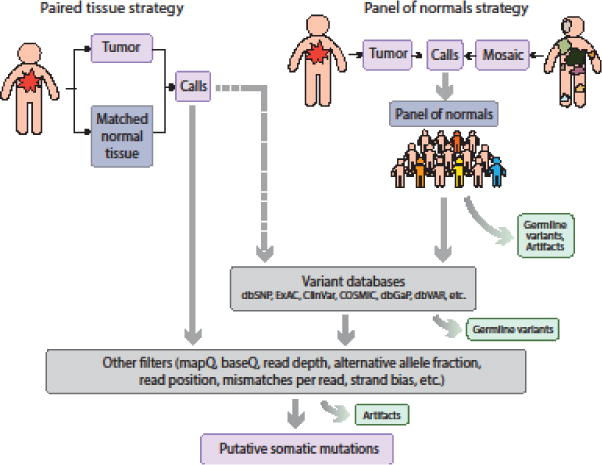
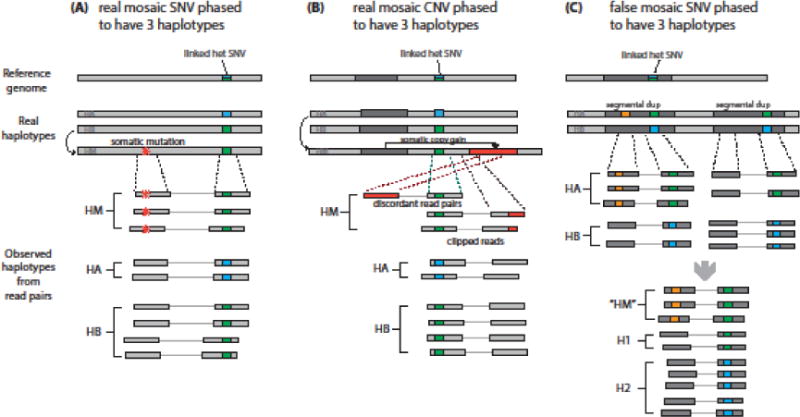
Somatic mutations have been studied extensively in the context of cancer. Recent studies have demonstrated that high-throughput sequencing data can be used to detect somatic mutations in non-tumor cells. Analysis of such mutations allows us to better understand the mutational processes in normal cells, explore cell lineages in development, and examine potential associations with age-related disease. We describe here approaches for characterizing somatic mutations in normal and non-tumor disease tissues. We discuss several experimental designs and common pitfalls in somatic mutation detection, as well as more recent developments such as phasing and linked-read technology. With the dramatically increasing numbers of samples undergoing genome sequencing, bioinformatic analysis will enable the characterization of somatic mutations and their impact on non-cancer tissues.
体细胞突变在癌症领域已经得到了广泛的研究。最近的研究表明,高通量测序数据可用于检测非肿瘤细胞中的体细胞突变。分析这些突变可以帮助我们更好地了解正常细胞中的突变过程,探索发育中的细胞谱系,并研究与年龄相关疾病的潜在关联。我们在这里描述了在正常和非肿瘤疾病组织中描述体细胞突变的方法。我们讨论了体细胞突变检测中的几种实验设计和常见陷阱,以及最近的发展,如相位和链接读取技术。随着越来越多的样本进行基因组测序,生物信息学分析将能够描述体细胞突变及其对非癌症组织的影响。