Moro Kazuki, Kawaguchi Tsutomu, Tsuchida Junko, Gabriel Emmanuel, Qi Qianya, Yan Li, Wakai Toshifumi, Takabe Kazuaki, Nagahashi Masayuki
Division of Digestive and General Surgery, Niigata University Graduate School of Medical and Dental Sciences, Niigata City 951-8510, Japan.
Breast Surgery, Department of Surgical Oncology, Roswell Park Comprehensive Cancer Center, Buffalo, New York 14263, USA.
Oncotarget. 2018 Apr 13;9(28):19874-19890. doi: 10.18632/oncotarget.24903.
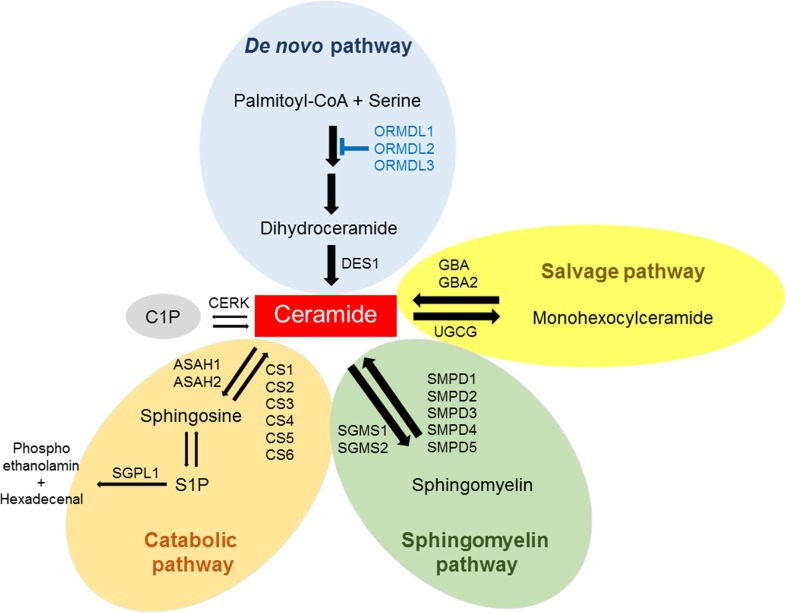
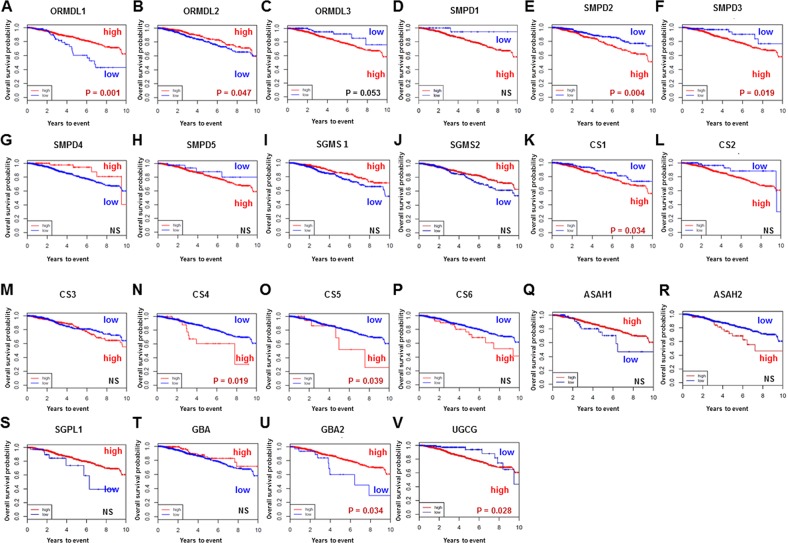
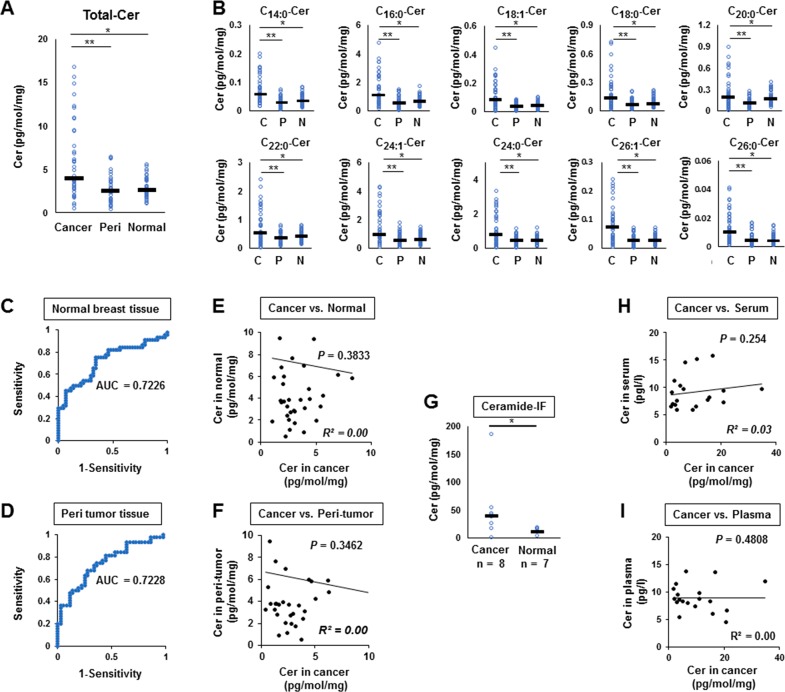
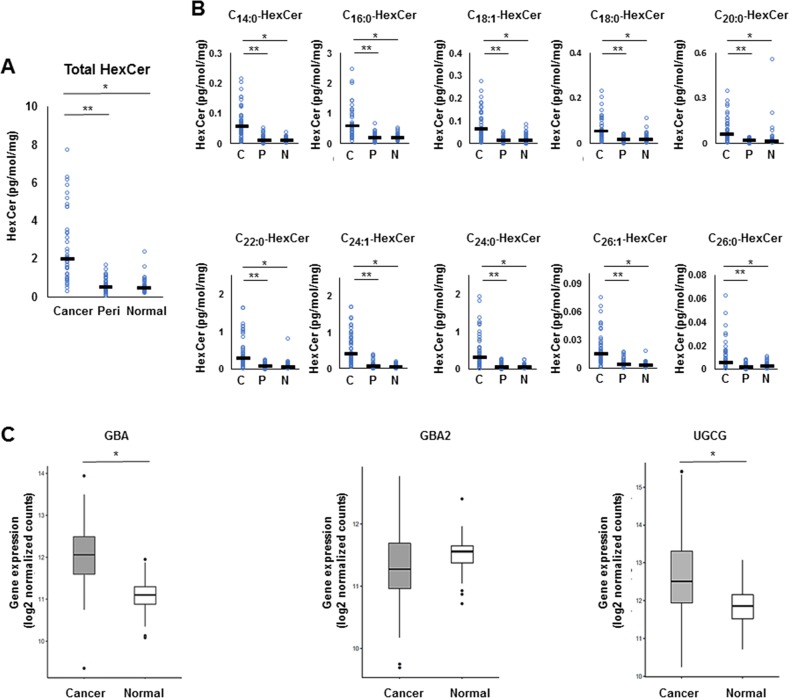
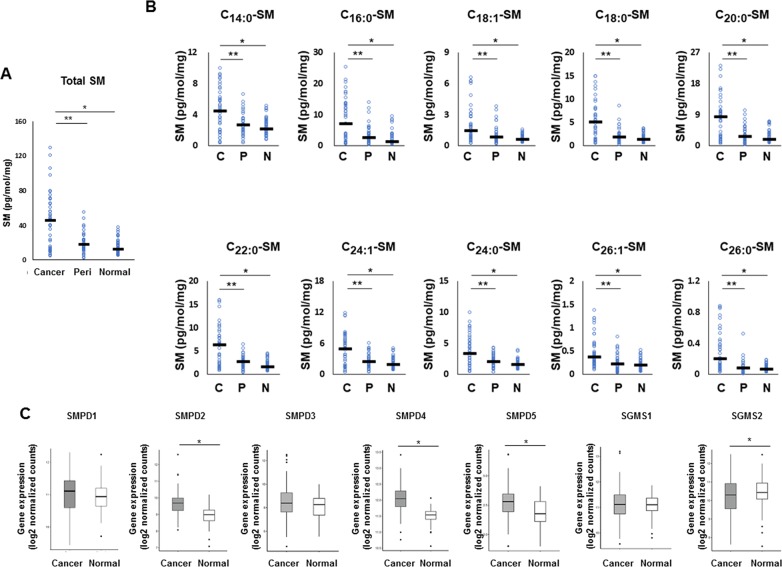
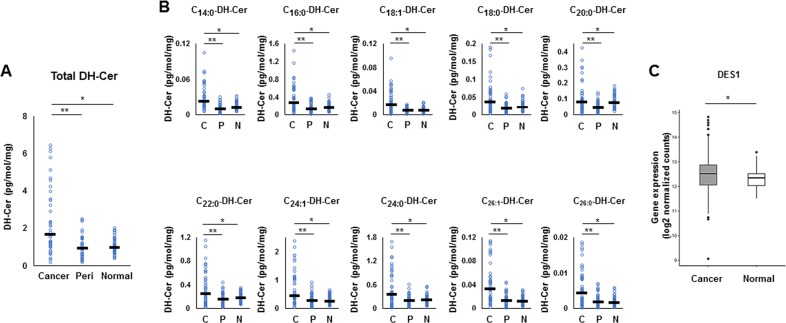
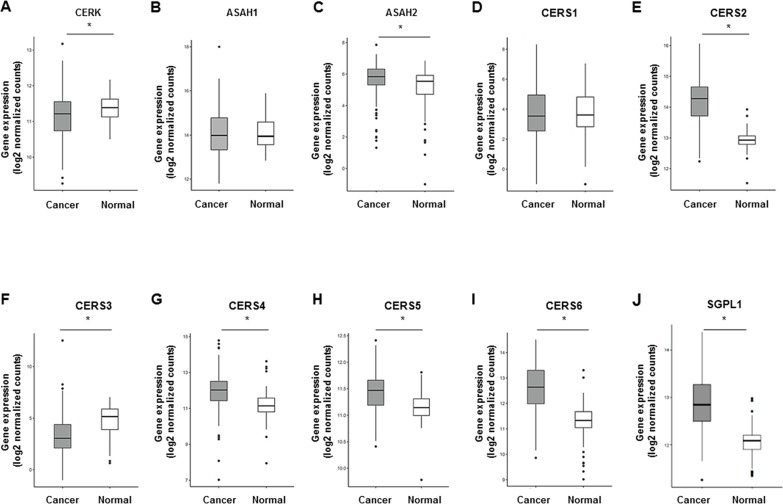
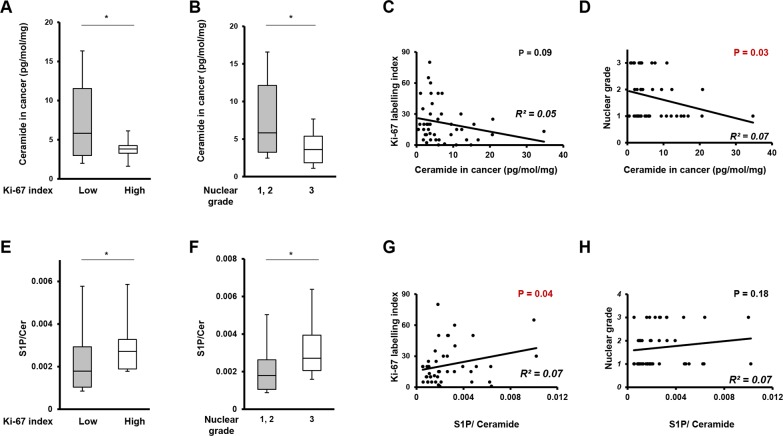
Sphingolipids have emerged as key regulatory molecules in cancer cell survival and death. Although important roles of sphingolipids in breast cancer progression have been reported in experimental models, their roles in human patients are yet to be revealed. The aim of this study was to investigate the ceramide levels and its biosynthesis pathways in human breast cancer patients. Breast cancer, peri-tumor and normal breast tissue samples were collected from surgical specimens from a series of 44 patients with breast cancer. The amount of sphingolipid metabolites in the tissue were determined by mass spectrometry. The Cancer Genome Atlas was used to analyze gene expression related to the sphingolipid metabolism. Ceramide levels were higher in breast cancer tissue compared to both normal and peri-tumor breast tissue. Substrates and enzymes that generate ceramide were significantly increased in all three ceramide biosynthesis pathways in cancer. Further, higher levels of ceramide in breast cancer were associated with less aggressive cancer biology presented by Ki-67 index and nuclear grade of the cancer. Interestingly, patients with higher gene expressions of enzymes in the three major ceramide synthesis pathways showed significantly worse prognosis. This is the first study to reveal the clinical relevance of ceramide metabolism in breast cancer patients. We demonstrated that ceramide levels in breast cancer tissue were significantly higher than those in normal tissue, with activation of the three ceramide biosynthesis pathways. We also identified that ceramide levels have a significant association with aggressive phenotype and its enzymes have prognostic impact on breast cancer patients.
鞘脂已成为癌细胞存活和死亡的关键调节分子。尽管在实验模型中已报道鞘脂在乳腺癌进展中起重要作用,但其在人类患者中的作用尚待揭示。本研究的目的是调查人类乳腺癌患者中神经酰胺水平及其生物合成途径。从44例乳腺癌患者的手术标本中收集乳腺癌、肿瘤周边和正常乳腺组织样本。通过质谱法测定组织中鞘脂代谢物的含量。利用癌症基因组图谱分析与鞘脂代谢相关的基因表达。与正常乳腺组织和肿瘤周边乳腺组织相比,乳腺癌组织中的神经酰胺水平更高。在癌症的所有三种神经酰胺生物合成途径中,生成神经酰胺的底物和酶均显著增加。此外,乳腺癌中较高水平的神经酰胺与由Ki-67指数和癌症核分级所呈现的侵袭性较低的癌症生物学特征相关。有趣的是,在三种主要神经酰胺合成途径中酶基因表达较高的患者预后明显较差。这是第一项揭示神经酰胺代谢在乳腺癌患者中的临床相关性的研究。我们证明,乳腺癌组织中的神经酰胺水平显著高于正常组织,且三种神经酰胺生物合成途径均被激活。我们还发现,神经酰胺水平与侵袭性表型显著相关,其相关酶对乳腺癌患者具有预后影响。