Department of Biological Sciences, College of Biological Science and Biotechnology, Chungnam National University, Daejeon, 34134, Republic of Korea.
Department of Life Science, Sogang University, Seoul, 04107, Republic of Korea.
BMC Plant Biol. 2018 May 8;18(1):82. doi: 10.1186/s12870-018-1290-9.
Water-soluble anthocyanin pigments are important ingredients in health-improving supplements and valuable for the food industry. Although great attention has been paid to the breeding and production of crops containing high levels of anthocyanin, genetic variation in red or purple cabbages (Brassica oleracea var. capitata F. rubra) has not yet been characterized at the molecular level. In this study, we identified the mechanism responsible for the establishment of purple color in cabbages.
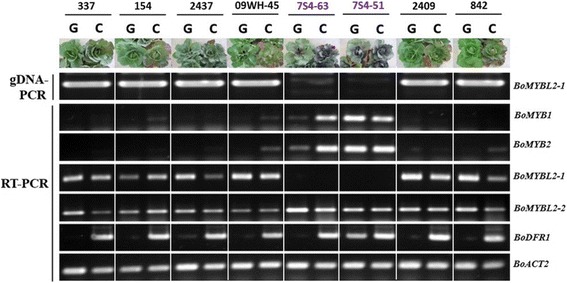
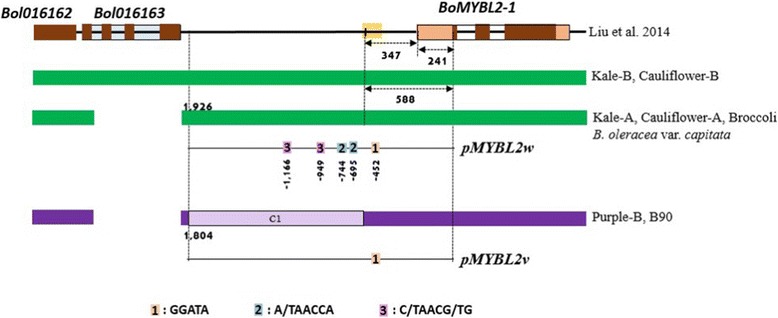
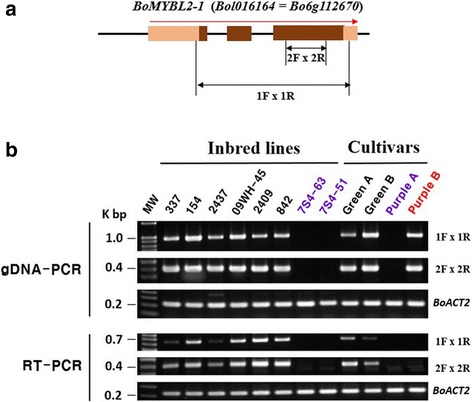
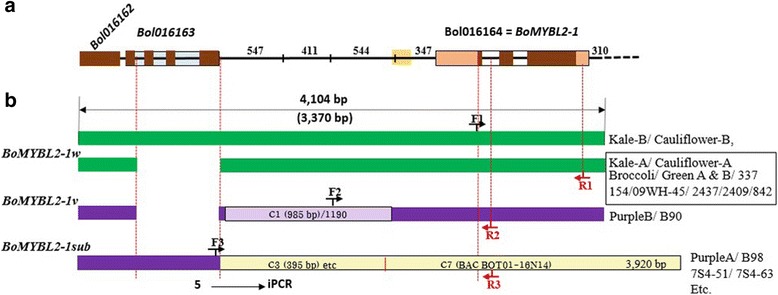
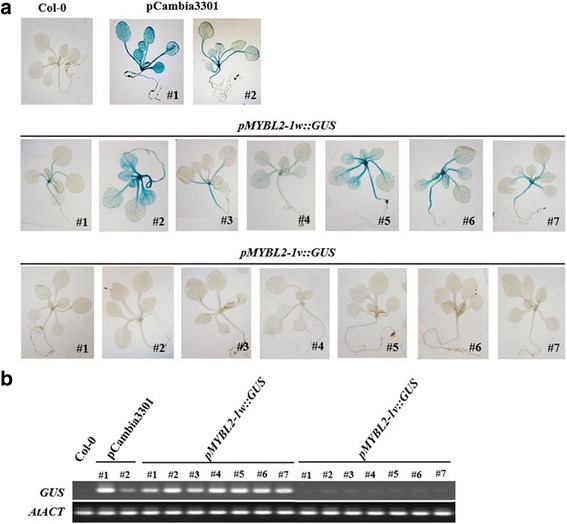
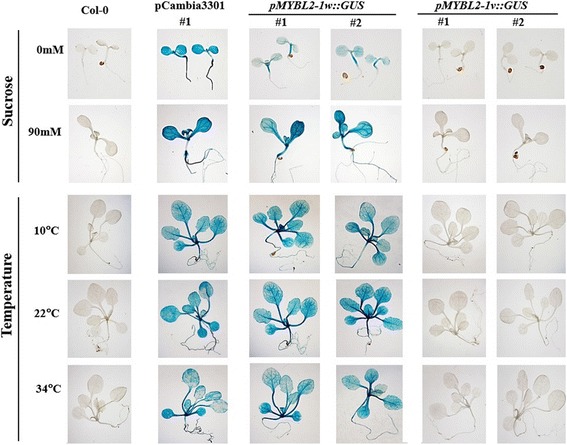
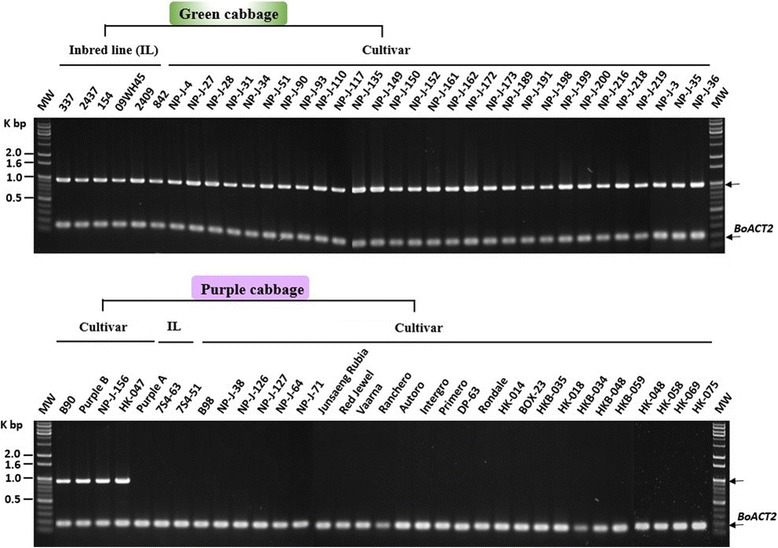
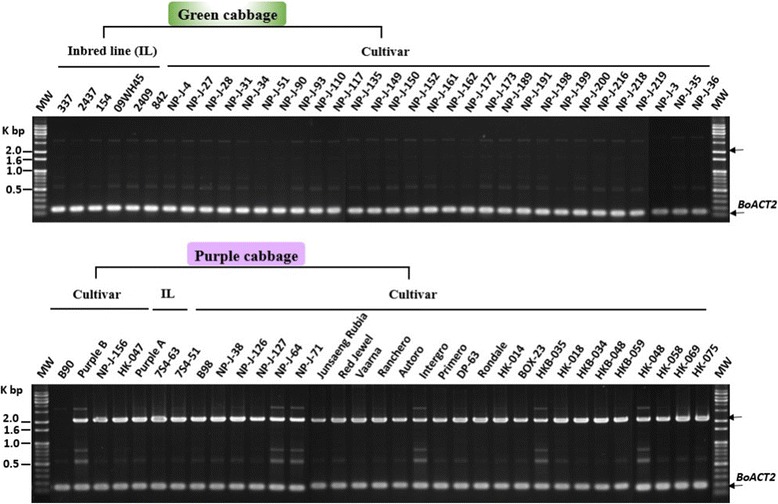
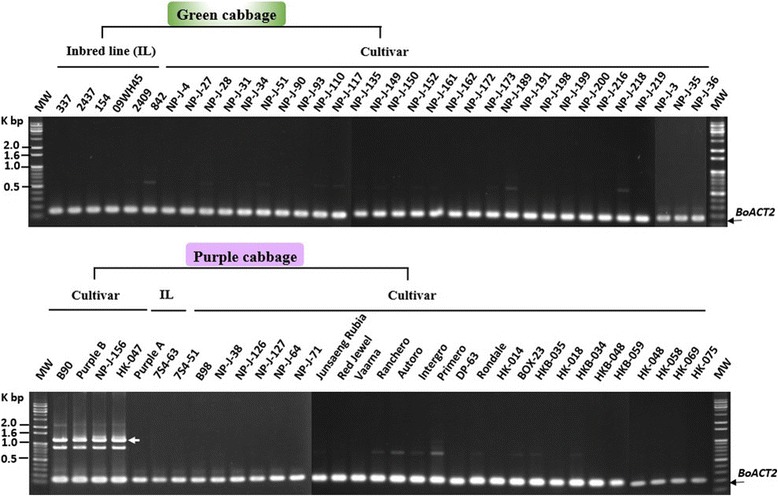
BoMYBL2-1 is one of the regulatory genes in the anthocyanin biosynthesis pathway in cabbages. It is a repressor whose expression is inversely correlated to anthocyanin synthesis and is not detectable in purple cabbages. Sequence analysis of purple cabbages revealed that most lacked BoMYBL2-1 coding sequences, although a few had a substitution in the region of the promoter 347 bp upstream of the gene that was associated with an absence of BoMYBL2-1 expression. Lack of transcriptional activity of the substitution-containing promoter was confirmed using transgenic Arabidopsis plants transformed with promoter::GUS fusion constructs. The finding that the defect in BoMYBL2-1 expression was solely responsible for purple coloration in cabbages was further demonstrated using genomic PCR and RT-PCR analyses of many other structural and regulatory genes in anthocyanin biosynthesis. Molecular markers for purple cabbages were developed and validated using 69 cabbage lines.
Expression of BoMYBL2-1 was inversely correlated to anthocyanin content, and purple color in cabbages resulted from a loss of BoMYBL2-1 expression, caused by either the promoter substitution or deletion of the gene. This is the first report of molecular markers that distinguish purple cabbages. Such markers will be useful for the production of intraspecific and interspecific hybrids for functional foods, and for industrial purposes requiring high anthocyanin content.
水溶性花色苷类色素是具有保健功能的膳食补充剂的重要成分,对食品工业也具有重要价值。尽管人们非常关注高花色苷含量作物的培育和生产,但尚未在分子水平上对红或紫甘蓝( Brassica oleracea var. capitata F. rubra )的遗传变异进行表征。在本研究中,我们鉴定了导致甘蓝呈现紫色的机制。
BoMYBL2-1 是甘蓝花色苷生物合成途径中的调控基因之一。它是一种阻遏物,其表达与花色苷合成呈负相关,在紫甘蓝中无法检测到。对紫甘蓝的序列分析表明,大多数紫甘蓝缺乏 BoMYBL2-1 编码序列,尽管少数紫甘蓝在基因上游 347bp 的启动子区域存在替换,这与 BoMYBL2-1 表达缺失有关。使用含有启动子的转基因拟南芥植物转化构建体::GUS 融合构建物证实了含有替换的启动子缺乏转录活性。利用基因组 PCR 和花色苷生物合成中许多其他结构和调控基因的 RT-PCR 分析进一步证明,BoMYBL2-1 表达的缺陷是导致甘蓝呈现紫色的唯一原因。开发并验证了用于紫甘蓝的分子标记,使用了 69 个甘蓝品系。
BoMYBL2-1 的表达与花色苷含量呈负相关,而甘蓝的紫色是由于 BoMYBL2-1 表达的丧失所致,这是由于启动子替换或基因缺失所致。这是第一个区分紫甘蓝的分子标记的报道。此类标记将有助于生产具有特定功能的同种和种间杂交品种的功能性食品,也有助于工业上需要高花色苷含量的目的。