Centre for Human Metabolomics, Faculty of Natural Sciences and Agriculture, North-West University (Potchefstroom Campus), Potchefstroom, South Africa.
Department of Statistics, Faculty of Natural Sciences and Agriculture, North-West University (Potchefstroom Campus), Potchefstroom, South Africa.
PLoS One. 2018 May 10;13(5):e0196850. doi: 10.1371/journal.pone.0196850. eCollection 2018.
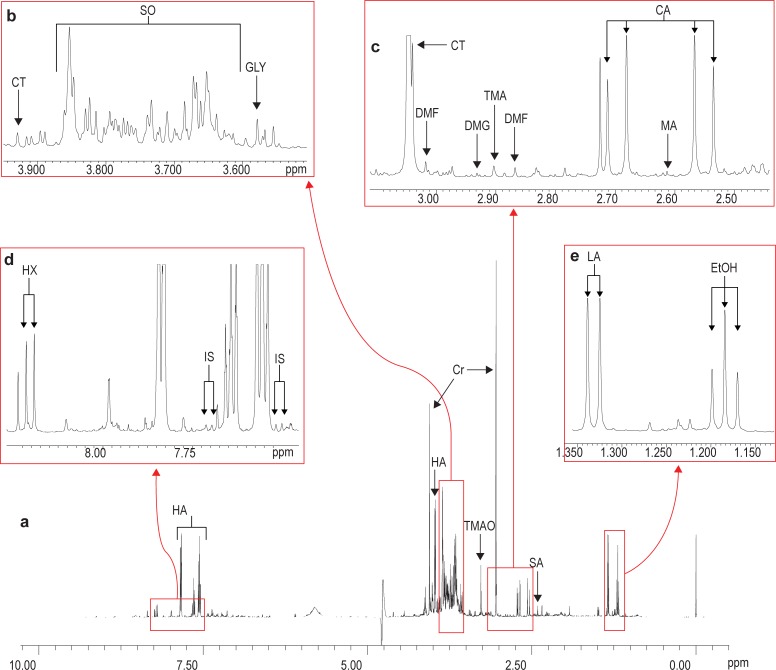
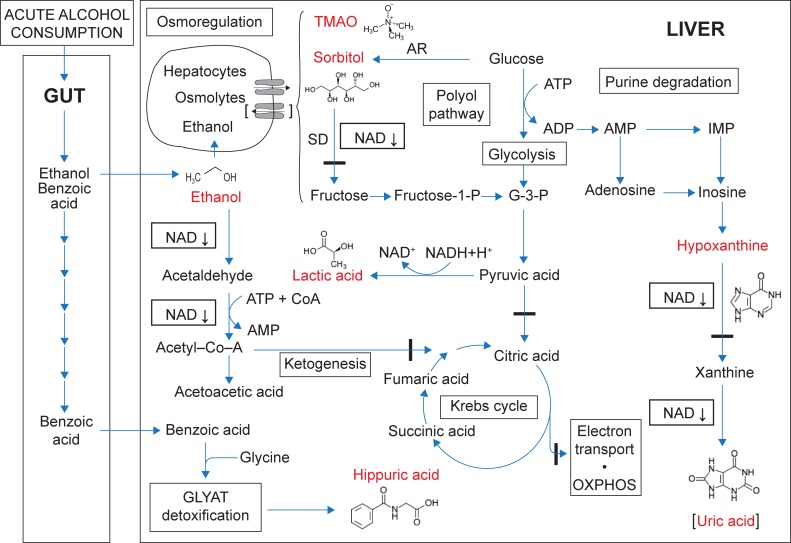
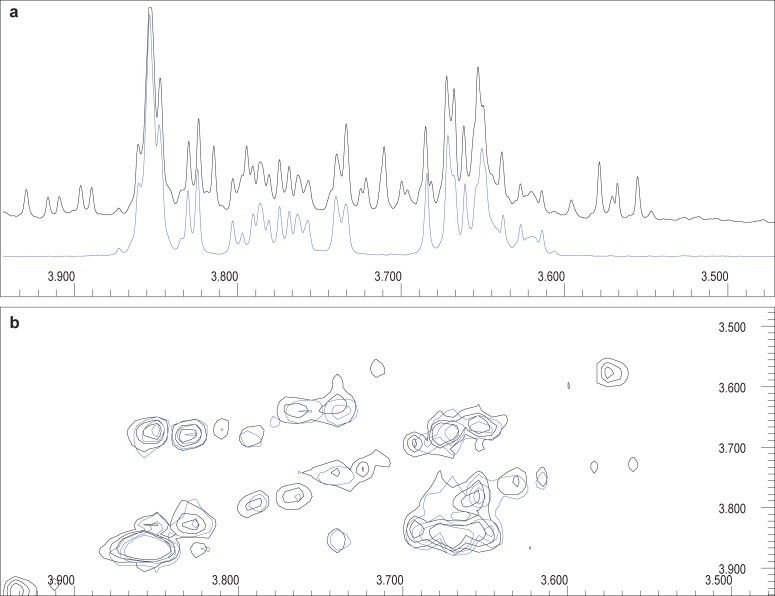
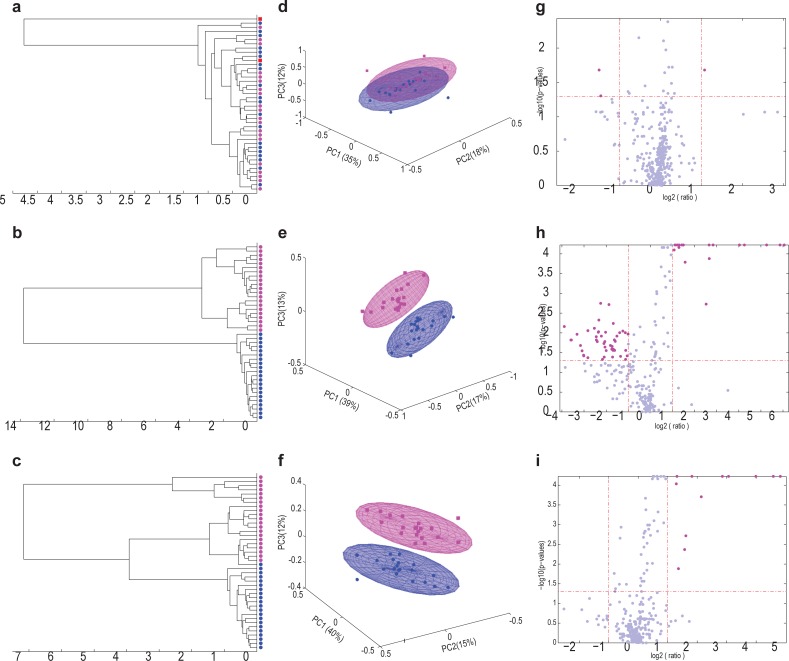
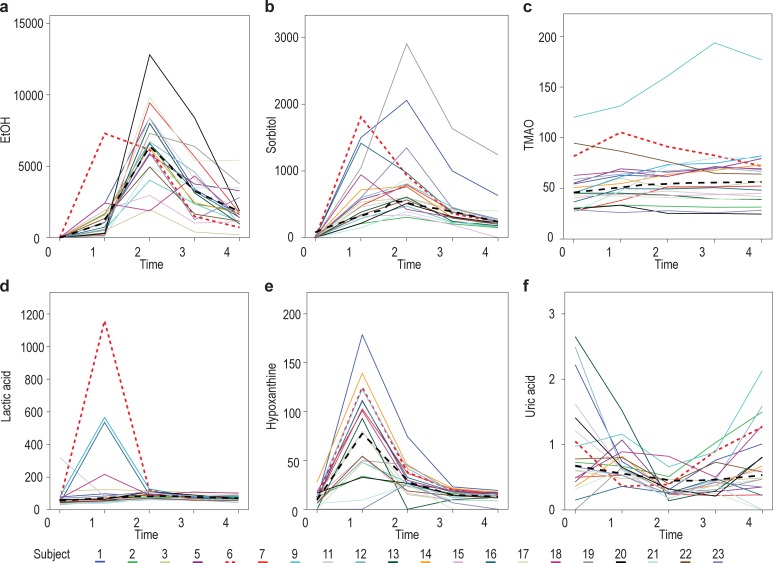
Metabolomics studies of disease conditions related to chronic alcohol consumption provide compelling evidence of several perturbed metabolic pathways underlying the pathophysiology of alcoholism. The objective of the present study was to utilize proton nuclear magnetic resonance (1H-NMR) spectroscopy metabolomics to study the holistic metabolic consequences of acute alcohol consumption in humans. The experimental design was a cross-over intervention study which included a number of substances to be consumed-alcohol, a nicotinamide adenine dinucleotide (NAD) supplement, and a benzoic acid-containing flavoured water vehicle. The experimental subjects-24 healthy, moderate-drinking young men-each provided six hourly-collected urine samples for analysis. Complete data sets were obtained from 20 of the subjects and used for data generation, analysis and interpretation. The results from the NMR approach produced complex spectral data, which could be resolved sufficiently through the application of a combination of univariate and multivariate methods of statistical analysis. The metabolite profiles resulting from acute alcohol consumption indicated that alcohol-induced NAD+ depletion, and the production of an excessive amount of reducing equivalents, greatly perturbed the hepatocyte redox homeostasis, resulting in essentially three major metabolic disturbances-up-regulated lactic acid metabolism, down-regulated purine catabolism and osmoregulation. Of these, the urinary excretion of the osmolyte sorbitol proved to be novel, and suggests hepatocyte swelling due to ethanol influx following acute alcohol consumption. Time-dependent metabolomics investigations, using designed interventions, provide a way of interpreting the variation induced by the different factors of a designed experiment, thereby also giving methodological significance to this study. The outcomes of this approach have the potential to significantly advance our understanding of the serious impact of the pathophysiological perturbations which arise from the consumption of a single, large dose of alcohol-a simulation of a widespread, and mostly naive, social practice.
代谢组学研究与慢性酒精消费相关的疾病状况提供了令人信服的证据,证明了酒精中毒病理生理学中存在几种代谢途径紊乱。本研究的目的是利用质子核磁共振(1H-NMR)代谢组学研究人类急性酒精消费的整体代谢后果。实验设计是一项交叉干预研究,包括一些要消耗的物质-酒精、烟酰胺腺嘌呤二核苷酸(NAD)补充剂和一种含苯甲酸的风味水载体。实验对象-24 名健康、适度饮酒的年轻男性-每人提供 6 小时收集的尿液样本进行分析。完整的数据集来自 20 名受试者,用于数据生成、分析和解释。NMR 方法产生的复杂光谱数据通过应用单变量和多变量统计分析方法的组合可以得到充分解决。来自急性酒精消费的代谢物谱表明,酒精诱导的 NAD+耗竭和过多还原当量的产生,极大地扰乱了肝细胞氧化还原稳态,导致三种主要代谢紊乱-上调乳酸代谢、下调嘌呤分解代谢和渗透压调节。其中,渗透调节剂山梨糖醇的尿排泄被证明是新颖的,提示由于急性酒精消费后乙醇流入,肝细胞肿胀。使用设计干预进行时间依赖性代谢组学研究提供了一种解释设计实验中不同因素引起的变化的方法,从而也使本研究具有方法学意义。这种方法的结果有可能极大地提高我们对源于单次大剂量饮酒的病理生理学干扰的严重影响的理解-这模拟了一种广泛而大多数是天真的社会实践。