Ullah Hammad, Khan Haroon
Department of Pharmacy, Abdul Wali Khan University Mardan, Mardan, Pakistan.
Front Pharmacol. 2018 Apr 27;9:422. doi: 10.3389/fphar.2018.00422. eCollection 2018.
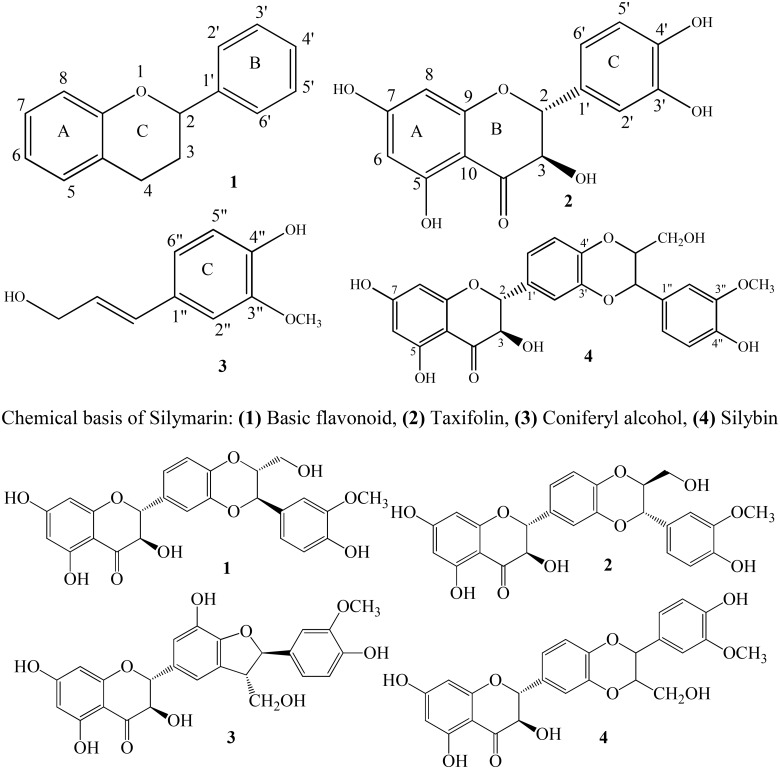
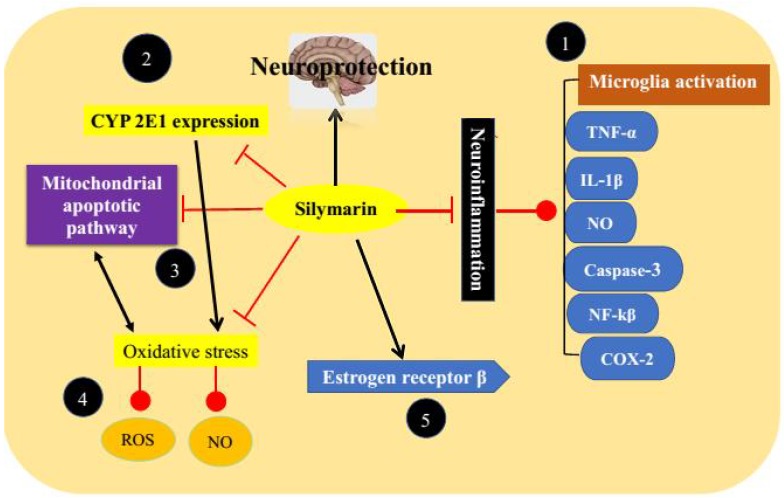
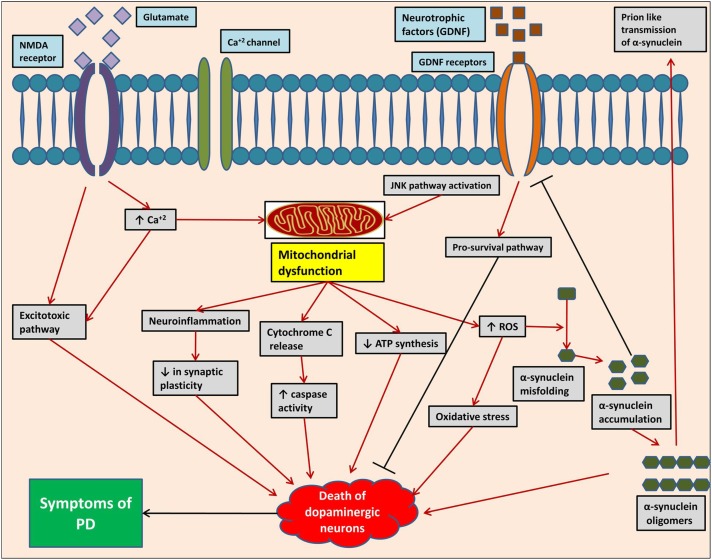
Parkinson's disease (PD) involves aggregation of α-synuclein and progressive loss of dopaminergic neurons. Pathogenesis of PD may also be related to one's genetic background. PD is most common among geriatric population and approximately 1-2% of population suffers over age 65 years. Currently no successful therapies are in practice for the management of PD and available therapies tend to decrease the symptoms of PD only. Furthermore, these are associated with diverse range of adverse effects profile. The neuroprotective effects of polyphenols are widely studied and documented. Among phytochemicals, silymarin is one of the most widely used flavonoids because of its extensive therapeutic properties and has been indicated in pathological conditions of prostate, CNS, lungs, skin, liver, and pancreas. Silymarin is a mixture of flavonolignans (silybin, isosilybin, and silychristin), small amount of flavonoids (taxifolin), fatty acids, and other polyphenolic compounds extracted from the dried fruit of and is clinically used for hepatoprotective effects since ancient times. Neuroprotective effects of silymarin have been studied in various models of neurological disorders such as Alzheimer's disease, PD, and cerebral ischemia. The aim of the present study is to provide a comprehensive review of the recent literature exploring the effects of silymarin administration on the progression of PD. Reducing oxidative stress, inflammatory cytokines, altering cellular apoptosis machinery, and estrogen receptor machinery are mechanisms that are responsible for neuroprotection by silymarin, as discussed in this review. Additionally, because of poor aqueous solubility, the bioavailability of silymarin is low and only 23-47% of silymarin reaches systemic circulation after oral administration. Our primary focus is on the chemical basis of the pharmacology of silymarin in the treatment of PD and its mechanisms and possible therapeutic/clinical status while addressing the bioavailability limitation.
帕金森病(PD)涉及α-突触核蛋白的聚集以及多巴胺能神经元的渐进性丧失。PD的发病机制也可能与个体的遗传背景有关。PD在老年人群中最为常见,65岁以上人群中约有1%-2%患有该病。目前,在PD的治疗方面尚无成功的疗法,现有的治疗方法往往只能减轻PD的症状。此外,这些疗法还伴有各种各样的不良反应。多酚的神经保护作用已得到广泛研究和记载。在植物化学物质中,水飞蓟素是使用最广泛的黄酮类化合物之一,因其具有广泛的治疗特性,已被应用于前列腺、中枢神经系统、肺、皮肤、肝脏和胰腺的病理状况。水飞蓟素是从干燥果实中提取的黄酮木脂素(水飞蓟宾、异水飞蓟宾和水飞蓟亭)、少量黄酮类化合物(紫杉叶素)、脂肪酸及其他多酚类化合物的混合物,自古以来就在临床上用于保肝作用。水飞蓟素的神经保护作用已在各种神经疾病模型中进行了研究,如阿尔茨海默病、PD和脑缺血。本研究的目的是对近期探索水飞蓟素给药对PD进展影响的文献进行全面综述。如本综述所述,减少氧化应激、炎性细胞因子、改变细胞凋亡机制和雌激素受体机制是水飞蓟素发挥神经保护作用的机制。此外,由于水溶性差,水飞蓟素的生物利用度较低,口服给药后只有23%-47%的水飞蓟素到达体循环。我们主要关注水飞蓟素治疗PD的药理学化学基础及其机制和可能的治疗/临床状况,同时解决生物利用度限制问题。