The Leslie and Susan Goldschmied (Gonda) Multidisciplinary Brain Research Center, Bar-Ilan University, 52900, Ramat-Gan, Israel.
Deuteron Technologies, 9777403, Jerusalem, Israel.
eNeuro. 2018 Apr 19;5(2). doi: 10.1523/ENEURO.0261-17.2018. eCollection 2018 Mar-Apr.
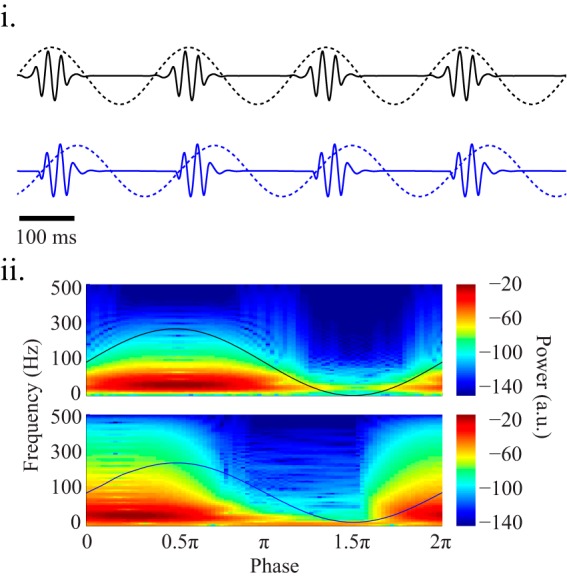
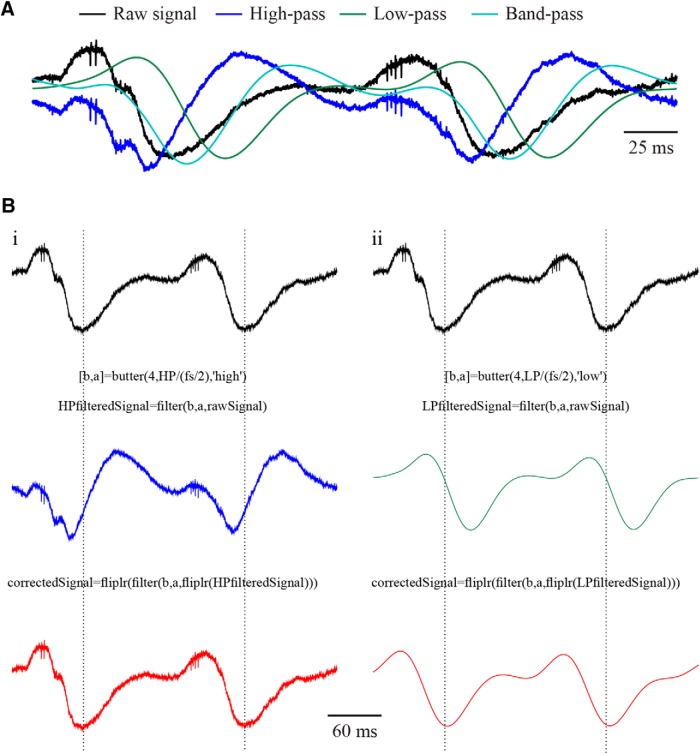
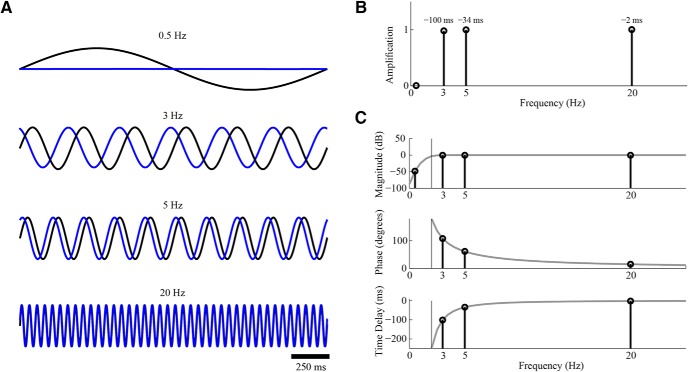
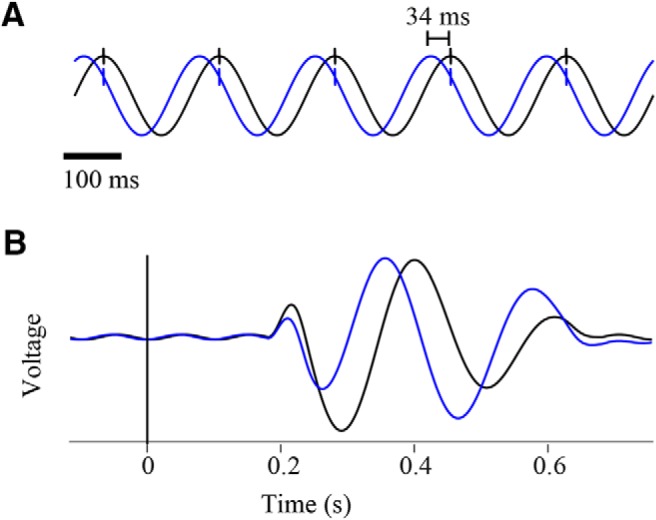
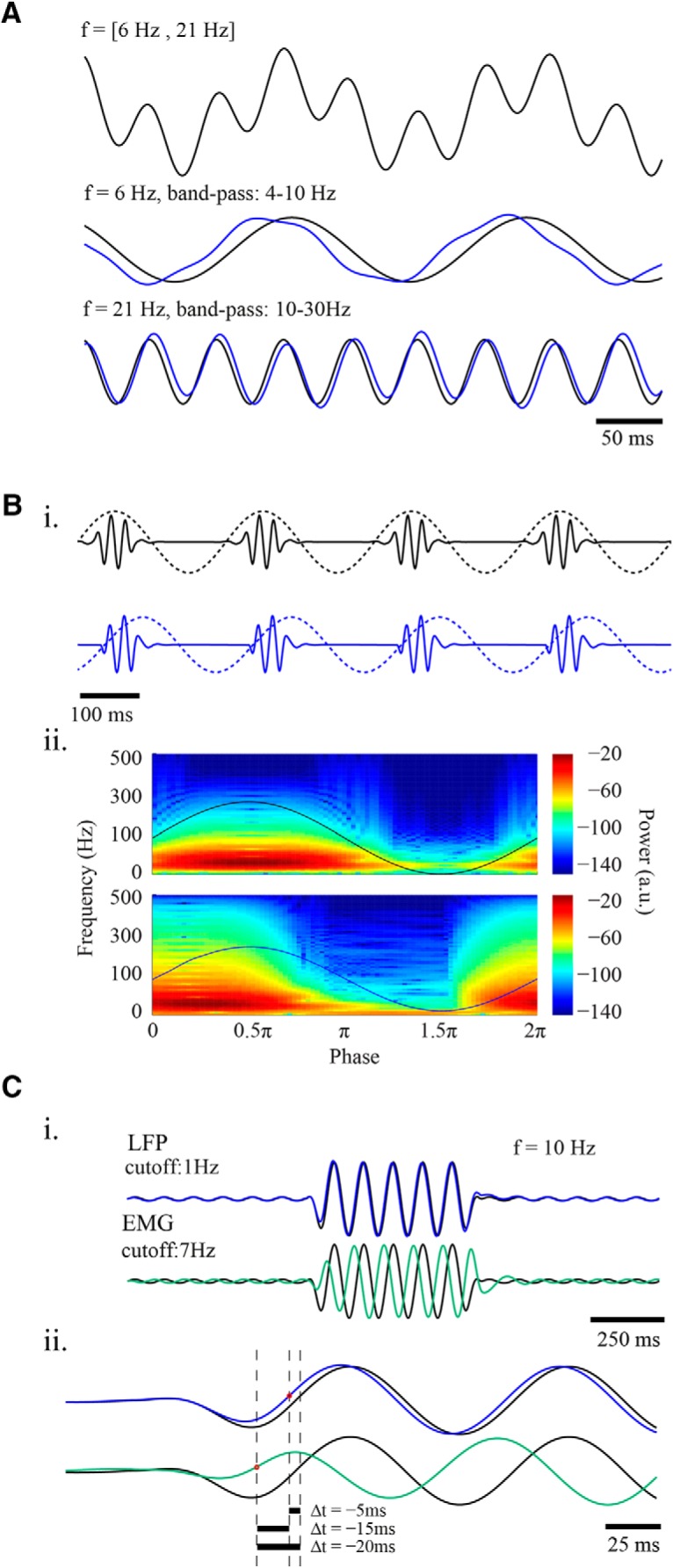
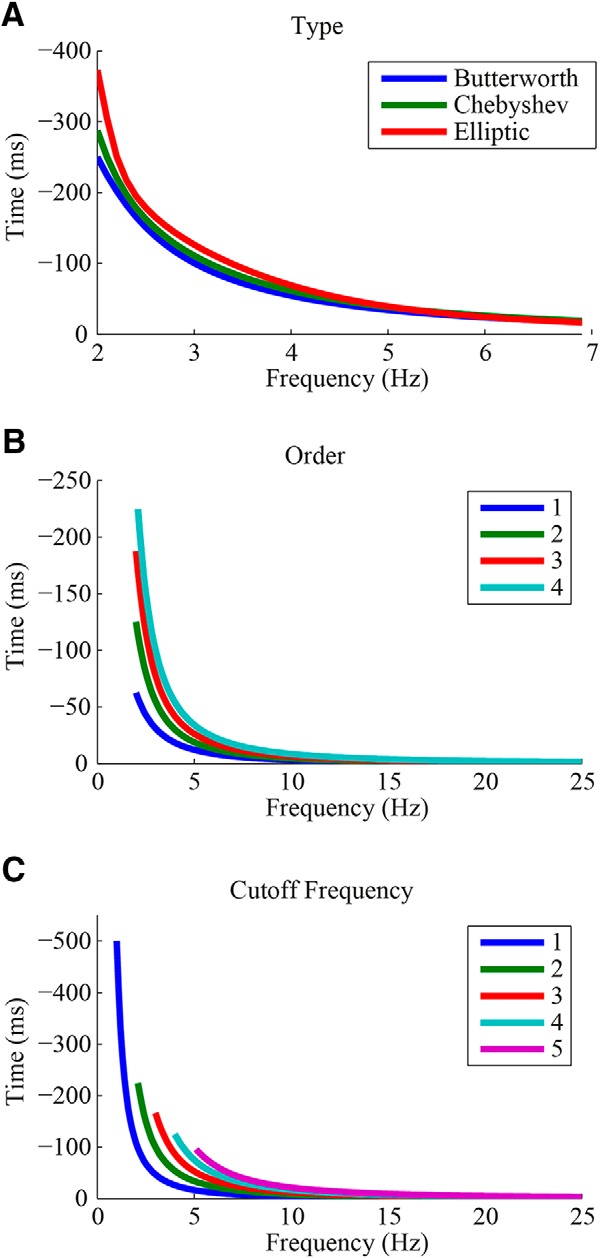
Filters are widely used for the modulation, typically attenuation, of amplitudes of different frequencies within neurophysiological signals. Filters, however, also induce changes in the phases of different frequencies whose amplitude is unmodulated. These phase shifts cause time lags in the filtered signals, leading to a disruption of the timing information between different frequencies within the same signal and between different signals. The emerging time lags can be either constant in the case of linear phase (LP) filters or vary as a function of the frequency in the more common case of non-LP (NLP) filters. Since filters are used ubiquitously online in the early stages of data acquisition, the vast majority of neurophysiological signals thus suffer from distortion of the timing information even prior to their sampling. This distortion is often exacerbated by further multiple offline filtering stages of the sampled signal. The distortion of timing information may cause misinterpretation of the results and lead to erroneous conclusions. Here we present a variety of typical examples of filter-induced phase distortions and discuss the evaluation and restoration of the timing information underlying the original signal.
滤波器广泛用于调制神经生理信号中不同频率的幅度,通常是衰减。然而,滤波器也会引起未调制频率的相位变化。这些相位变化会导致滤波信号中的时间延迟,从而破坏同一信号内和不同信号之间不同频率之间的定时信息。在线性相位 (LP) 滤波器的情况下,这些时滞是恒定的,而在更常见的非 LP (NLP) 滤波器的情况下,它们随频率而变化。由于滤波器在数据采集的早期阶段在线广泛使用,因此绝大多数神经生理信号在采样之前就已经受到定时信息失真的影响。这种失真通常会因对采样信号进行进一步的多次离线滤波而加剧。定时信息的失真可能导致对结果的误解,并导致错误的结论。在这里,我们展示了各种滤波器引起的相位失真的典型示例,并讨论了原始信号下定时信息的评估和恢复。