Mistrík Pavel, Jolly Claude, Sieber Daniel, Hochmair Ingeborg
MED-EL Company, Austria.
World J Otorhinolaryngol Head Neck Surg. 2018 Mar 30;3(4):192-199. doi: 10.1016/j.wjorl.2017.12.007. eCollection 2017 Dec.
A design comparison of current perimodiolar and lateral wall electrode arrays of the cochlear implant (CI) is provided. The focus is on functional features such as acoustic frequency coverage and tonotopic mapping, battery consumption and dynamic range. A traumacity of their insertion is also evaluated.
Review of up-to-date literature.
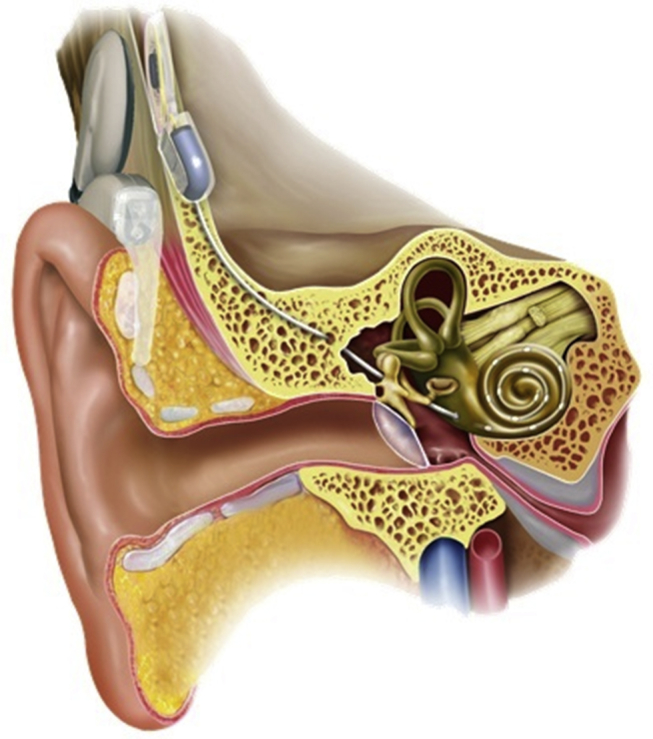
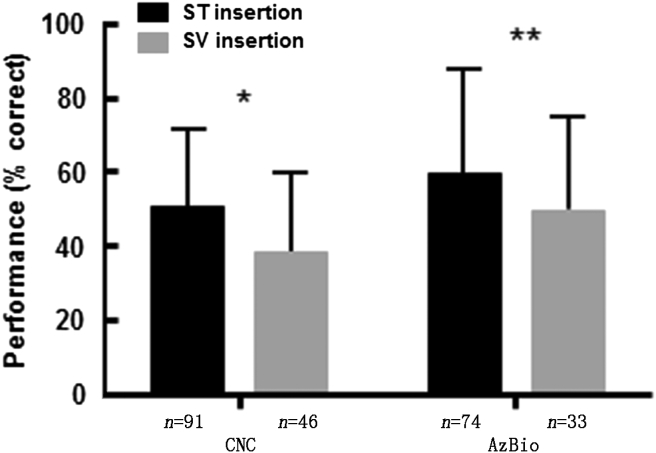
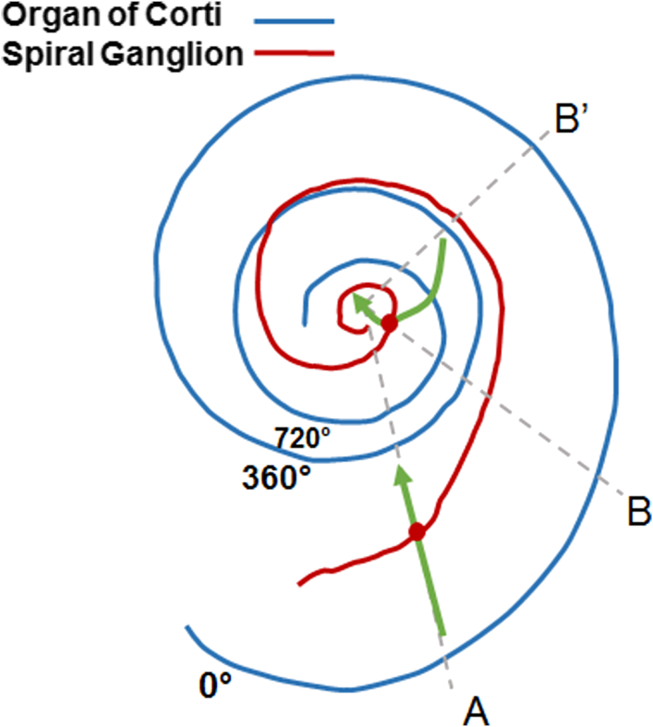
Perimodiolar electrode arrays are positioned in the basal turn of the cochlea near the modiolus. They are designed to initiate the action potential in the proximity to the neural soma located in spiral ganglion. On the other hand, lateral wall electrode arrays can be inserted deeper inside the cochlea, as they are located along the lateral wall and such insertion trajectory is less traumatic. This class of arrays targets primarily surviving neural peripheral processes. Due to their larger insertion depth, lateral wall arrays can deliver lower acoustic frequencies in manner better corresponding to cochlear tonotopicity. In fact, spiral ganglion sections containing auditory nerve fibres tuned to low acoustic frequencies are located deeper than 1 and half turn inside the cochlea. For this reason, a significant frequency mismatch might be occurring for apical electrodes in perimodiolar arrays, detrimental to speech perception. Tonal languages such as Mandarin might be therefore better treated with lateral wall arrays. On the other hand, closer proximity to target tissue results in lower psychophysical threshold levels for perimodiolar arrays. However, the maximal comfort level is also lower, paradoxically resulting in narrower dynamic range than that of lateral wall arrays. Battery consumption is comparable for both types of arrays.
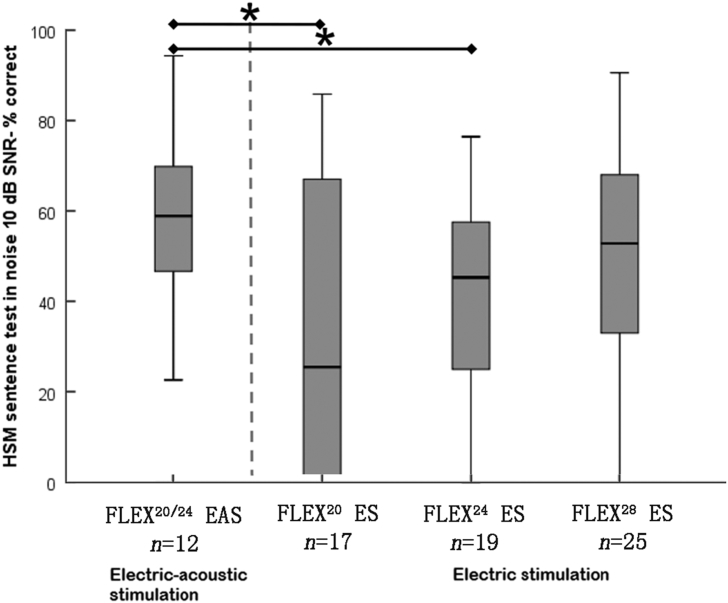
Lateral wall arrays are less likely to cause trauma to cochlear structures. As the current trend in cochlear implantation is the maximal protection of residual acoustic hearing, the lateral wall arrays seem more suitable for hearing preservation CI surgeries. Future development could focus on combining the advantages of both types: perimodiolar location in the basal turn extended to lateral wall location for higher turn locations.
对当前人工耳蜗(CI)的蜗周电极阵列和侧壁电极阵列进行设计比较。重点关注功能特性,如声频覆盖范围和音调定位、电池消耗以及动态范围。同时评估它们插入时的创伤性。
查阅最新文献。
蜗周电极阵列位于靠近蜗轴的耳蜗基部转弯处。其设计目的是在位于螺旋神经节的神经胞体附近引发动作电位。另一方面,侧壁电极阵列可插入耳蜗内部更深的位置,因为它们沿着侧壁定位,且这种插入轨迹的创伤较小。这类阵列主要针对存活的神经外周突起。由于其插入深度较大,侧壁阵列能够以更符合耳蜗音调定位的方式传递较低的声频。实际上,包含调谐到低声频的听神经纤维的螺旋神经节部分位于耳蜗内超过一圈半的深度。因此,蜗周阵列中的顶端电极可能会出现明显的频率失配,这对言语感知不利。因此,对于像普通话这样的声调语言,使用侧壁阵列可能效果更好。另一方面,蜗周阵列与目标组织更接近,导致其心理物理阈值水平较低。然而,其最大舒适水平也较低,矛盾的是,这导致其动态范围比侧壁阵列更窄。两种类型的阵列电池消耗相当。
侧壁阵列对耳蜗结构造成创伤的可能性较小。由于当前人工耳蜗植入的趋势是最大程度地保护残余听力,侧壁阵列似乎更适合用于听力保留型CI手术。未来的发展可以集中在结合两种类型的优点:将基部转弯处的蜗周位置扩展到较高转弯位置的侧壁位置。