Department for Management of Science and Technology Development, Ton Duc Thang University, Ho Chi Minh City 700000, Vietnam.
Faculty of Pharmacy, Ton Duc Thang University, Ho Chi Minh City 700000, Vietnam.
Nutrients. 2018 May 19;10(5):645. doi: 10.3390/nu10050645.
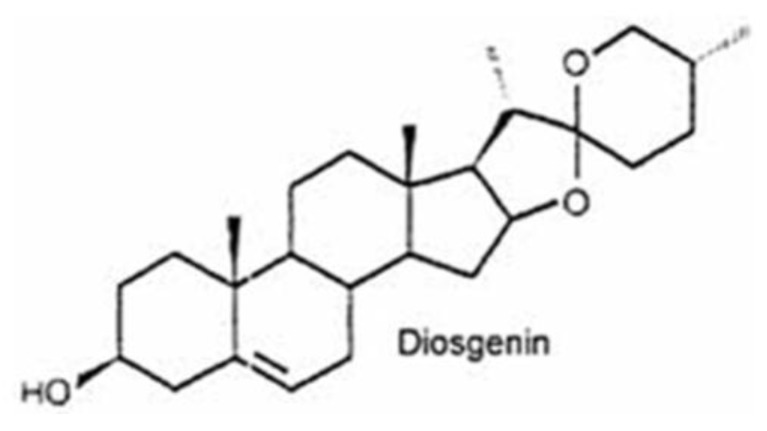
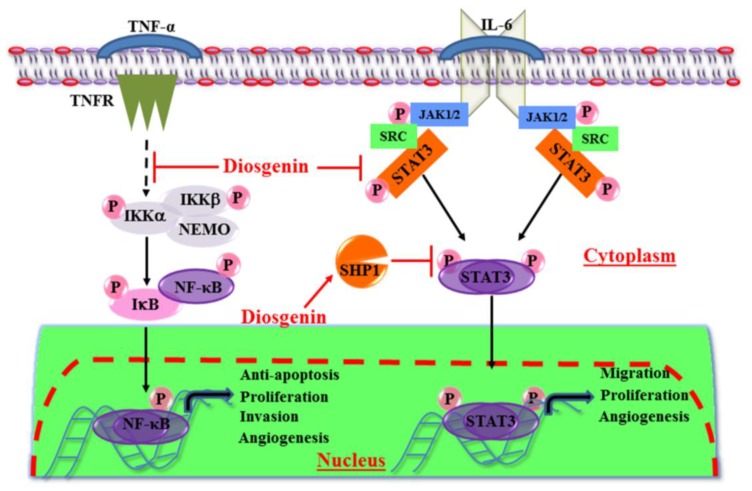
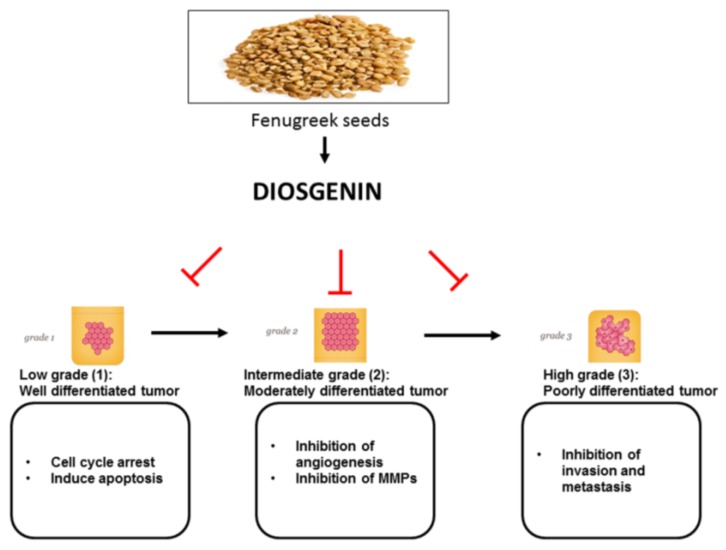
Novel and alternative options are being adopted to combat the initiation and progression of human cancers. One of the approaches is the use of molecules isolated from traditional medicinal herbs, edible dietary plants and seeds that play a pivotal role in the prevention/treatment of cancer, either alone or in combination with existing chemotherapeutic agents. Compounds that modulate these oncogenic processes are potential candidates for cancer therapy and may eventually make it to clinical applications. Diosgenin is a naturally occurring steroidal sapogenin and is one of the major bioactive compounds found in dietary fenugreek () seeds. In addition to being a lactation aid, diosgenin has been shown to be hypocholesterolemic, gastro- and hepato-protective, anti-oxidant, anti-inflammatory, anti-diabetic, and anti-cancer. Diosgenin has a unique structural similarity to estrogen. Several preclinical studies have reported on the pro-apoptotic and anti-cancer properties of diosgenin against a variety of cancers, both in in vitro and in vivo. Diosgenin has also been reported to reverse multi-drug resistance in cancer cells and sensitize cancer cells to standard chemotherapy. Remarkably, diosgenin has also been reported to be used by pharmaceutical companies to synthesize steroidal drugs. Several novel diosgenin analogs and nano-formulations have been synthesized with improved anti-cancer efficacy and pharmacokinetic profile. In this review we discuss in detail the multifaceted anti-cancer properties of diosgenin that have found application in pharmaceutical, functional food, and cosmetic industries; and the various intracellular molecular targets modulated by diosgenin that abrogate the oncogenic process.
正在采用新的和替代的方法来对抗人类癌症的发生和进展。其中一种方法是使用从传统草药、食用植物和种子中分离出来的分子,这些分子在预防/治疗癌症方面发挥着关键作用,无论是单独使用还是与现有的化疗药物联合使用。调节这些致癌过程的化合物是癌症治疗的潜在候选药物,最终可能会应用于临床。薯蓣皂苷元是一种天然存在的甾体皂素,是食用葫芦巴种子中发现的主要生物活性化合物之一。除了作为一种催乳剂外,薯蓣皂苷元还具有降胆固醇、胃和肝保护、抗氧化、抗炎、抗糖尿病和抗癌作用。薯蓣皂苷元与雌激素具有独特的结构相似性。一些临床前研究报告了薯蓣皂苷元对多种癌症的促凋亡和抗癌特性,无论是在体外还是体内。薯蓣皂苷元还被报道可以逆转癌细胞的多药耐药性,并使癌细胞对标准化疗敏感。值得注意的是,薯蓣皂苷元也被制药公司用于合成甾体药物。已经合成了几种新型的薯蓣皂苷元类似物和纳米制剂,具有改善的抗癌功效和药代动力学特征。在这篇综述中,我们详细讨论了薯蓣皂苷元的多方面抗癌特性,这些特性在制药、功能性食品和化妆品行业得到了应用;以及薯蓣皂苷元调节的各种细胞内分子靶点,这些靶点可以阻断致癌过程。