Barcelonaβeta Brain Research Center, Pasqual Maragall Foundation, C/ Wellington, 30, 08005, Barcelona, Spain.
Centro de Investigación Biomédica en Red de Bioingeniería, Biomateriales y Nanomedicina (CIBER-BBN), Madrid, Spain.
Alzheimers Res Ther. 2018 May 24;10(1):48. doi: 10.1186/s13195-018-0375-x.
The ε4 allele of the apolipoprotein E gene (APOE-ε4) is the strongest genetic factor for late-onset Alzheimer's disease. During middle age, cognitively healthy APOE-ε4 carriers already show several brain alterations that resemble those of Alzheimer's disease (AD), but to a subtler degree. These include microstructural white matter (WM) changes that have been proposed as one of the earliest structural events in the AD cascade. However, previous studies have focused mainly on comparison of APOE-ε4 carriers vs noncarriers. Therefore, the extent and magnitude of the brain alterations in healthy ε4 homozygotes, who are the individuals at highest risk, remain to be characterized in detail.
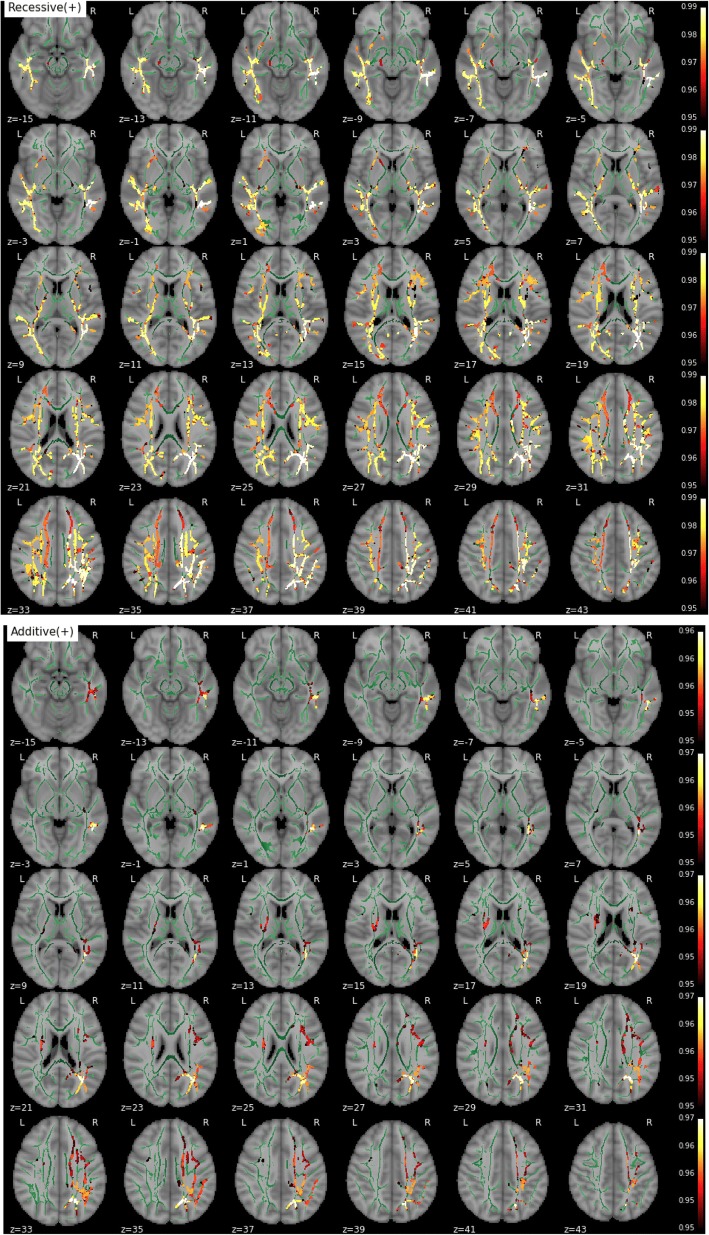
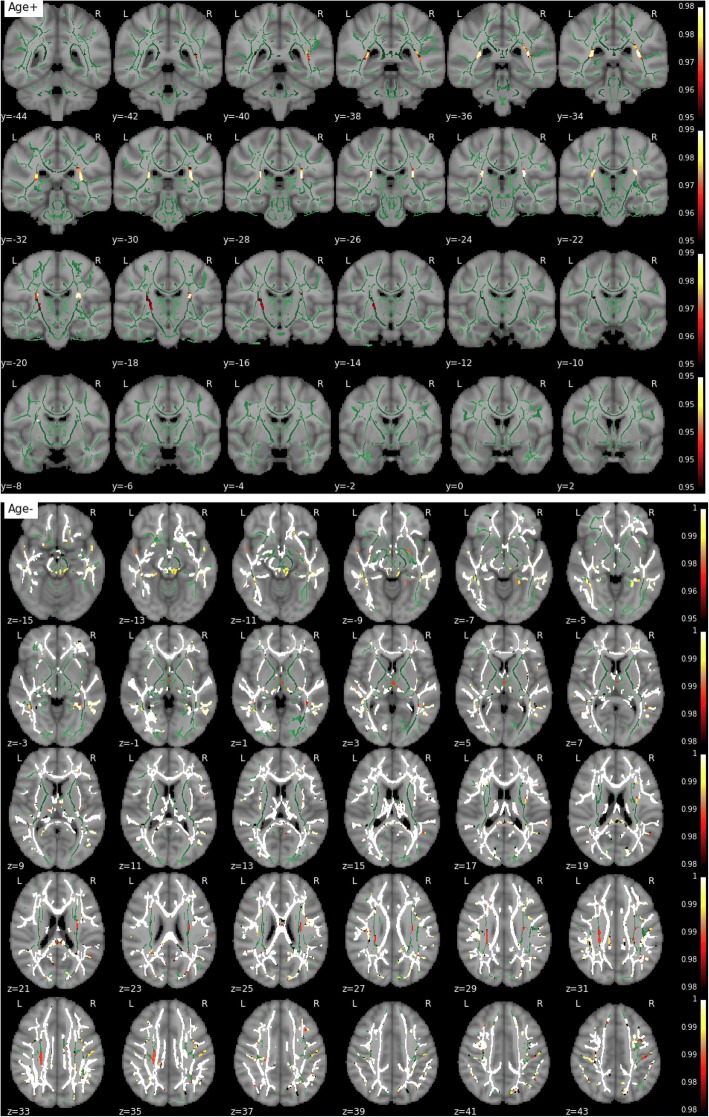
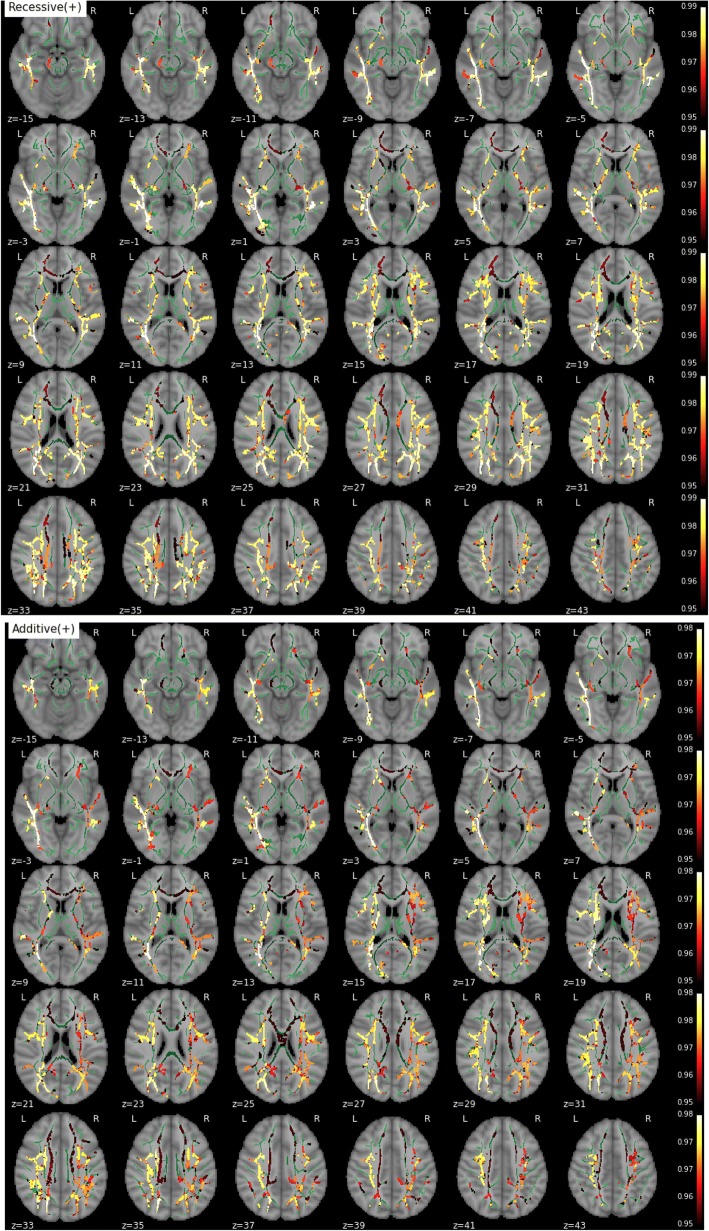
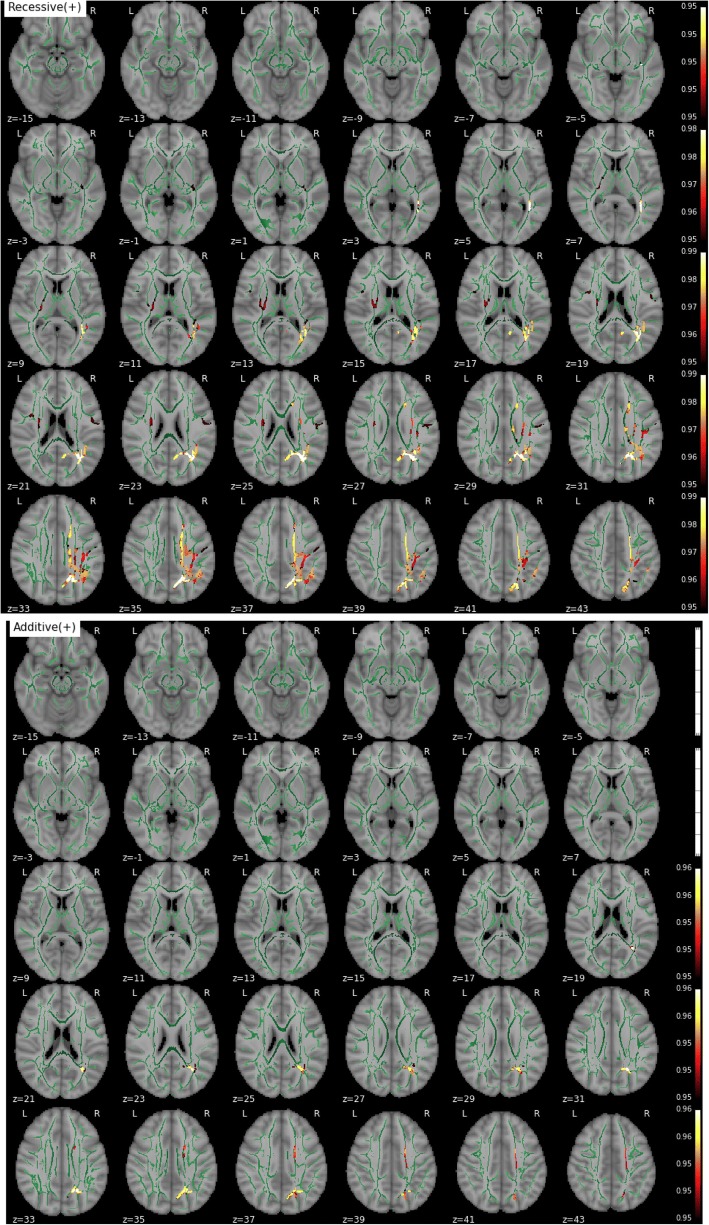
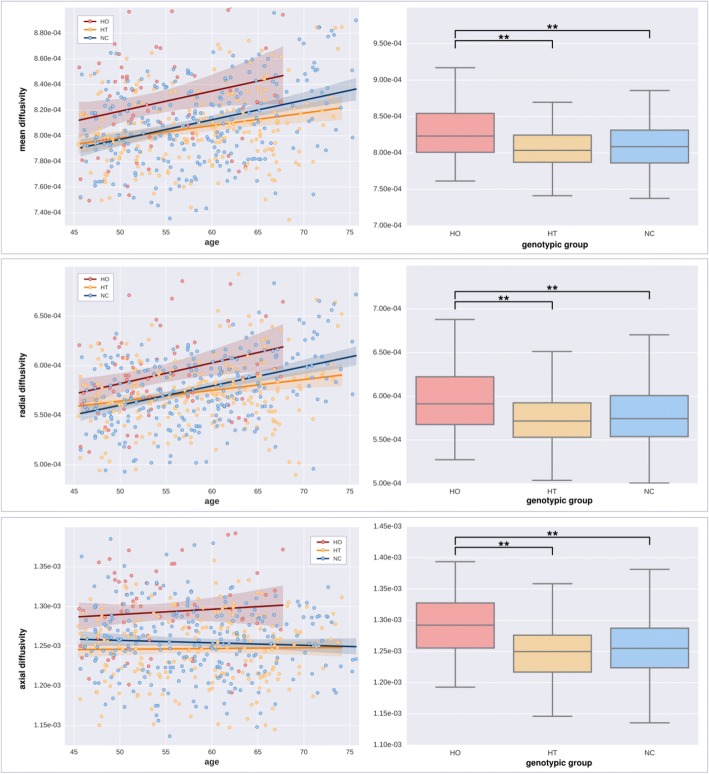
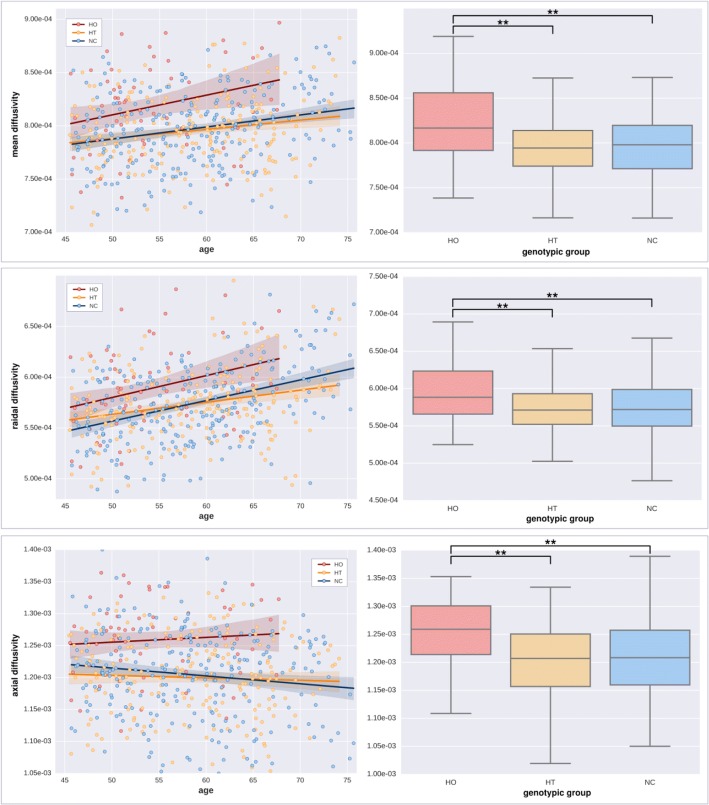
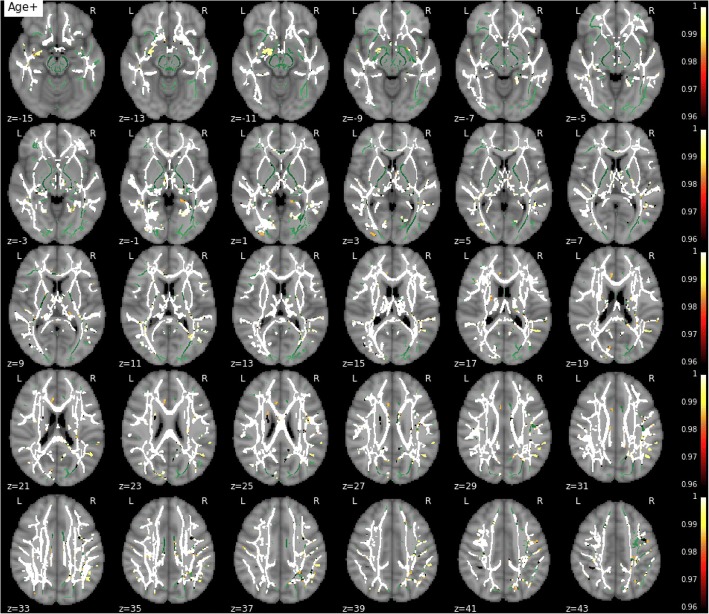
We examined mean, axial, and radial water diffusivity (MD, AxD, and RD, respectively) and fractional anisotropy in the WM as measured by diffusion-weighted imaging in 532 cognitively healthy middle-aged participants from the ALFA study (ALzheimer and FAmilies) cohort, a single-site population-based study enriched for AD risk (68 APOE-ε4 homozygotes, 207 heterozygotes, and 257 noncarriers). We examined the impact of age and APOE genotype on these parameters using tract-based spatial statistics.
Healthy APOE-ε4 homozygotes display increased WM diffusivity in regions known to be affected by AD. The effects in AxD were much smaller than in RD, suggesting a disruption of the myelin sheath rather than pure axonal damage.
These findings could be interpreted as the result of the reduced capacity of the ε4 isoform of the APOE protein to keep cholesterol homeostasis in the brain. Because cerebral lipid metabolism is strongly related to the pathogenesis of AD, our results shed light on the possible mechanisms through which the APOE-ε4 genotype is associated with an increased risk of AD.
载脂蛋白 E 基因(APOE-ε4)的 ε4 等位基因是导致迟发性阿尔茨海默病的最强遗传因素。在中年时期,认知健康的 APOE-ε4 携带者已经表现出几种类似于阿尔茨海默病(AD)的脑改变,但程度较轻。这些改变包括被认为是 AD 级联中最早的结构事件之一的脑白质(WM)微观结构变化。然而,以前的研究主要集中在 APOE-ε4 携带者与非携带者的比较上。因此,在风险最高的健康 ε4 纯合子个体中,WM 中的平均、轴向和径向水扩散系数(MD、AxD 和 RD)以及各向异性分数的脑改变的程度和幅度仍需要详细描述。
我们在来自 ALFA 研究(ALzheimer 和 FAmilies)队列的 532 名认知健康的中年参与者中检查了 WM 的平均、轴向和径向水扩散系数(MD、AxD 和 RD)和各向异性分数,这是一项基于单站点的人群研究,富含 AD 风险(68 名 APOE-ε4 纯合子、207 名杂合子和 257 名非携带者)。我们使用基于束的空间统计学来检查年龄和 APOE 基因型对这些参数的影响。
健康的 APOE-ε4 纯合子在已知受 AD 影响的 WM 区域显示出增加的 WM 扩散性。AxD 的影响比 RD 小得多,这表明是髓鞘的破坏而不是单纯的轴突损伤。
这些发现可以解释为 APOE 蛋白的 ε4 同工型在脑内保持胆固醇稳态的能力降低的结果。因为脑内脂质代谢与 AD 的发病机制密切相关,所以我们的结果揭示了 APOE-ε4 基因型与 AD 风险增加相关的可能机制。