Graduate Institute of Biomedical Materials and Tissue Engineering Taipei Medical University and International Ph.D. Program in Biomedical Engineering College of Biomedical Engineering, Taipei Medical University, No. 250, Wuxing Street, Xinyi District, Taipei 110, Taiwan.
School of Biomedical Engineering, College of Biomedical Engineering, Taipei Medical University, No. 250, Wuxing Street, Xinyi District, Taipei 110, Taiwan.
Molecules. 2018 May 24;23(6):1256. doi: 10.3390/molecules23061256.
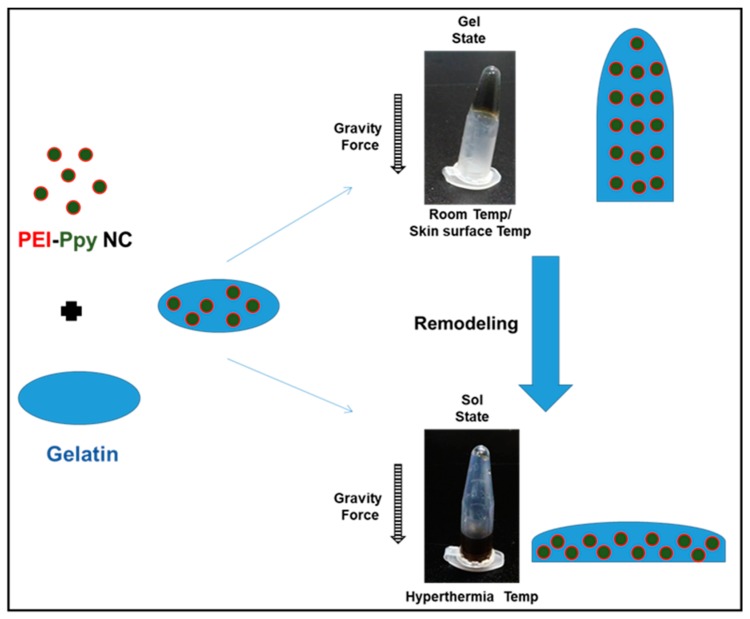
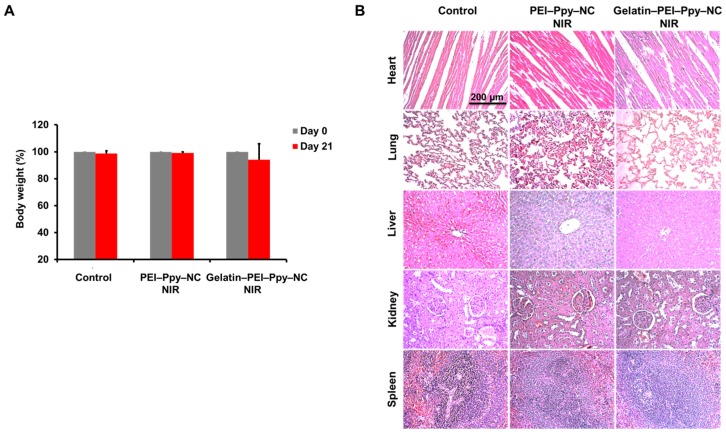
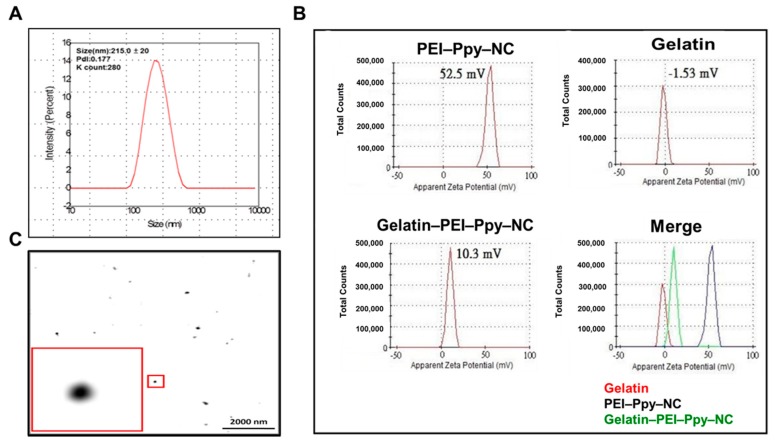
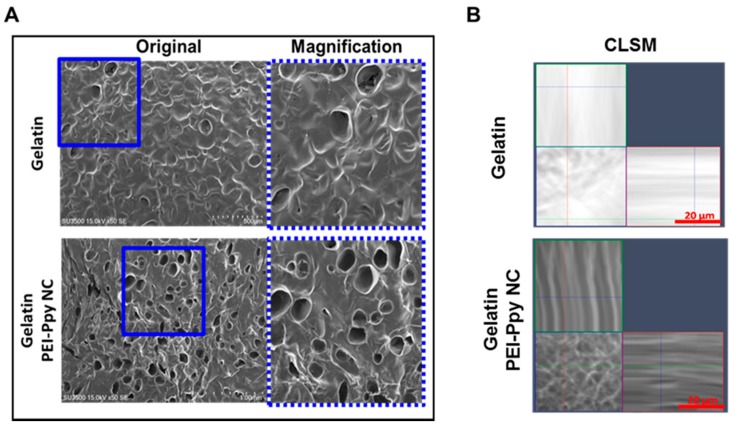
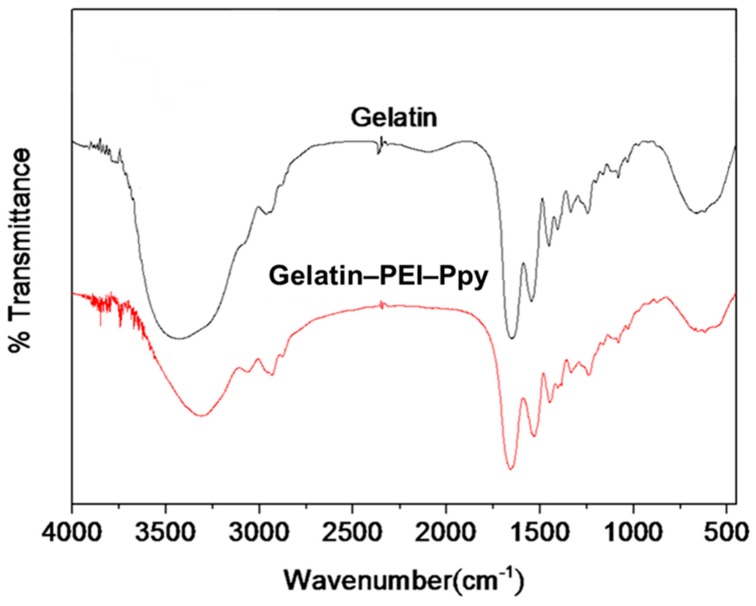
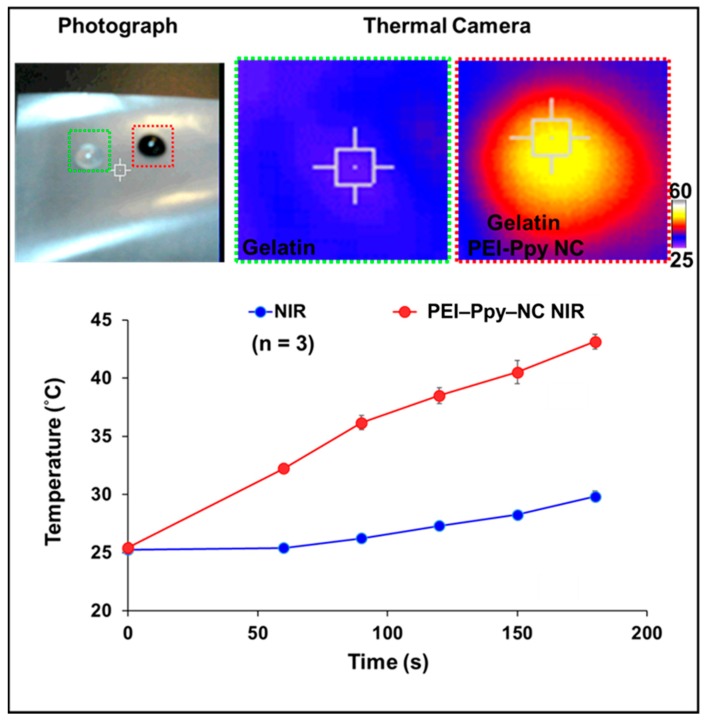
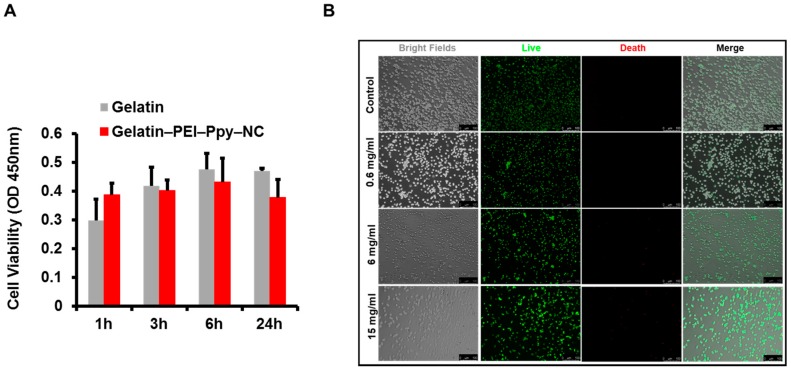
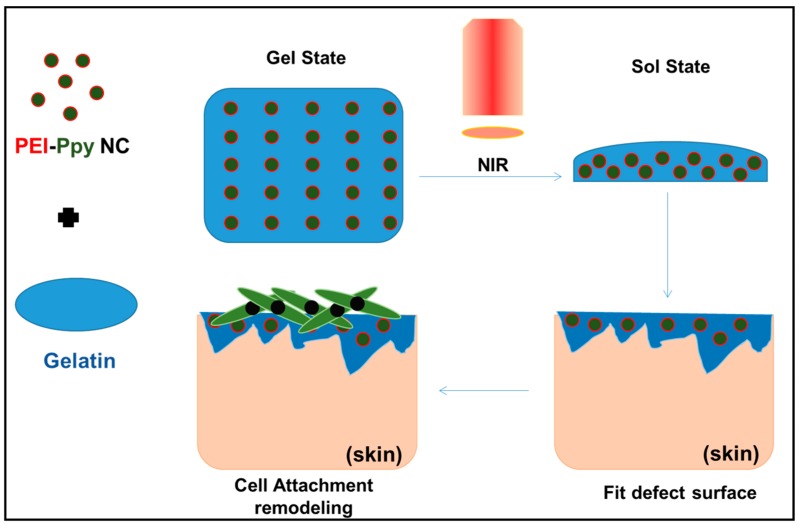
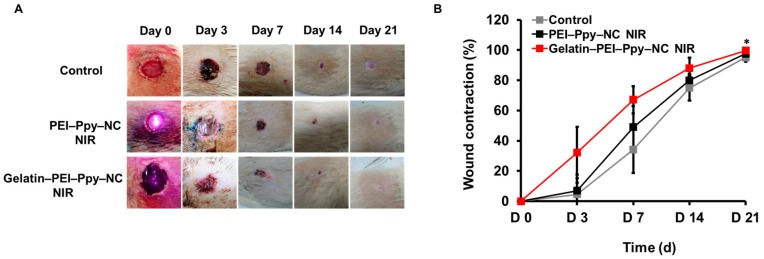
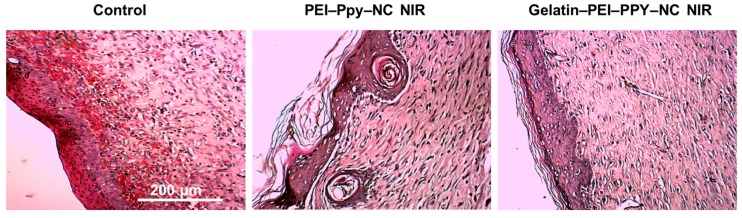
The introduction and designing of functional thermoresponsive hydrogels have been recommended as recent potential therapeutic approaches for biomedical applications. The development of bioactive materials such as thermosensitive gelatin-incorporated nano-organic materials with a porous structure and photothermally triggerable and cell adhesion properties may potentially achieve this goal. This novel class of photothermal hydrogels can provide an advantage of hyperthermia together with a reversibly transformable hydrogel for tissue engineering. Polypyrrole (Ppy) is a bioorganic conducting polymeric substance and has long been used in biomedical applications owing to its brilliant stability, electrically conductive features, and excellent absorbance around the near-infrared (NIR) region. In this study, a cationic photothermal triggerable/guidable gelatin hydrogel containing a polyethylenimine (PEI)⁻Ppy nanocomplex with a porous microstructure was established, and its physicochemical characteristics were studied through dynamic light scattering, scanning electronic microscopy, transmission electron microscopy, an FTIR; and cellular interaction behaviors towards fibroblasts incubated with a test sample were examined via MTT assay and fluorescence microscopy. Photothermal performance was evaluated. Furthermore, the in vivo study was performed on male Wistar rat full thickness excisions model for checking the safety and efficacy of the designed gelatin⁻PEI⁻Ppy nanohydrogel system in wound healing and for other biomedical uses in future. This photothermally sensitive hydrogel system has an NIR-triggerable property that provides local hyperthermic temperature by PEI⁻Ppy nanoparticles for tissue engineering applications. Features of the designed hydrogel may fill other niches, such as being an antibacterial agent, generation of free radicals to further improve wound healing, and remodeling of the promising photothermal therapy for future tissue engineering applications.
功能性温敏水凝胶的引入和设计已被推荐为生物医学应用的最新潜在治疗方法。开发具有多孔结构和光热触发及细胞黏附性能的温敏明胶纳米有机材料等生物活性材料,可能会实现这一目标。这种新型光热水凝胶可以提供热疗的优势,同时具有可还原转化的水凝胶,用于组织工程。聚吡咯(Ppy)是一种生物有机导电聚合物物质,由于其出色的稳定性、导电性和对近红外(NIR)区域的优异吸收能力,长期以来一直应用于生物医学领域。在本研究中,建立了一种含有多孔微结构的聚乙二胺(PEI)-Ppy 纳米复合物的阳离子光热触发/导向明胶水凝胶,并通过动态光散射、扫描电子显微镜、透射电子显微镜、傅里叶变换红外光谱研究了其物理化学特性;通过 MTT 测定法和荧光显微镜检查了与测试样品孵育的成纤维细胞的细胞相互作用行为。评估了光热性能。此外,在雄性 Wistar 大鼠全厚度切除模型上进行了体内研究,以检查设计的明胶-PEI-Ppy 纳米水凝胶系统在伤口愈合和未来其他生物医学用途中的安全性和有效性。这种光热敏感水凝胶系统具有 NIR 触发特性,可通过 PEI-Ppy 纳米颗粒提供组织工程应用的局部高热温度。设计的水凝胶的特性可以填补其他空白,例如作为抗菌剂、产生自由基以进一步改善伤口愈合,以及为未来的组织工程应用重塑有前途的光热疗法。