Graduate Institute of Biomedical Electronics and Bioinformatics, National Taiwan University, Taipei, Taiwan.
Bone and Joint Research Center, Department of Orthopedics, Taipei Medical University Hospital, School of Medicine, College of Medicine, Taipei Medical University, Taipei, Taiwan.
Int J Nanomedicine. 2019 Feb 28;14:1575-1585. doi: 10.2147/IJN.S163299. eCollection 2019.
Polymeric delivery systems have been elucidated over the last few years as an approach of achieving high therapeutic effect to the local site of malignant disease patients who have cancer. Polypyrrole (Ppy) is a potential organic conducting polymer which has long been recognized as a versatile material due to its excellent stability, conductive properties, and great absorbance in the range of near-infrared (NIR). It is tremendously versatile for use in various biomedical fields such as cancer therapy. NIR irradiation-activated treatment platform technologies are now being considered to be novel and exciting options in potential nanomedicine. However, the realistic photothermal use of Ppy-applied nanomaterials is yet in its early phase, and there are a few disadvantages of Ppy, such as its water insolubility. In the clinic, the common approach for treatment of lung cancer is the delivery of therapeutic active substances through intratumoral administration. Nevertheless, the tumor uptake, regional retention, mechanism of treatment, and tissue organ penetration regarding the developed strategy of this nanomaterial with photothermal hyperthermia are important issues for exerting effective cancer therapy.
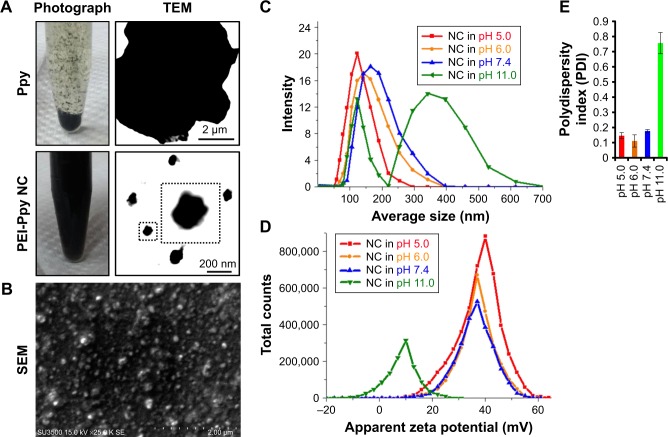
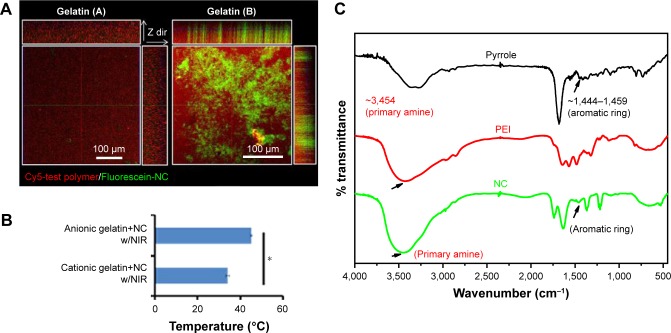
In this study, we developed a cationic Ppy-polyethylenimine nanocomplex (NC) with photothermal hyperthermia to study its physicochemical characteristics, including size distribution, zeta potential, and transmission electron microscopy, scanning electron microscopy, and Fourier transform infrared morphology. We also examined the cellular uptake effect on lung cancer cells, the photothermal properties, intracellularly generated reactive oxygen species (ROS), and cytotoxicity.
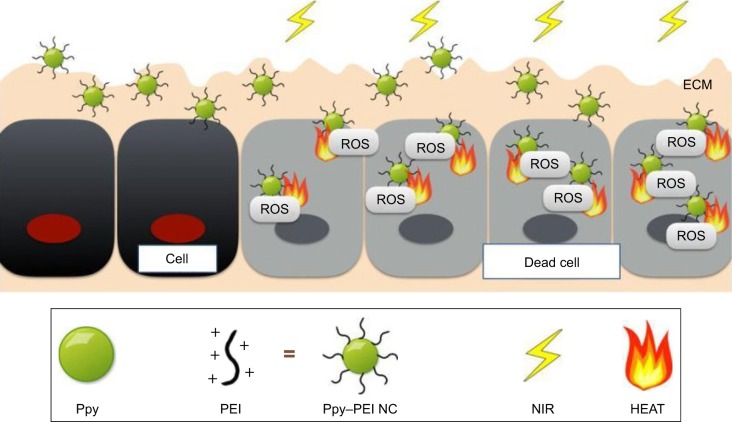
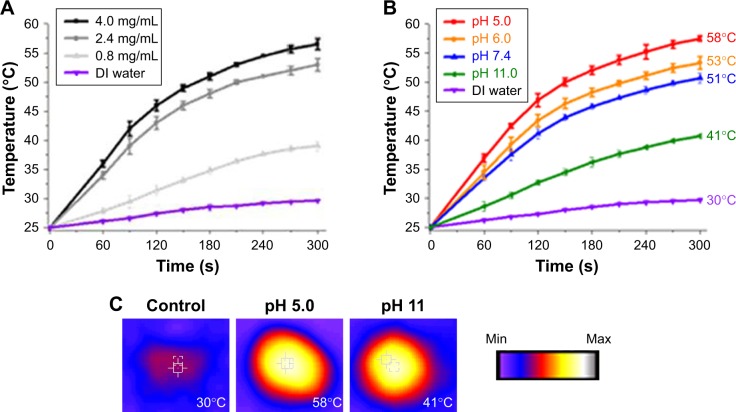
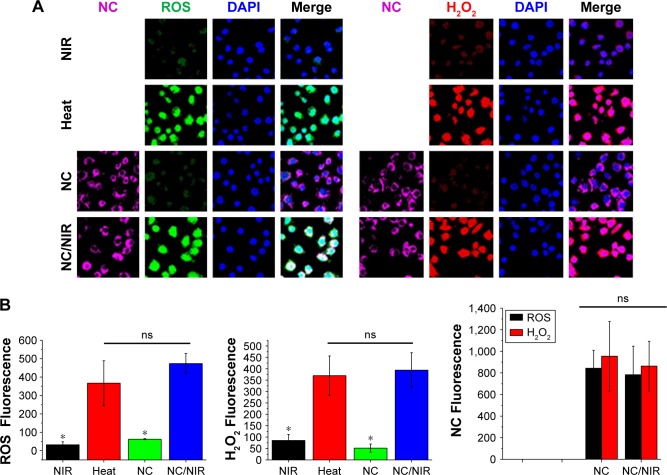
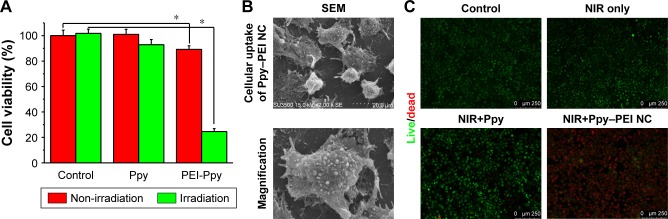
The results suggested that this nanocarrier system was able to effectively attach onto lung cancer cells for subsequent endocytosis. The NCs taken up were able to absorb NIR and then converted the NIR light into local hyperthermia with its intracellular photothermal performance to provide local hyperthermic treatment. This regionally generated hyperthermia also induced ROS formation and improved the killing of lung cancer cells as a promising local photothermal therapy.
This development of a nanocarrier would bring a novel therapeutic strategy for lung cancer in the future.
在过去的几年中,高分子递药系统已被阐明,可作为使癌症患者恶性疾病局部部位达到高治疗效果的方法。聚吡咯(Ppy)是一种有前途的有机导电聚合物,由于其优异的稳定性、导电性和对近红外(NIR)的高吸收率,长期以来一直被认为是一种多功能材料。它在各种生物医学领域具有广泛的用途,如癌症治疗。近红外光激发治疗平台技术现在被认为是潜在纳米医学中的新型和令人兴奋的选择。然而,Ppy 应用纳米材料的现实光热应用仍处于早期阶段,并且 Ppy 存在一些缺点,例如其不溶于水。在临床上,治疗肺癌的常用方法是通过瘤内给药来输送治疗活性物质。然而,对于这种具有光热高热的纳米材料的开发策略,肿瘤摄取、区域保留、治疗机制和组织器官穿透是发挥有效癌症治疗作用的重要问题。
在这项研究中,我们开发了一种具有光热高热的阳离子 Ppy-聚乙烯亚胺纳米复合物(NC),以研究其物理化学特性,包括大小分布、zeta 电位、透射电子显微镜、扫描电子显微镜和傅里叶变换红外形态。我们还研究了对肺癌细胞的细胞摄取效果、光热特性、细胞内产生的活性氧(ROS)和细胞毒性。
结果表明,这种纳米载体系统能够有效地附着在肺癌细胞上,随后进行内吞作用。被摄取的 NC 能够吸收 NIR,然后将 NIR 光转化为局部过热,其细胞内光热性能提供局部过热治疗。这种区域产生的过热还诱导 ROS 形成,并提高了对肺癌细胞的杀伤作用,作为一种有前途的局部光热治疗。
这种纳米载体的开发将为未来的肺癌治疗带来新的治疗策略。