Atkinson Kimberly F, Nauli Surya M
Department of Biomedical & Pharmaceutical Sciences, Chapman University, Irvine, CA, USA.
Int J Pharma Res Rev. 2016 Mar;5(3):51-58.
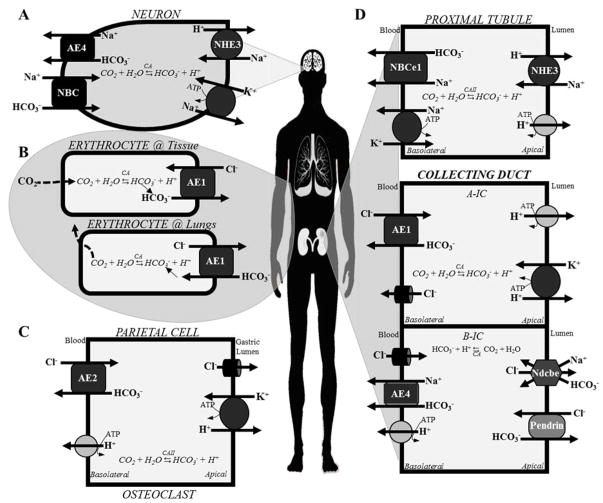
Regulation of pH is critical for physiological processes. Maintenance of acid-base homeostasis is tightly regulated by the renal and respiratory systems. However, fluctuations in extracellular pH are also sensed by other organ systems. Ion transporter activity to modify the amount of acid (H and CO) and bicarbonate (HCO) is therefore actively maintained within the kidney and lung. This review describes acid-base disorders (acidosis and alkalosis) and highlights the importance of pH sensors and ion transporters that may be potential therapeutic targets for treatment of acid-base disorders. Specifically, the renal pH sensors proline-rich tyrosine kinase-2 (Pyk2) and G-protein coupled receptor-4 (GPR4) are discussed here.
pH的调节对生理过程至关重要。酸碱平衡的维持受到肾脏和呼吸系统的严格调控。然而,细胞外pH的波动也能被其他器官系统感知。因此,肾脏和肺内会积极维持离子转运体的活性,以改变酸(H⁺和CO₂)和碳酸氢根(HCO₃⁻)的量。本综述描述了酸碱紊乱(酸中毒和碱中毒),并强调了pH传感器和离子转运体的重要性,它们可能是治疗酸碱紊乱的潜在治疗靶点。具体而言,本文讨论了肾脏pH传感器富含脯氨酸的酪氨酸激酶2(Pyk2)和G蛋白偶联受体4(GPR4)。