Department for Twin Research & Genetic Epidemiology, King's College London, London, UK.
Institute of Bioinformatics and Systems Biology, Helmholtz Zentrum München-German Research Center for Environmental Health, Neuherberg, Germany.
Nat Genet. 2018 Jun;50(6):790-795. doi: 10.1038/s41588-018-0135-7. Epub 2018 May 28.
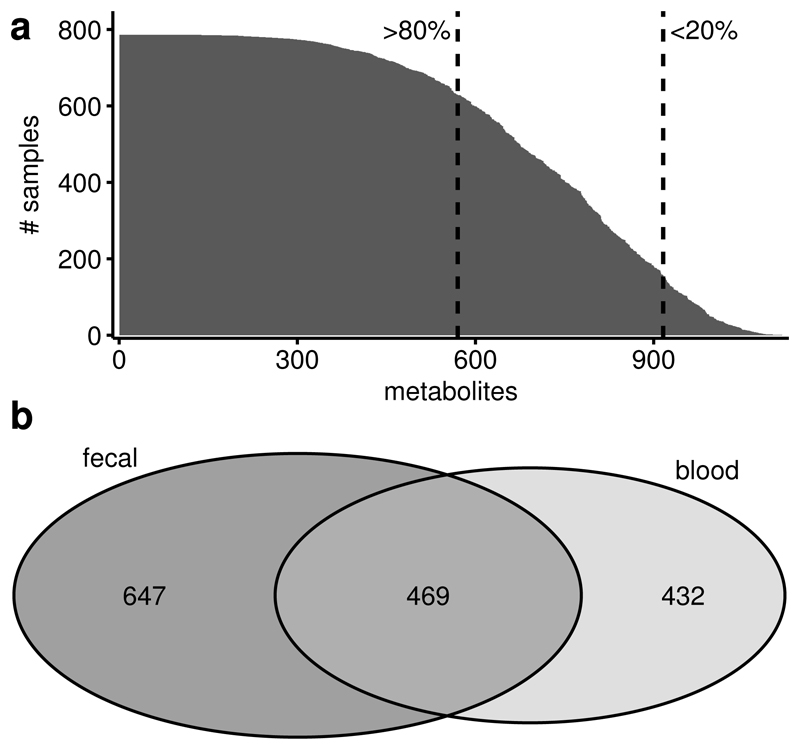
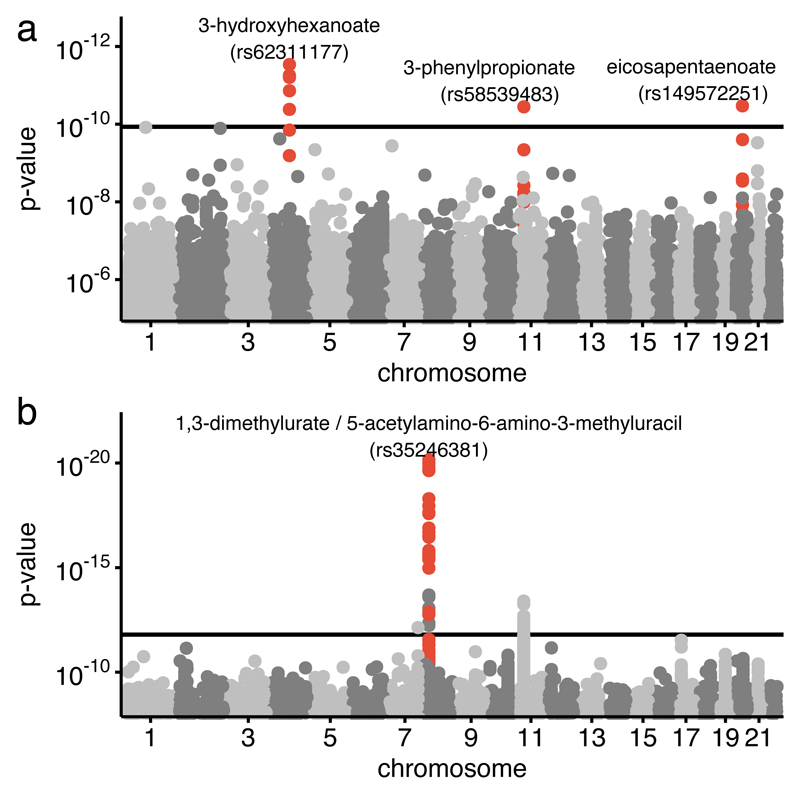
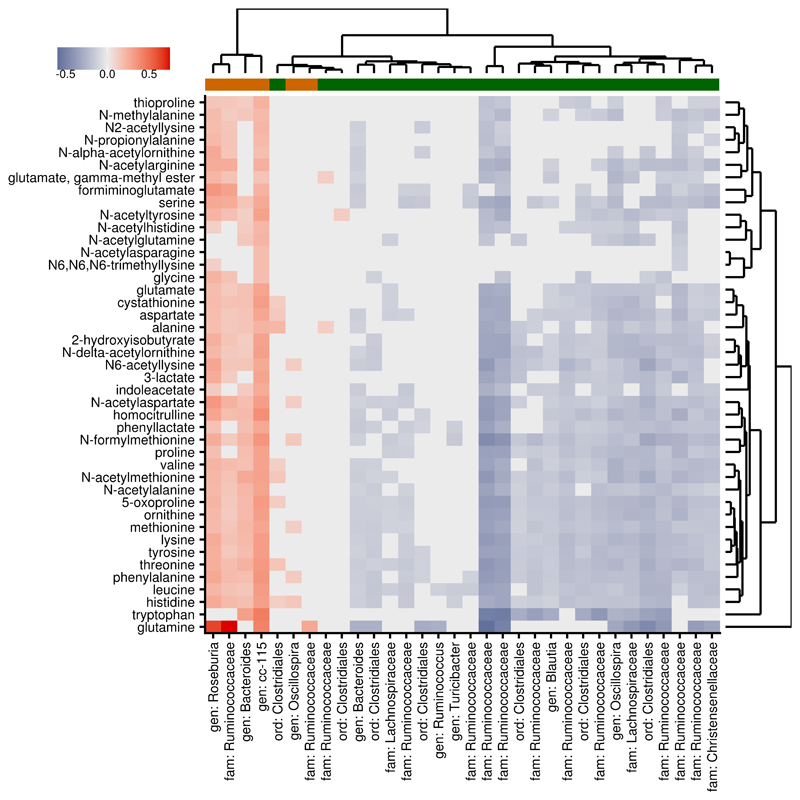
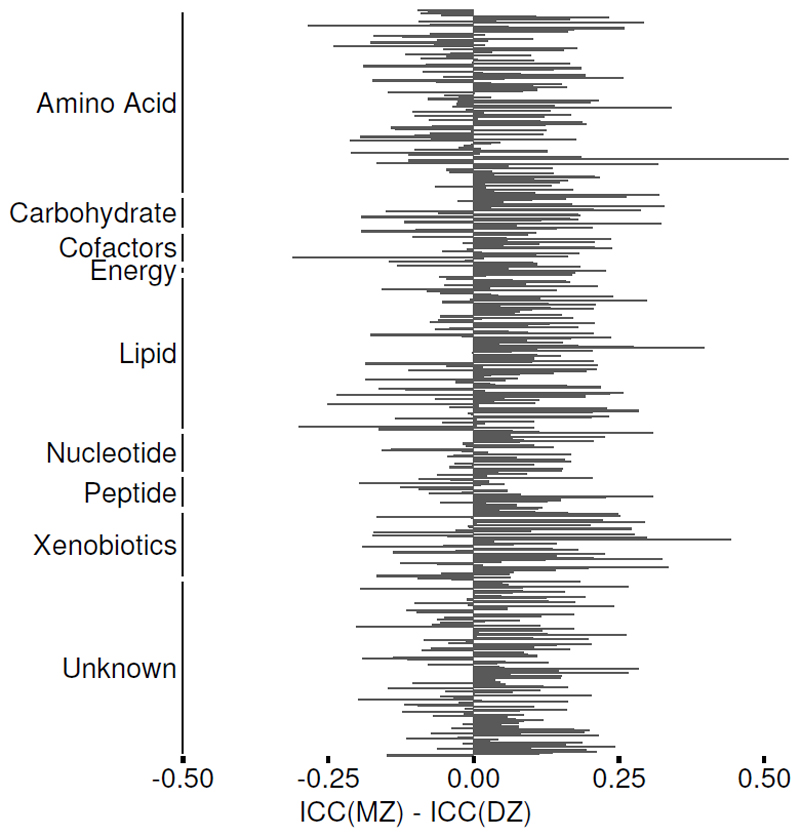
The human gut microbiome plays a key role in human health , but 16S characterization lacks quantitative functional annotation . The fecal metabolome provides a functional readout of microbial activity and can be used as an intermediate phenotype mediating host-microbiome interactions . In this comprehensive description of the fecal metabolome, examining 1,116 metabolites from 786 individuals from a population-based twin study (TwinsUK), the fecal metabolome was found to be only modestly influenced by host genetics (heritability (H) = 17.9%). One replicated locus at the NAT2 gene was associated with fecal metabolic traits. The fecal metabolome largely reflects gut microbial composition, explaining on average 67.7% (±18.8%) of its variance. It is strongly associated with visceral-fat mass, thereby illustrating potential mechanisms underlying the well-established microbial influence on abdominal obesity. Fecal metabolic profiling thus is a novel tool to explore links among microbiome composition, host phenotypes, and heritable complex traits.
人类肠道微生物群在人类健康中起着关键作用,但 16S 特征缺乏定量功能注释。粪便代谢组学提供了微生物活性的功能读数,并可用作介导宿主-微生物相互作用的中间表型。在对来自基于人群的双胞胎研究(TwinsUK)的 786 个人的 1116 种粪便代谢物进行的全面描述中,发现粪便代谢组受宿主遗传的影响很小(遗传力(H)= 17.9%)。NAT2 基因的一个复制基因座与粪便代谢特征相关。粪便代谢组在很大程度上反映了肠道微生物组成,平均解释其变异的 67.7%(±18.8%)。它与内脏脂肪质量强烈相关,从而说明了微生物对腹部肥胖的既定影响的潜在机制。粪便代谢组学分析因此是一种探索微生物组成、宿主表型和可遗传复杂特征之间联系的新工具。