Pisani Anthony R, Wyman Peter A, Gurditta Kunali, Schmeelk-Cone Karen, Anderson Carolyn L, Judd Emily
Department of Psychiatry, University of Rochester School of Medicine and Dentistry, Rochester, NY, United States.
Department of Pediatrics, University of Rochester School of Medicine and Dentistry, Rochester, NY, United States.
JMIR Ment Health. 2018 May 31;5(2):e10425. doi: 10.2196/10425.
Suicide is a leading cause of death among 10- to 19-year-olds in the United States, with 5% to 8% attempting suicide each year. Suicide risk rises significantly during early adolescence and is higher in rural and underserved communities. School-based universal prevention programs offer a promising way of reducing suicide by providing strategies for emotion regulation and encouraging help-seeking behaviors and youth-adult connectedness. However, such programs frequently run into difficulties in trying to engage a broad range of students. Text messaging is a dominant medium of communication among youths, and studies show both efficacy and uptake in text messaging interventions aimed at adolescents. Text-based interventions may, thus, offer a means for school-based universal prevention programs to engage adolescents who would otherwise be difficult to reach.
We field tested Text4Strength, an automated, interactive text messaging intervention that seeks to reach a broad range of early adolescents in rural communities. Text4Strength extends Sources of Strength, a peer-led school suicide prevention program, by encouraging emotion regulation, help-seeking behaviors, and youth-adult connectedness in adolescents. The study tested the appeal and feasibility of Text4Strength and its potential to extend universal school-based suicide prevention.
We field tested Text4Strength with 42 ninth-grade students. Over 9 weeks, students received 28 interactive message sequences across 9 categories (Sources of Strength introduction, positive friend, mentors, family support, healthy activities, generosity, spirituality, medical access, and emotion regulation strategies). The message sequences included games, requests for advice, questions about students' own experiences, and peer testimonial videos. We measured baseline mental health characteristics, frequency of replies, completion of sequences and video viewing, appeal to students, and their perception of having benefited from the program.
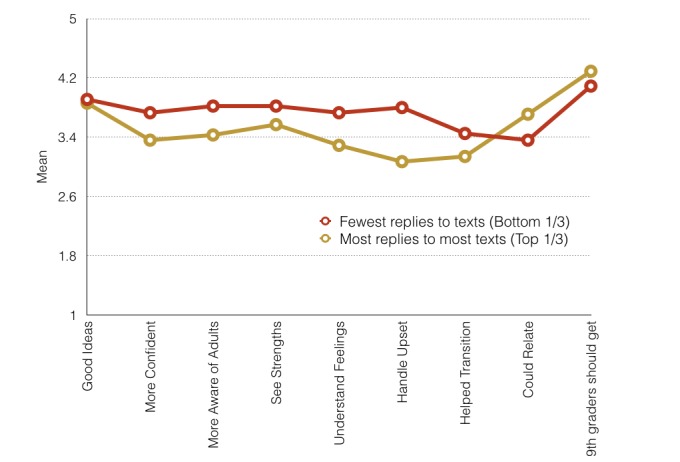
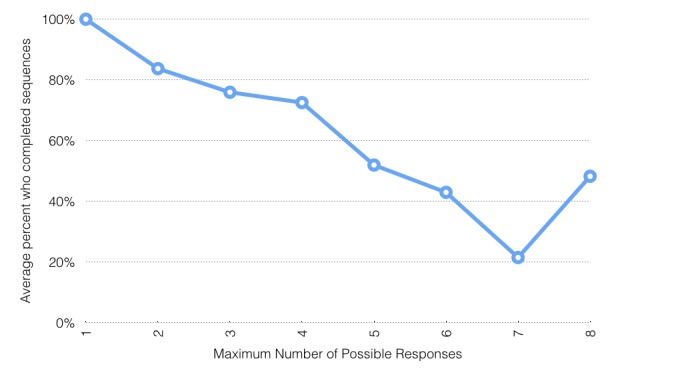
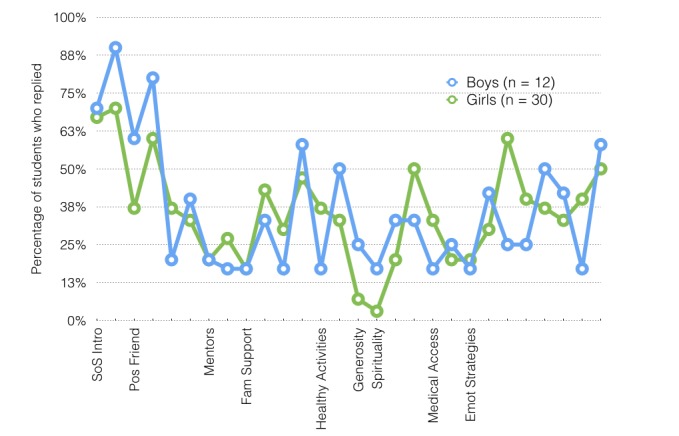
Of the 42 participating students, 38 (91%) responded to at least one sequence and 22 (52%) responded to more than a third of the sequences. The proportion of students who completed multistep sequences they had started ranged from 35% (6/17) to 100% (3/3 to 28/28), with responses dropping off when more than 4 replies were needed. With the exception of spirituality and generosity, each of the content areas generated at least a moderate number of student replies from both boys and girls. Students with higher and lower levels of risk and distress interacted with the sequences at similar rates. Contrary to expectations, few students watched videos. Students viewed the intervention as useful-even those who rarely responded to messages. More than 70% found the texts useful (3 items, n range 29-34) and 90% (36) agreed the program should be repeated.
Text4Strength offers a potentially engaging way to extend school-based interventions that promote protective factors for suicide. Text4Strength is ready to be revised, based on findings and student feedback from this field test, and rigorously tested for efficacy.
自杀是美国10至19岁青少年的主要死因之一,每年有5%至8%的青少年尝试自杀。自杀风险在青春期早期显著上升,在农村和服务不足的社区更高。基于学校的普遍预防计划通过提供情绪调节策略、鼓励寻求帮助的行为以及青少年与成年人的联系,为减少自杀提供了一种有前景的方式。然而,此类计划在试图吸引广泛的学生参与时经常遇到困难。短信是青少年中占主导地位的交流媒介,研究表明针对青少年的短信干预既有效果又能被接受。因此,基于短信的干预可能为基于学校的普遍预防计划提供一种途径,以吸引那些原本难以接触到的青少年。
我们对Text4Strength进行了实地测试,这是一种自动化的交互式短信干预措施,旨在覆盖农村社区的广泛青少年群体。Text4Strength扩展了“力量之源”,这是一个由同伴主导的学校自杀预防计划,通过鼓励青少年进行情绪调节、寻求帮助的行为以及青少年与成年人的联系。该研究测试了Text4Strength的吸引力和可行性及其扩展基于学校的普遍自杀预防的潜力。
我们对42名九年级学生进行了Text4Strength的实地测试。在9周时间里,学生们收到了28个交互式短信序列,分为9个类别(力量之源介绍、积极的朋友、导师、家庭支持、健康活动、慷慨、精神层面、医疗途径和情绪调节策略)。短信序列包括游戏、征求建议、关于学生自身经历的问题以及同伴推荐视频。我们测量了基线心理健康特征、回复频率、序列完成情况和视频观看情况、对学生的吸引力以及他们对从该计划中受益的看法。
在42名参与学生中,38名(91%)至少回复了一个序列,22名(52%)回复了超过三分之一的序列。完成已开始的多步骤序列的学生比例从35%(6/17)到100%(3/3至28/28)不等,当需要超过4条回复时,回复率会下降。除了精神层面和慷慨类别外,每个内容领域都至少从男孩和女孩那里得到了一定数量的回复。风险和困扰程度较高和较低的学生与序列的互动率相似。与预期相反,很少有学生观看视频。学生们认为该干预是有用的——即使是那些很少回复短信的学生。超过70%的学生认为短信有用(3项,n范围为29 - 34),90%(36名)同意该计划应该重复进行。
Text4Strength为扩展基于学校的干预措施提供了一种潜在的有效方式,这些干预措施可促进自杀的保护因素。基于此次实地测试的结果和学生反馈,Text4Strength已准备好进行修订,并对其效果进行严格测试。