Leng Jincheng, Xiong Feng, Yao Junpeng, Dai Xiahuan, Luo Yulei, Hu Maoqing, Zhang Lin, Li Ying
Chengdu University of Traditional Chinese Medicine, Chengdu, China.
Department of Acupuncture, Hospital of Traditional Chinese Medicine, Dazu District, Chongqing, China.
Evid Based Complement Alternat Med. 2018 Apr 26;2018:3039783. doi: 10.1155/2018/3039783. eCollection 2018.
The study aimed to investigate the mechanism of electroacupuncture reducing weight via tuberous sclerosis complex 1 (Tsc1) promoter methylation, inhibiting the mammalian target of rapamycin complex 1 (mTORC1) pathway.
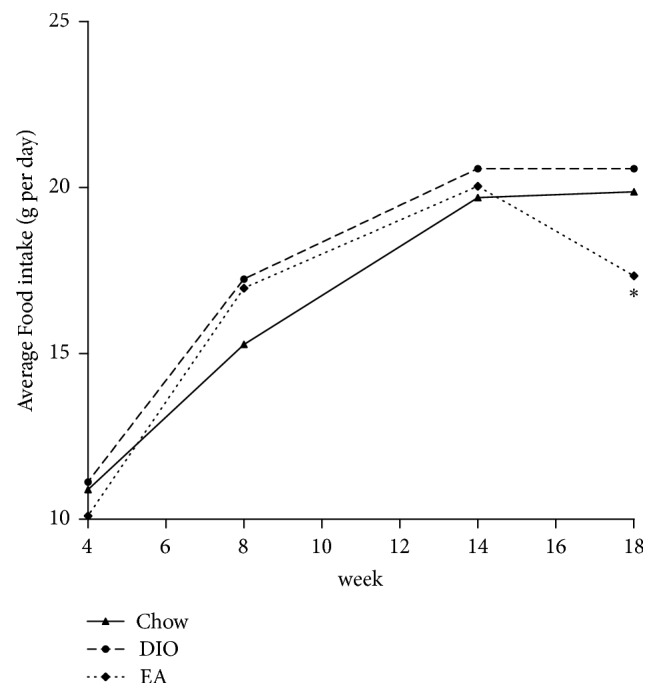
Male Sprague-Dawley rats were divided into chow-fed group (chow group) or high-fat diet group (HF group) for 14 weeks. The obesity rats in HF group were randomly divided into electroacupuncture group (EA group) and diet-induced obesity (DIO) group, which received EA stimulation on bilateral ST25, RN12, SP6, and ST36 for 4 weeks or no further treatment, respectively. Methylation of the Tsc1 gene promoter and expression of agouti-related protein (AgRP), neuropeptide Y (NPY), and proopiomelanocortin (PoMC) were detected at the 18th week.
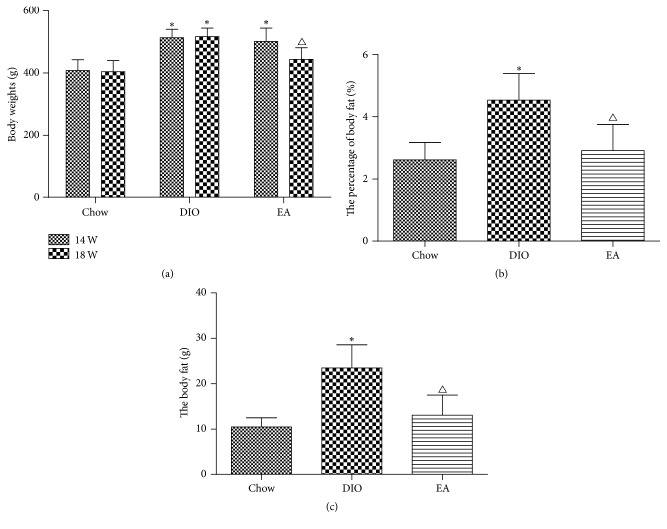
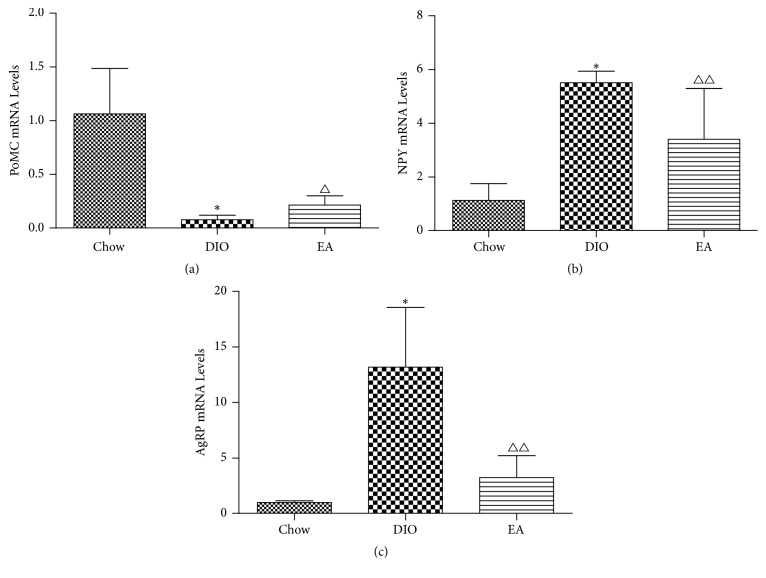
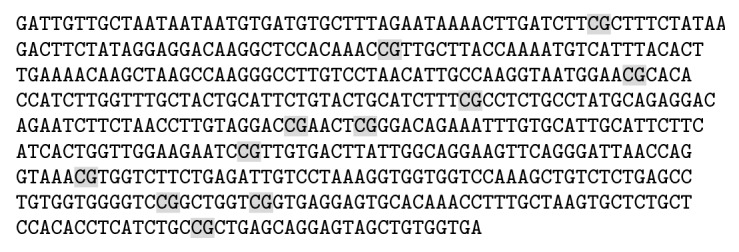
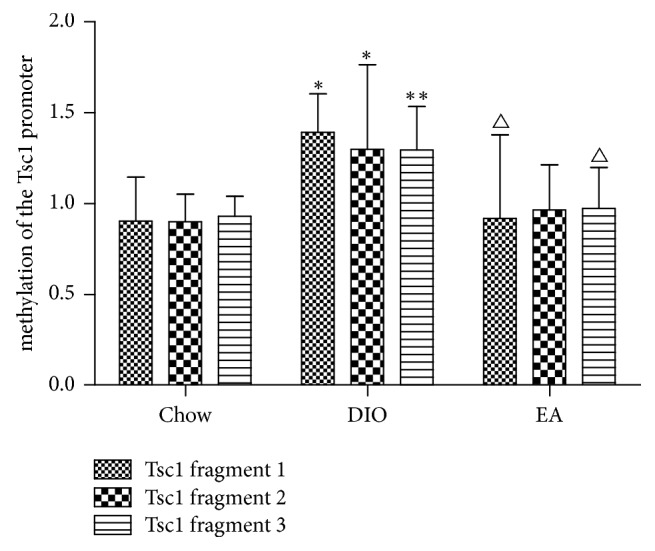
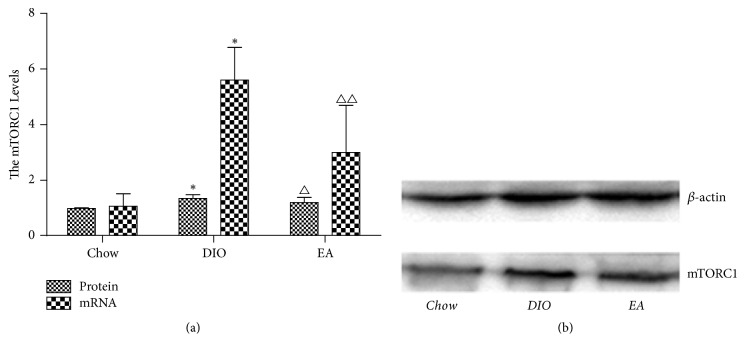
At week 18, weight, body fat, and the body fat rate in DIO group were significantly higher than those of the chow and EA group. Compared with the chow group, the DIO group had increased methylation of the Tsc1 gene promoter and expression of mTORC1, AgRP, and NPY gene and decreased PoMC in the hypothalamus; after EA, methylation of the Tsc1 gene promoter, mRNA, and protein of the mTORC1 and expression of AgRP and NPY gene decreased and PoMC increased significantly.
Our study could shed light on the potential pathway where EA exerts effects on the mechanism of EA treatment for obesity through the hypothalamic Tsc1 promoter demethylation and inhibition of the activity of mTORC1 signaling pathway.
本研究旨在探讨电针通过结节性硬化复合物1(Tsc1)启动子甲基化减轻体重的机制,抑制雷帕霉素哺乳动物靶蛋白复合物1(mTORC1)信号通路。
将雄性Sprague-Dawley大鼠分为普通饲料喂养组(普通组)或高脂饮食组(HF组),持续14周。将HF组中的肥胖大鼠随机分为电针组(EA组)和饮食诱导肥胖组(DIO组),分别在双侧ST25、RN12、SP6和ST36接受电针刺激4周或不进行进一步治疗。在第18周检测Tsc1基因启动子的甲基化以及刺鼠相关蛋白(AgRP)、神经肽Y(NPY)和阿黑皮素原(POMC)的表达。
在第18周时,DIO组的体重、体脂和体脂率显著高于普通组和EA组。与普通组相比,DIO组下丘脑Tsc1基因启动子甲基化增加,mTORC1、AgRP和NPY基因表达增加,POMC减少;电针后,Tsc1基因启动子甲基化、mTORC1的mRNA和蛋白以及AgRP和NPY基因表达降低,POMC显著增加。
我们的研究可能揭示了电针通过下丘脑Tsc1启动子去甲基化和抑制mTORC1信号通路活性对肥胖治疗机制发挥作用的潜在途径。