György Bence, Lööv Camilla, Zaborowski Mikołaj P, Takeda Shuko, Kleinstiver Benjamin P, Commins Caitlin, Kastanenka Ksenia, Mu Dakai, Volak Adrienn, Giedraitis Vilmantas, Lannfelt Lars, Maguire Casey A, Joung J Keith, Hyman Bradley T, Breakefield Xandra O, Ingelsson Martin
Departments of Neurology and Radiology, Massachusetts General Hospital and Center for NeuroDiscovery, Harvard Medical School, Boston, MA, USA; Department of Neurobiology, Harvard Medical School, 220 Longwood Avenue, Boston, MA 02115, USA.
Departments of Neurology and Radiology, Massachusetts General Hospital and Alzheimer's Disease Research Center, Harvard Medical School, Boston, MA, USA.
Mol Ther Nucleic Acids. 2018 Jun 1;11:429-440. doi: 10.1016/j.omtn.2018.03.007. Epub 2018 Mar 16.
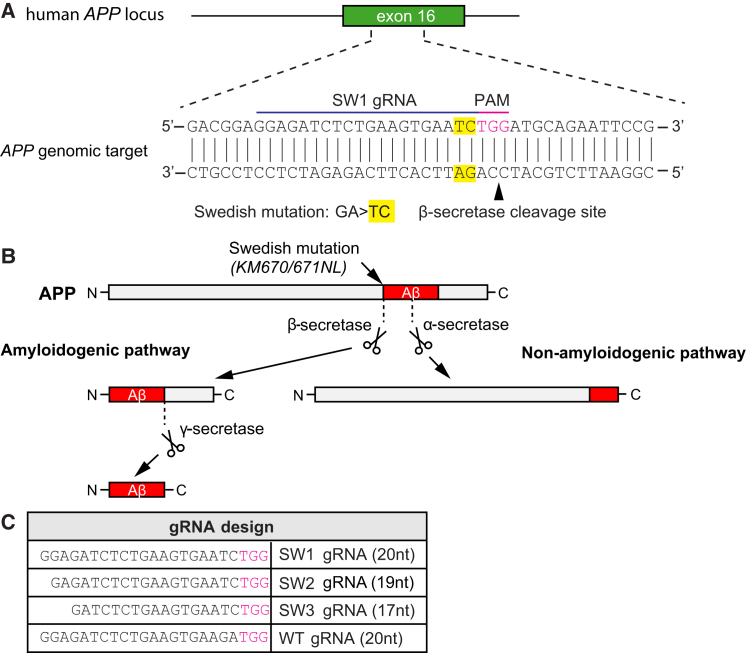
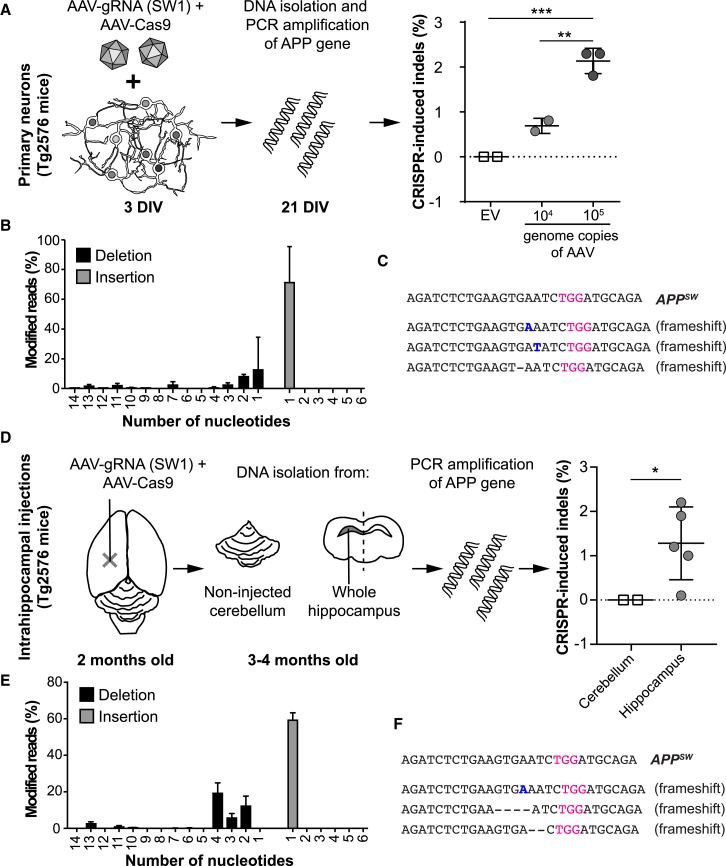
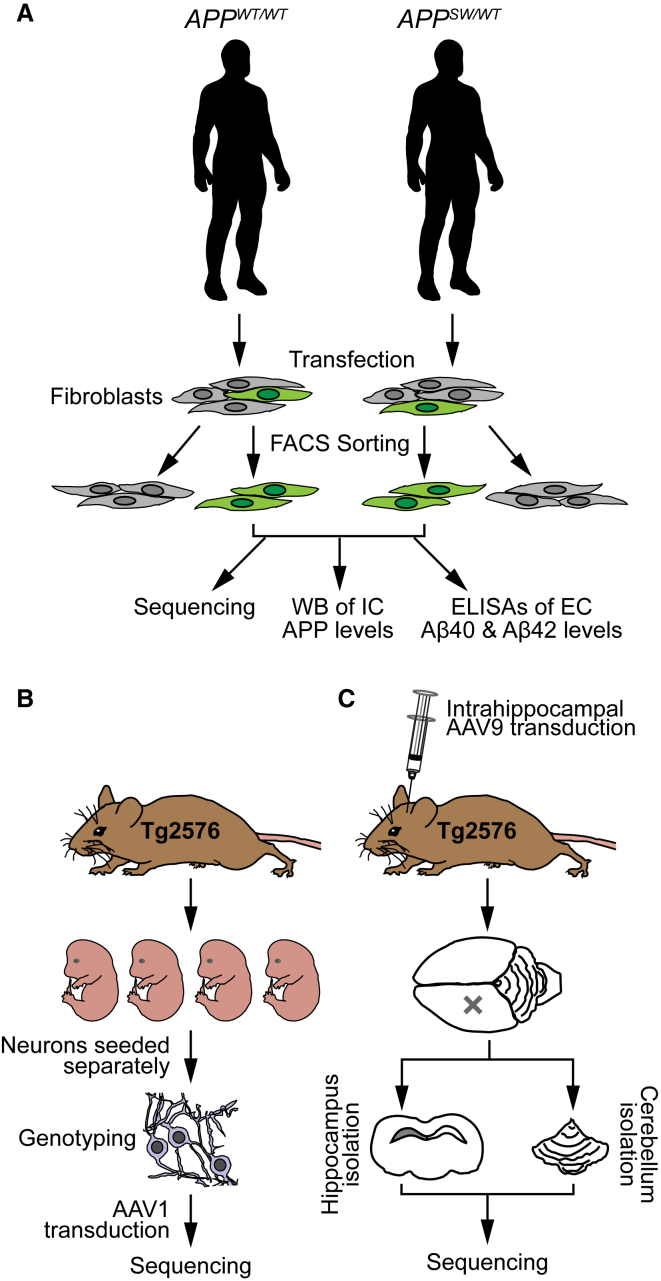
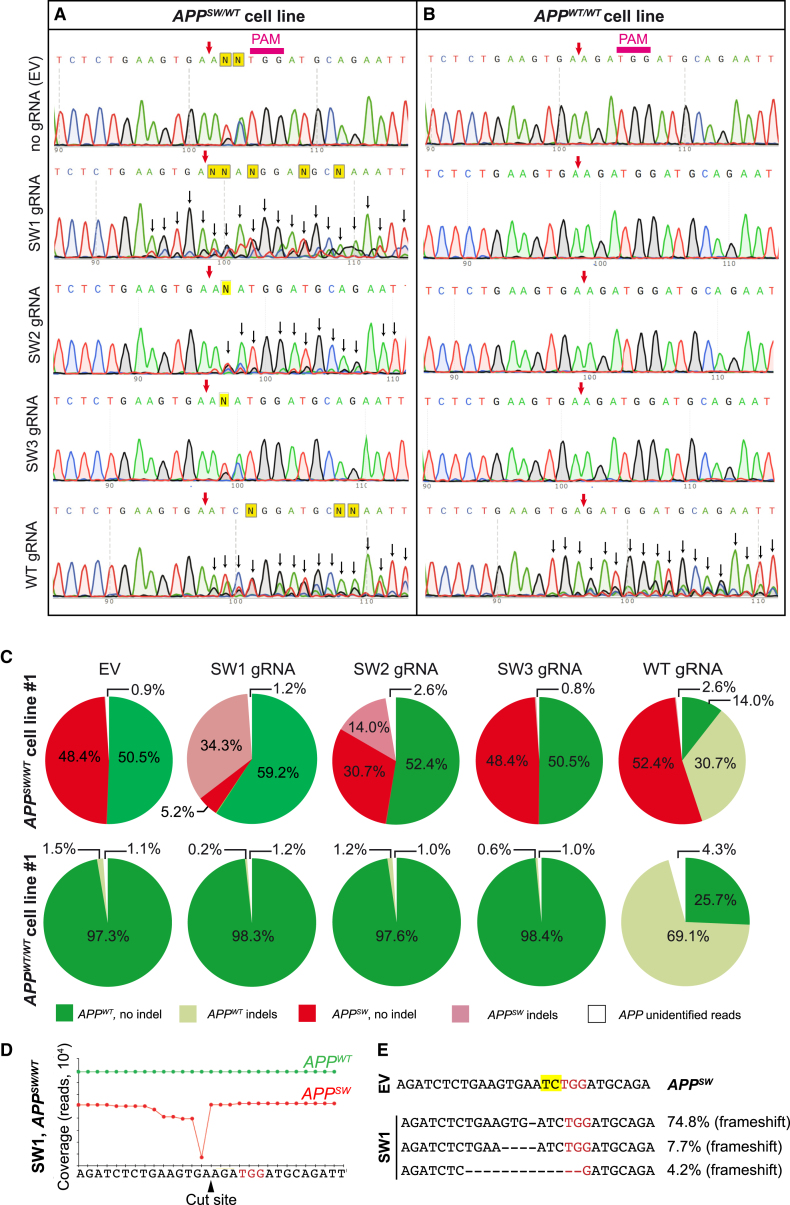
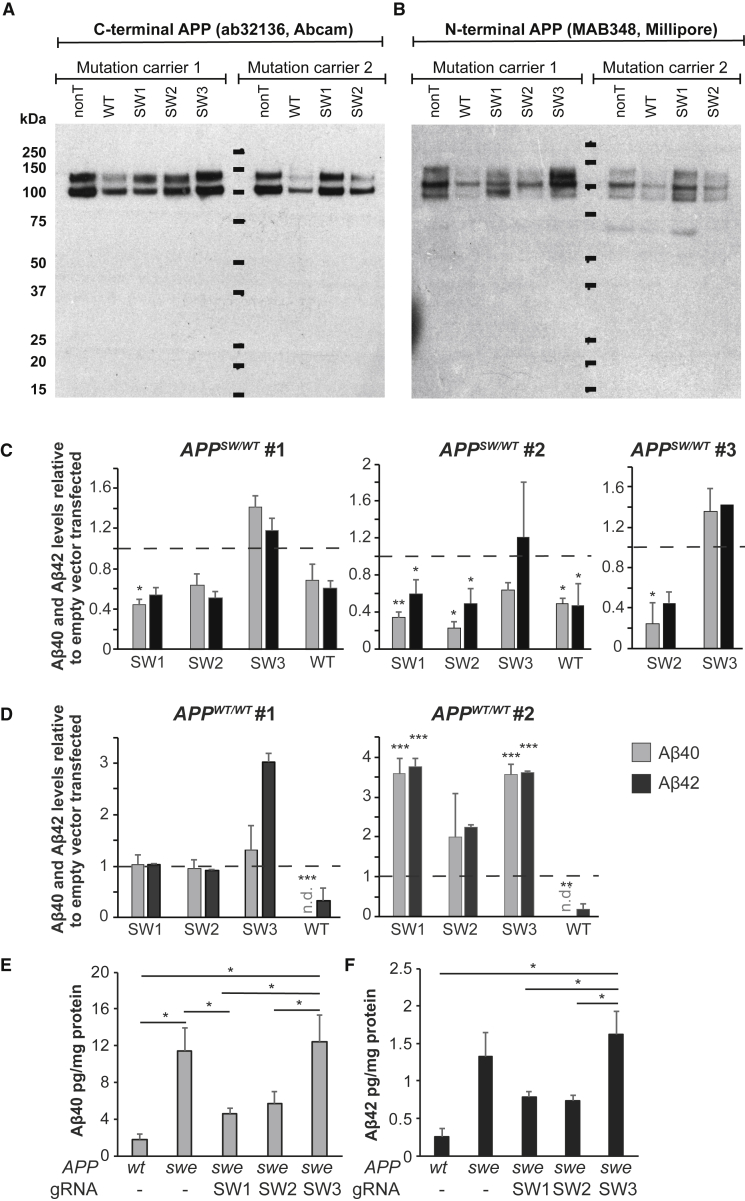
The APPswe (Swedish) mutation in the amyloid precursor protein (APP) gene causes dominantly inherited Alzheimer's disease (AD) as a result of increased β-secretase cleavage of the amyloid-β (Aβ) precursor protein. This leads to abnormally high Aβ levels, not only in brain but also in peripheral tissues of mutation carriers. Here, we selectively disrupted the human mutant APP allele using CRISPR. By applying CRISPR/Cas9 from Streptococcus pyogenes, we generated allele-specific deletions of either APP or APP. As measured by ELISA, conditioned media of targeted patient-derived fibroblasts displayed an approximate 60% reduction in secreted Aβ. Next, coding sequences for the APP-specific guide RNA (gRNA) and Cas9 were packaged into separate adeno-associated viral (AAV) vectors. Site-specific indel formation was achieved both in primary neurons isolated from APP transgenic mouse embryos (Tg2576) and after co-injection of these vectors into hippocampus of adult mice. Taken together, we here present proof-of-concept data that CRISPR/Cas9 can selectively disrupt the APP allele both ex vivo and in vivo-and thereby decrease pathogenic Aβ. Hence, this system may have the potential to be developed as a tool for gene therapy against AD caused by APPswe and other point mutations associated with increased Aβ.
淀粉样前体蛋白(APP)基因中的APPswe(瑞典型)突变会导致淀粉样β(Aβ)前体蛋白的β-分泌酶切割增加,从而引发显性遗传的阿尔茨海默病(AD)。这不仅会导致突变携带者大脑中Aβ水平异常升高,还会使其外周组织中的Aβ水平升高。在此,我们使用CRISPR选择性地破坏了人类突变APP等位基因。通过应用化脓性链球菌的CRISPR/Cas9,我们产生了APP或APP的等位基因特异性缺失。通过酶联免疫吸附测定(ELISA)测量,靶向患者来源的成纤维细胞的条件培养基中分泌的Aβ减少了约60%。接下来,将APP特异性引导RNA(gRNA)和Cas9的编码序列包装到单独的腺相关病毒(AAV)载体中。在从APP转基因小鼠胚胎(Tg2576)分离的原代神经元中以及将这些载体共注射到成年小鼠海马体后,均实现了位点特异性插入缺失的形成。综上所述,我们在此展示了概念验证数据,即CRISPR/Cas9可以在体外和体内选择性地破坏APP等位基因,从而降低致病性Aβ。因此,该系统可能有潜力被开发成为一种针对由APPswe和其他与Aβ增加相关的点突变引起的AD的基因治疗工具。