Ruddick-Collins L C, Johnston J D, Morgan P J, Johnstone A M
The Rowett Institute University of Aberdeen Aberdeen UK.
Faculty of Health and Medical Sciences University of Surrey Guildford UK.
Nutr Bull. 2018 Jun;43(2):174-183. doi: 10.1111/nbu.12323. Epub 2018 May 8.
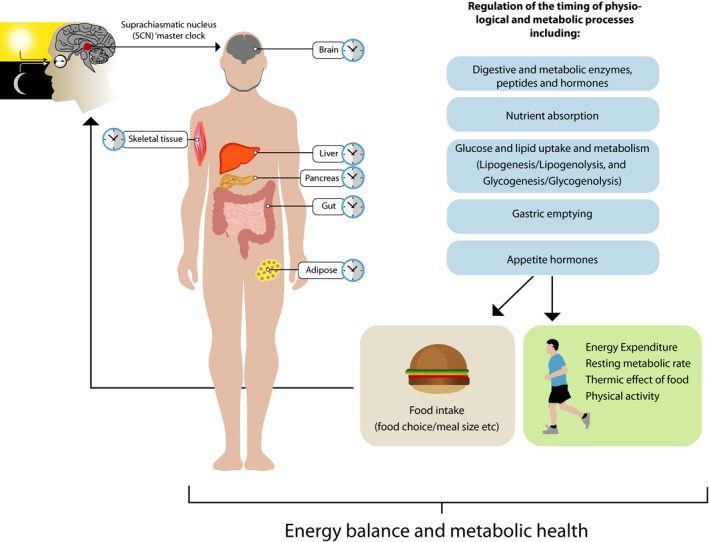
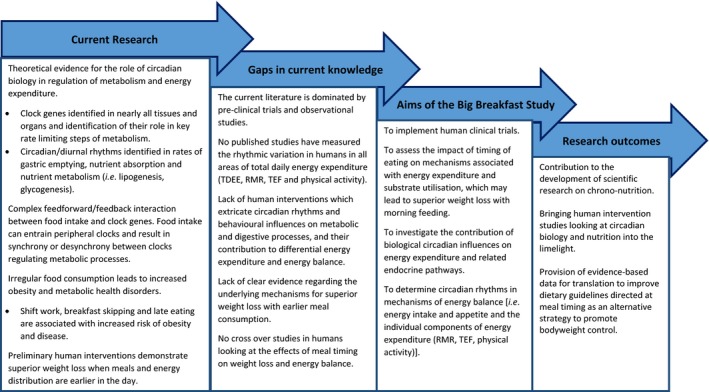
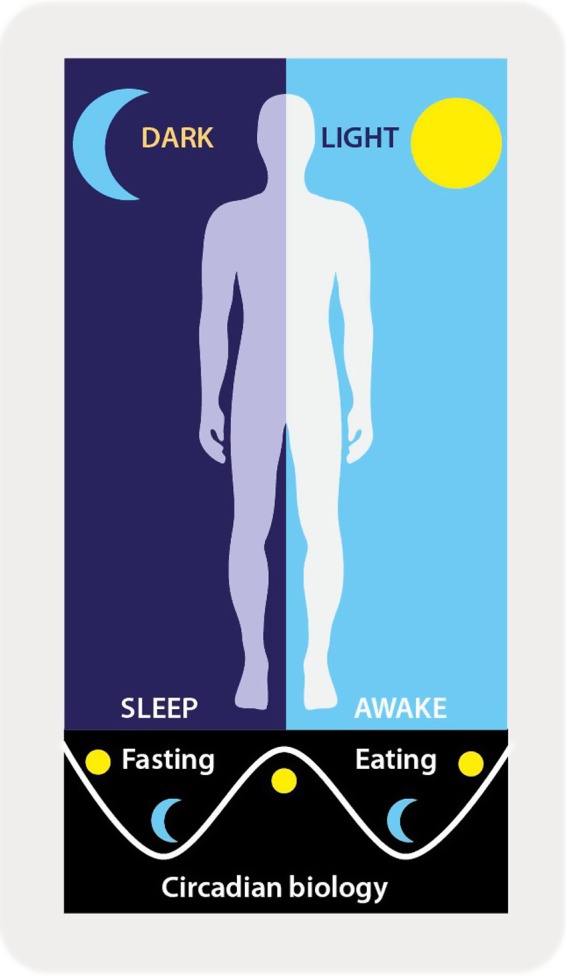
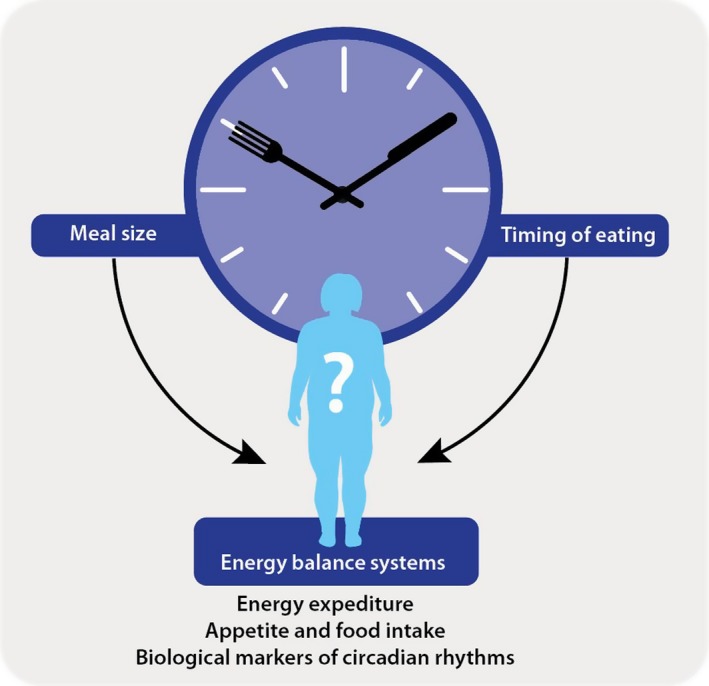
A growing body of evidence highlights the importance of the biological clock as a modulator of energy balance and metabolism. Recent studies in humans have shown that ingested calories are apparently utilised more efficiently in the morning than in the evening and this is manifest through improved weight loss, even under iso-energetic calorie intake. The mechanisms behind this enhanced morning energy metabolism are not yet clear, although it may result from behavioural adaptations or circadian driven variations in physiology and energy metabolism. A major objective of the newly funded therefore is to investigate the mechanistic basis of this amplified morning thermogenesis leading to enhanced weight loss, by exploring behavioural and physiological adaptations in energy expenditure alongside the underlying circadian biology. This report briefly discusses the current research linking meal timing, circadian rhythms and metabolism; highlights the research gaps; and provides an overview of the studies being undertaken as part of the Medical Research Council-funded .
越来越多的证据凸显了生物钟作为能量平衡和新陈代谢调节者的重要性。最近在人类身上的研究表明,摄入的卡路里在早晨显然比晚上能更有效地被利用,即使在等能量卡路里摄入的情况下,这也通过更好的体重减轻表现出来。这种增强的早晨能量代谢背后的机制尚不清楚,尽管它可能是由行为适应或生理和能量代谢中昼夜节律驱动的变化导致的。因此,新获得资助项目的一个主要目标是,通过探索能量消耗方面的行为和生理适应以及潜在的昼夜生物学,研究这种增强的早晨产热导致体重减轻增加的机制基础。本报告简要讨论了当前将用餐时间、昼夜节律和新陈代谢联系起来的研究;突出了研究空白;并概述了作为医学研究理事会资助项目一部分正在进行的研究。