Diabetes Unit, Wolfson Medical Center, Sackler Faculty of Medicine, Tel Aviv University, Holon 58100, Israel.
Institute of Biochemistry, Food Science and Nutrition, The Robert H. Smith Faculty of Agriculture, Food and Environment, The Hebrew University of Jerusalem, Rehovot 76000, Israel.
Nutrients. 2021 May 5;13(5):1558. doi: 10.3390/nu13051558.
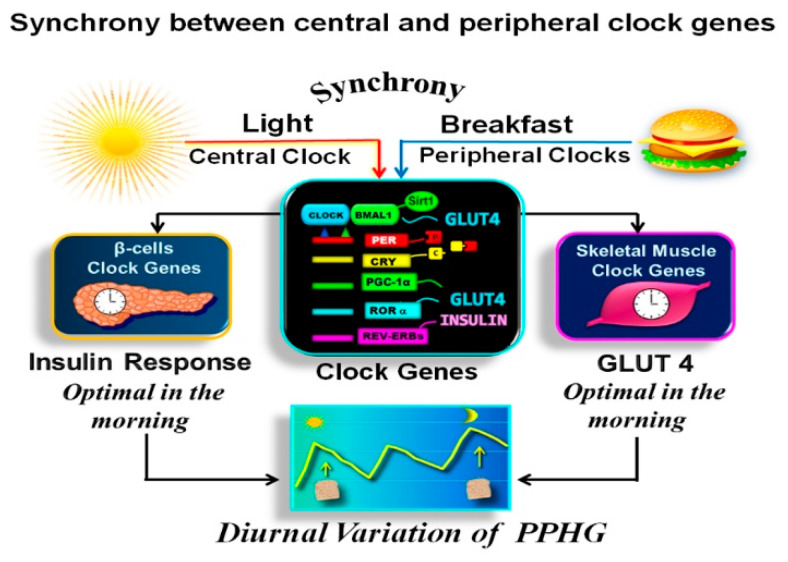
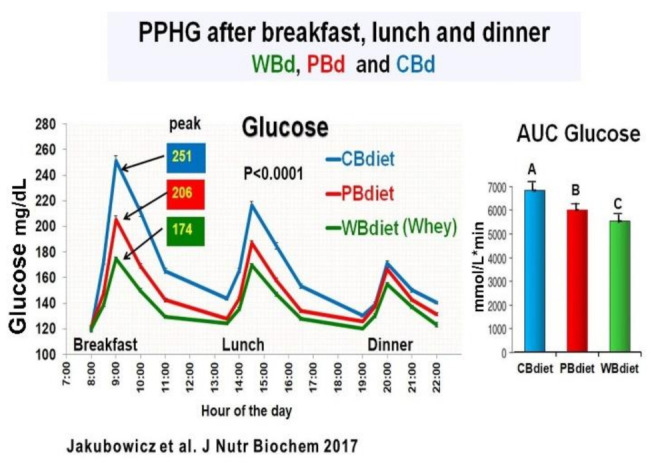
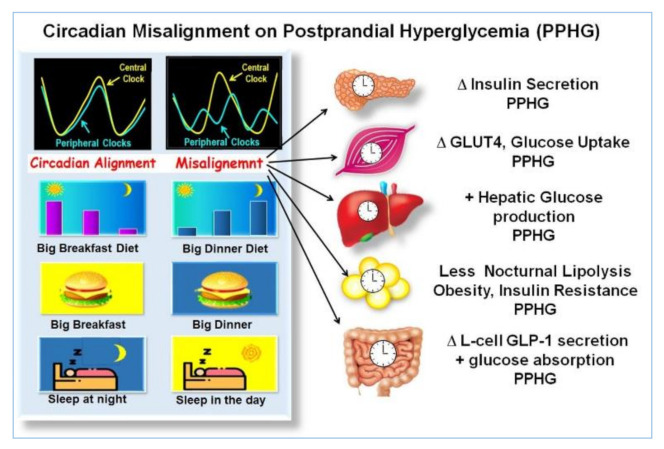
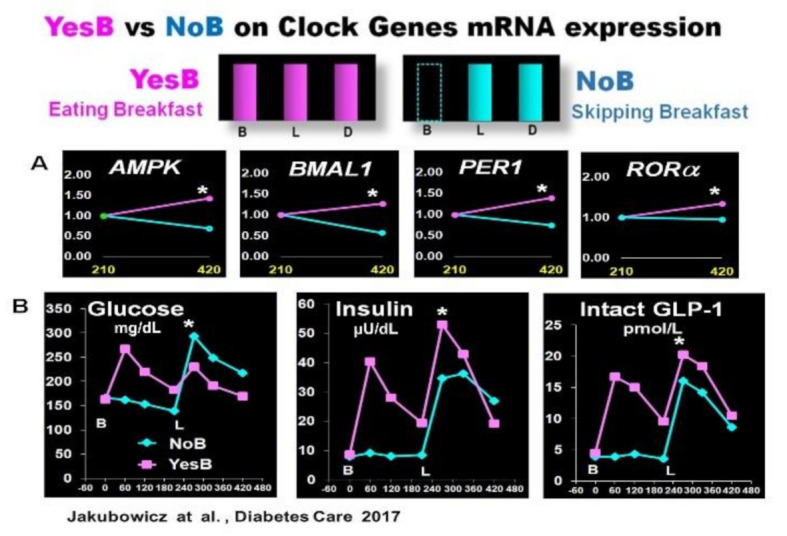
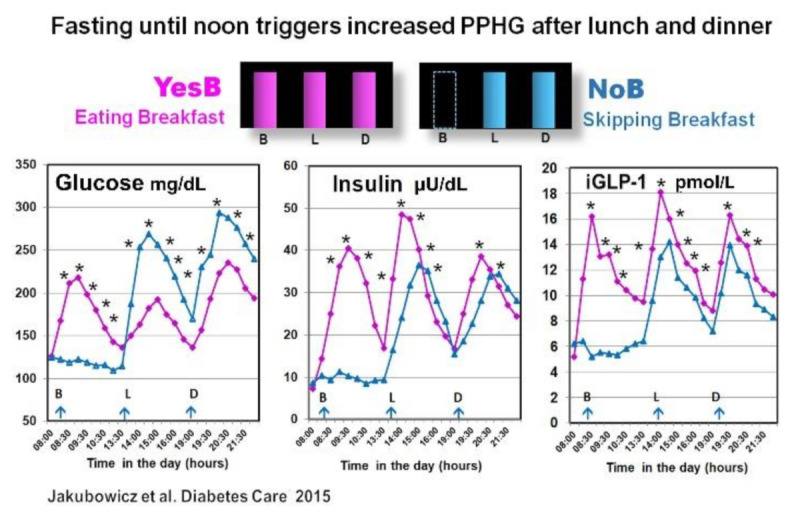
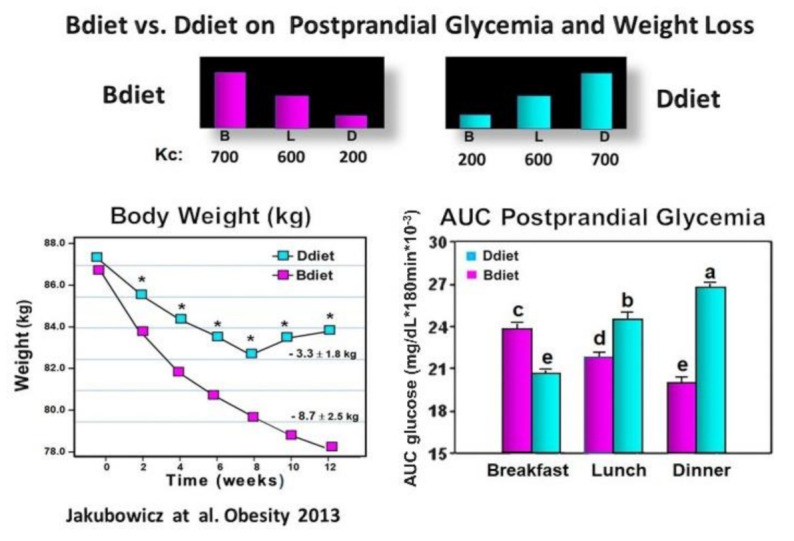
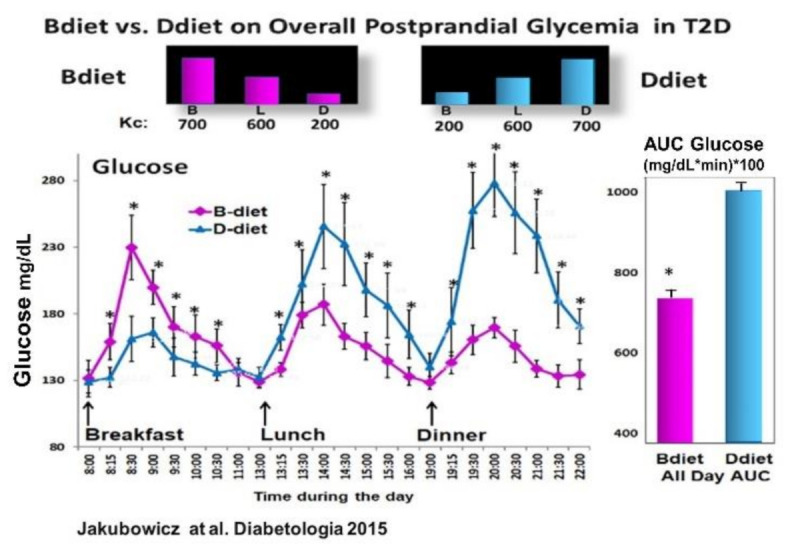
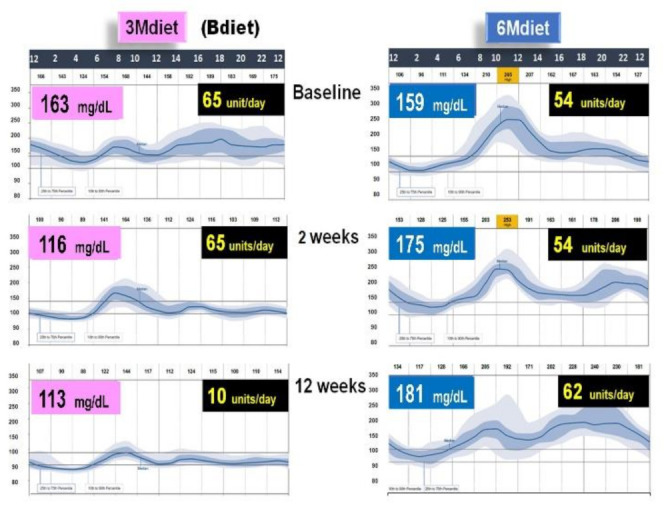
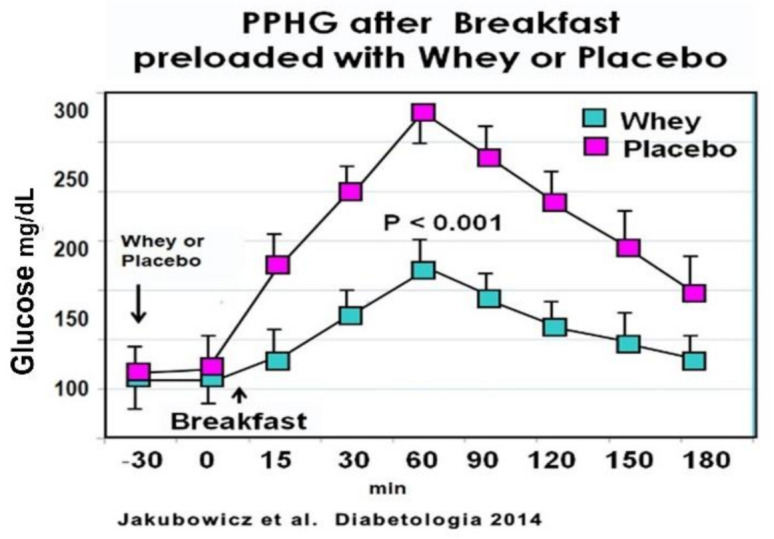
Postprandial hyperglycemia (PPHG) is strongly linked with the future development of cardiovascular complications in type 2 diabetes (T2D). Hence, reducing postprandial glycemic excursions is essential in T2D treatment to slow progressive deficiency of β-cell function and prevent cardiovascular complications. Most of the metabolic processes involved in PPHG, i.e., β-cell secretory function, GLP-1 secretion, insulin sensitivity, muscular glucose uptake, and hepatic glucose production, are controlled by the circadian clock and display daily oscillation. Consequently, postprandial glycemia displays diurnal variation with a higher glycemic response after meals with the same carbohydrate content, consumed at dusk compared to the morning. T2D and meal timing schedule not synchronized with the circadian clock (i.e., skipping breakfast) are associated with disrupted clock gene expression and is linked to PPHG. In contrast, greater intake in the morning (i.e., high energy breakfast) than in the evening has a resetting effect on clock gene oscillations and beneficial effects on weight loss, appetite, and reduction of PPHG, independently of total energy intake. Therefore, resetting clock gene expression through a diet intervention consisting of meal timing aligned to the circadian clock, i.e., shifting most calories and carbohydrates to the early hours of the day, is a promising therapeutic approach to improve PPHG in T2D. This review will focus on recent studies, showing how a high-energy breakfast diet (Bdiet) has resetting and synchronizing actions on circadian clock genes expression, improving glucose metabolism, postprandial glycemic excursions along with weight loss in T2D.
餐后高血糖(PPHG)与 2 型糖尿病(T2D)患者未来心血管并发症的发展密切相关。因此,在 T2D 治疗中降低餐后血糖波动对于减缓β细胞功能的进行性缺陷和预防心血管并发症至关重要。涉及 PPHG 的大多数代谢过程,即β细胞分泌功能、GLP-1 分泌、胰岛素敏感性、肌肉葡萄糖摄取和肝葡萄糖产生,均受生物钟控制并呈现昼夜波动。因此,餐后血糖呈现出昼夜变化,与在黄昏时摄入相同碳水化合物含量的餐后相比,早餐时餐后血糖反应更高。T2D 和与生物钟不同步的进餐时间安排(即不吃早餐)与时钟基因表达的紊乱有关,并与 PPHG 相关。相比之下,早晨(即高能量早餐)摄入更多食物对时钟基因波动具有重置效应,并且对体重减轻、食欲和 PPHG 降低具有有益影响,而与总能量摄入无关。因此,通过与生物钟对齐的进餐时间安排(即大部分热量和碳水化合物转移到一天的早期)的饮食干预来重置时钟基因表达是改善 T2D 中 PPHG 的一种有前途的治疗方法。这篇综述将重点介绍最近的研究,展示高能量早餐饮食(Bdiet)如何对生物钟基因表达具有重置和同步作用,改善葡萄糖代谢、餐后血糖波动以及 T2D 患者的体重减轻。