Xie Yangmei, Chu Aiqun, Feng Yonghao, Chen Long, Shao Yiye, Luo Qiong, Deng Xiaolin, Wu Men, Shi Xiaohong, Chen Yinghui
Department of Neurology, Jinshan Hospital, Fudan University, Shanghai, China.
Department of General Medicine, Shihua Community Health Service Center, Shanghai, China.
Front Pharmacol. 2018 May 14;9:478. doi: 10.3389/fphar.2018.00478. eCollection 2018.
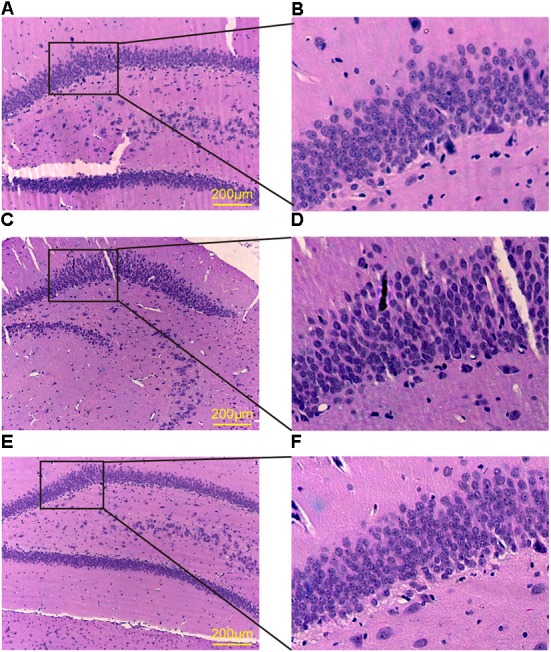
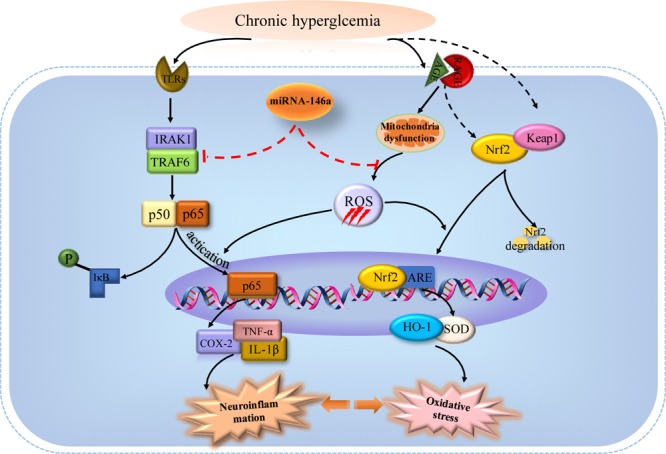
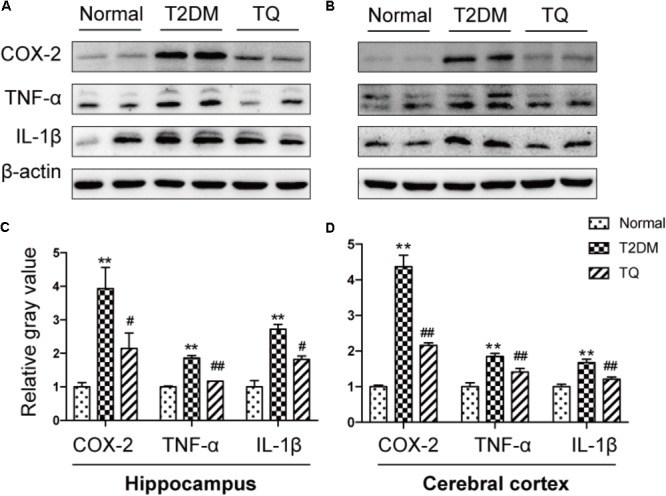
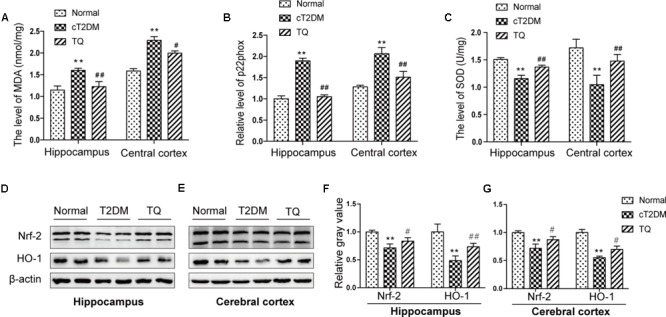
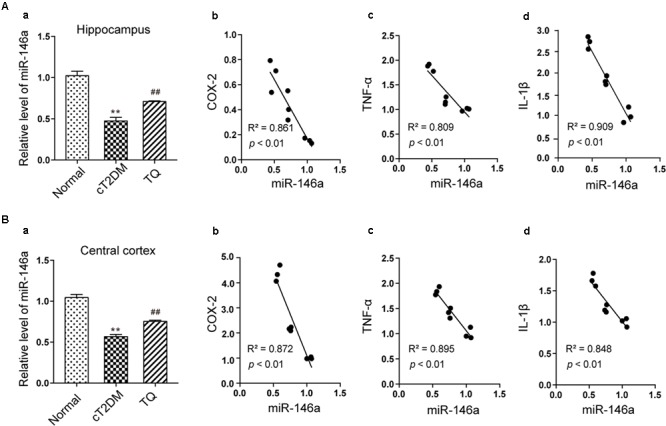
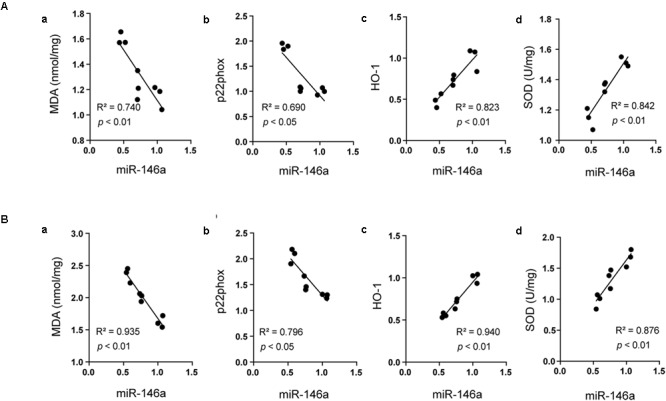
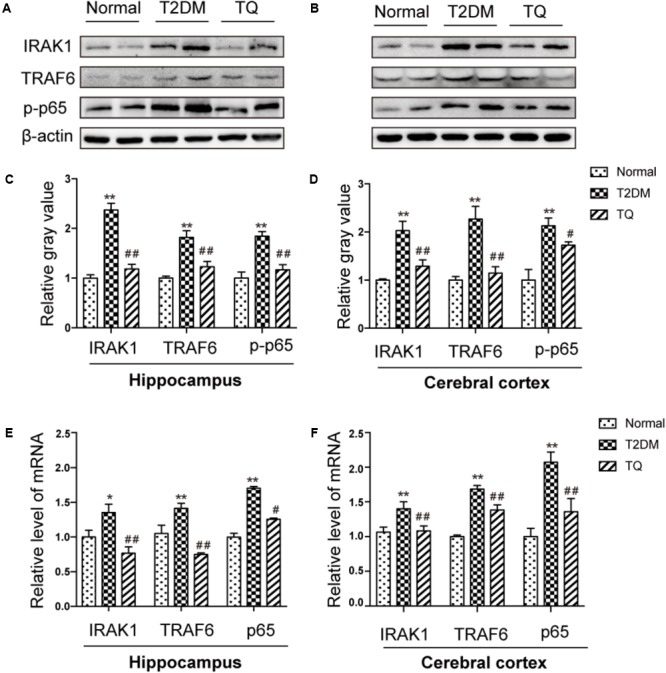
It was demonstrated that inflammation and oxidative stress induced by hyperglycemia were closely associated with alteration of miR-146a. Here, we investigated the role of miR-146a in mediating inflammation and oxidative stress in the brain of chronic T2DM rats. The chronic T2DM (cT2DM) models were induced by intraperitoneal administration of STZ (35 mg/kg) after being fed a high-fat, high-sugar diet for 6 weeks. H&E staining was conducted to observe the morphological impairment of the rat hippocampus. The expressions of inflammatory mediators (COX-2, TNF-α, IL-1β) and antioxidant proteins (Nrf2, HO-1) were measured by western blot. The levels of MDA and SOD were detected by the respective activity assay kit. The levels of p22phox and miR-146a were examined by quantitative real-time PCR (qRT-PCR). The expressions of IRAK1, TRAF6 and NF-κB p65 were measured by western blot and qRT-PCR. Pearson correlation analysis was performed to investigate the correlations between miR-146a and inflammatory mediators as well as oxidative stress indicators. The expression of miR-146a was negatively correlated with inflammation and oxidative stress status. In the brain tissues of cT2DM rats, it was observed that the expressions of inflammatory mediators (COX-2, TNF-α, IL-1β) and oxidative stress indicators including MDA and p22phox were elevated, which were negatively correlated with the expression of miR-146a. While, the antioxidant proteins (Nrf2, HO-1, SOD) levels decreased in the brain of cT2DM rats, which were positively correlated with the miR-146a level. The expressions of NF-κB p65 and its specific modulators (IRAK1&TRAF6) were elevated in the brain of cT2DM rats, which might be inhibited by miR-146a. Our results implied that increased inflammation and oxidative stress status were associated with brain impairment in cT2DM rats, which were negatively correlated with miR-146a expression. Thus, miR-146a may serve as a negative comprehensive indicator of inflammation and oxidative stress status in the brain of chronic T2DM rats.
结果表明,高血糖诱导的炎症和氧化应激与miR-146a的改变密切相关。在此,我们研究了miR-146a在介导慢性2型糖尿病(T2DM)大鼠大脑炎症和氧化应激中的作用。在给予高脂高糖饮食6周后,通过腹腔注射链脲佐菌素(STZ,35mg/kg)诱导建立慢性T2DM(cT2DM)模型。进行苏木精-伊红(H&E)染色以观察大鼠海马的形态损伤。通过蛋白质免疫印迹法检测炎症介质(COX-2、TNF-α、IL-1β)和抗氧化蛋白(Nrf2、HO-1)的表达。使用相应的活性检测试剂盒检测丙二醛(MDA)和超氧化物歧化酶(SOD)的水平。通过定量实时聚合酶链反应(qRT-PCR)检测p22phox和miR-146a的水平。通过蛋白质免疫印迹法和qRT-PCR检测白细胞介素-1受体相关激酶1(IRAK1)、肿瘤坏死因子受体相关因子6(TRAF6)和核因子κB p65(NF-κB p65)的表达。进行Pearson相关性分析以研究miR-146a与炎症介质以及氧化应激指标之间的相关性。miR-146a的表达与炎症和氧化应激状态呈负相关。在cT2DM大鼠的脑组织中,观察到炎症介质(COX-2、TNF-α、IL-1β)以及包括MDA和p22phox在内的氧化应激指标的表达升高,它们与miR-146a的表达呈负相关。而cT2DM大鼠大脑中的抗氧化蛋白(Nrf2、HO-1、SOD)水平降低,它们与miR-146a水平呈正相关。cT2DM大鼠大脑中NF-κB p65及其特异性调节因子(IRAK1和TRAF6)的表达升高,而miR-146a可能对其具有抑制作用。我们的结果表明,cT2DM大鼠炎症和氧化应激状态增加与脑损伤有关,且与miR-146a表达呈负相关。因此,miR-146a可能是慢性T2DM大鼠大脑炎症和氧化应激状态的一个负性综合指标。