Shao Yi-Ye, Li Bing, Huang Yong-Mei, Luo Qiong, Xie Yang-Mei, Chen Ying-Hui
Department of Neurology, Jinshan Hospital, Fudan University, Shanghai 201508, China.
Center Laboratory, Jinshan Hospital, Fudan University, Shanghai 200040, China.
Transl Neurosci. 2017 Mar 25;8:9-14. doi: 10.1515/tnsci-2017-0003. eCollection 2017 Jan.
Status epilepticus (SE) results in the generation of reactive oxygen species (ROS), which contribute to seizure-induced brain injury. It is well known that oxidative stress plays a pivotal role in status epilepticus (SE). Thymoquinone (TQ) is a bioactive monomer extracted from black cumin (Nigella sativa) seed oil that has anti-inflammatory, anti-cancer, and antioxidant activity in various diseases. This study evaluated the protective effects of TQ on brain injury in a lithium-pilocarpine rat model of SE and investigated the underlying mechanism related to antioxidative pathway.
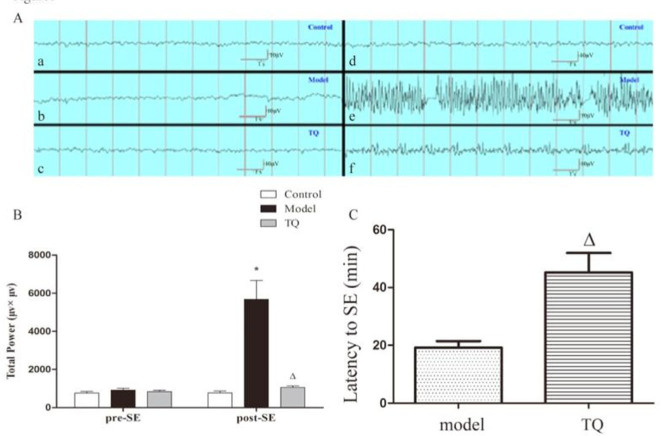
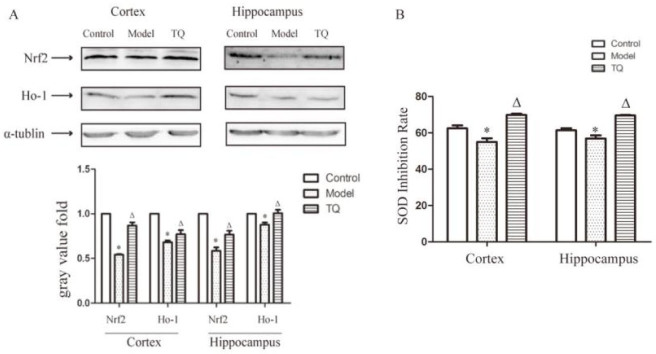
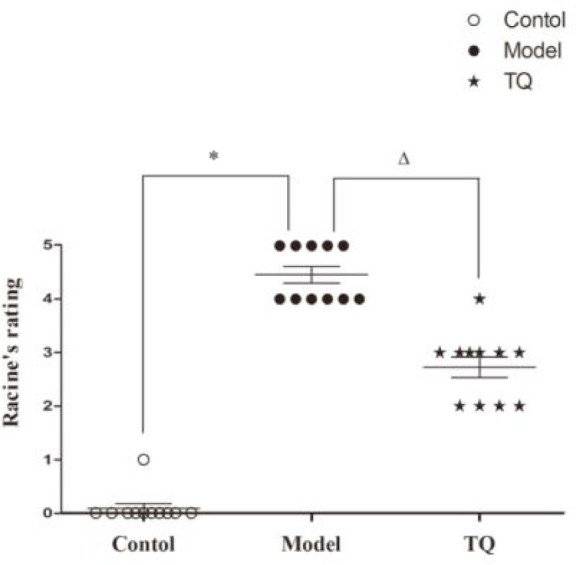
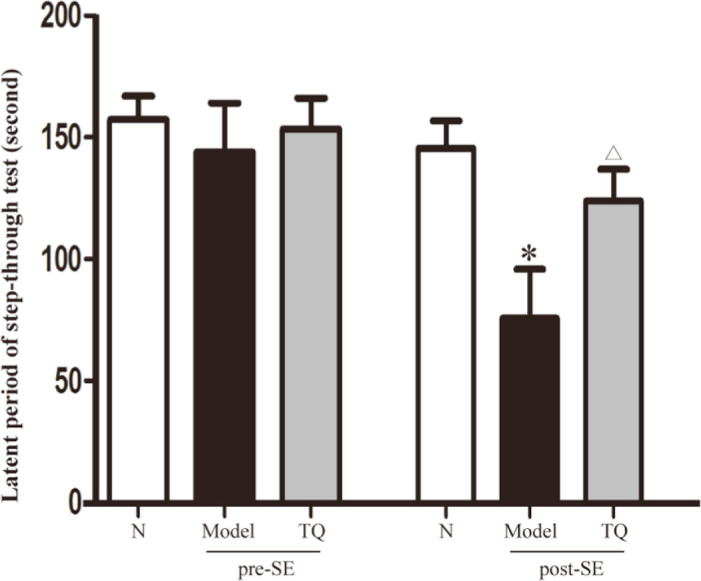
Electroencephalogram and Racine scale were used to value seizure severity. Passive-avoidance test was used to determine learning and memory function. Moreover, anti-oxidative activity of TQ was observed using Western blot and super oxide dismutase (SOD) activity assay.
Latency to SE increased in the TQ-pretreated group compared with rats in the model group, while the total power was significantly lower. Seizure severity measured on the Racine scale was significantly lower in the TQ group compared with the model group. Results of behavioral experiments suggest that TQ may also have a protective effect on learning and memory function. Investigation of the protective mechanism of TQ showed that TQ-pretreatment significantly increased the expression of Nrf2, HO-1 proteins and SOD in the hippocampus.
These findings showed that TQ attenuated brain injury induced by SE via an anti-oxidative pathway.
癫痫持续状态(SE)会导致活性氧(ROS)的产生,这会导致癫痫发作引起的脑损伤。众所周知,氧化应激在癫痫持续状态(SE)中起关键作用。百里醌(TQ)是从黑种草(Nigella sativa)种子油中提取的一种生物活性单体,在多种疾病中具有抗炎、抗癌和抗氧化活性。本研究评估了TQ对SE锂-匹罗卡品大鼠模型脑损伤的保护作用,并研究了与抗氧化途径相关的潜在机制。
采用脑电图和Racine评分来评估癫痫发作的严重程度。采用被动回避试验来测定学习和记忆功能。此外,通过蛋白质免疫印迹法和超氧化物歧化酶(SOD)活性测定来观察TQ的抗氧化活性。
与模型组大鼠相比,TQ预处理组出现SE的潜伏期延长,而总功率显著降低。与模型组相比,TQ组根据Racine评分测定的癫痫发作严重程度显著降低。行为实验结果表明,TQ对学习和记忆功能也可能具有保护作用。对TQ保护机制的研究表明,TQ预处理显著增加了海马中Nrf2、HO-1蛋白和SOD的表达。
这些研究结果表明,TQ通过抗氧化途径减轻了SE诱导的脑损伤。