Rodríguez-Rodríguez Pilar, Ramiro-Cortijo David, Reyes-Hernández Cynthia G, López de Pablo Angel L, González M Carmen, Arribas Silvia M
Departamento de Fisiología, Facultad de Medicina, Universidad Autónoma de Madrid, Madrid, Spain.
Front Physiol. 2018 May 23;9:602. doi: 10.3389/fphys.2018.00602. eCollection 2018.
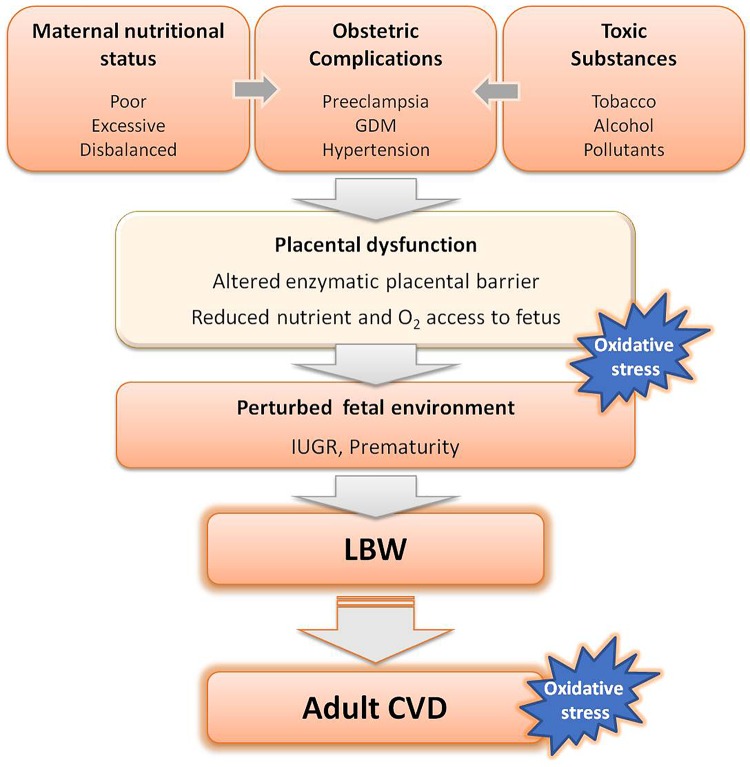
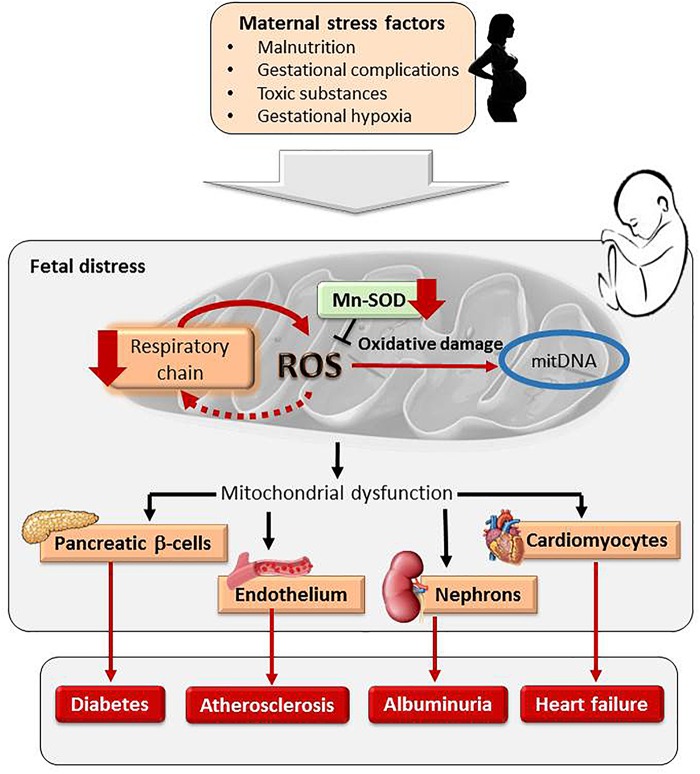
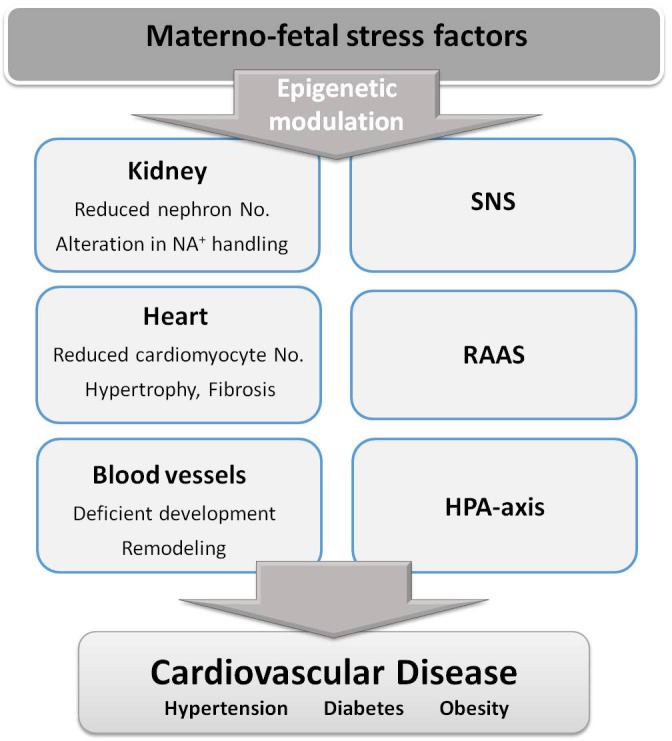
Lifestyle and genetic background are well known risk factors of cardiovascular disease (CVD). A third contributing factor is suboptimal fetal development, due to nutrient or oxygen deprivation, placental insufficiency, or exposure to toxic substances. The fetus adapts to adverse intrauterine conditions to ensure survival; the immediate consequence is low birth weight (LBW) and the long-term effect is an increased susceptibility to develop CVD in adult life. This process is known as Developmental Origins of Health and Disease (DOHaD) or fetal programming of CVD. The influence of fetal life for the future cardiovascular health of the individual has been evidenced by numerous epidemiologic studies in populations suffering from starvation during intrauterine life. Furthermore, experimental animal models have provided support and enabled exploring the underlying mechanisms. Oxidative stress seems to play a central role in fetal programming of CVD, both in the response of the feto-placental unit to the suboptimal intrauterine environment and in the alterations of physiologic systems of cardiovascular control, ultimately leading to disease. This review aims to summarize current knowledge on the alterations in oxidative balance in response to fetal stress factors covering two aspects. Firstly, the evidence from human studies of the implication of oxidative stress in LBW induced by suboptimal conditions during intrauterine life, emphasizing the role of the placenta. In the second part we summarize data on specific redox alterations in key cardiovascular control organs induced by exposure to known stress factors in experimental animals and discuss the emerging role of the mitochondria.
生活方式和遗传背景是众所周知的心血管疾病(CVD)风险因素。第三个促成因素是胎儿发育欠佳,这是由于营养或氧气缺乏、胎盘功能不全或接触有毒物质所致。胎儿会适应不利的子宫内环境以确保生存;直接后果是低出生体重(LBW),长期影响是成年后患心血管疾病的易感性增加。这一过程被称为健康与疾病的发育起源(DOHaD)或心血管疾病的胎儿编程。胎儿期对个体未来心血管健康的影响已在许多针对子宫内生活期间遭受饥饿的人群的流行病学研究中得到证实。此外,实验动物模型也提供了支持,并有助于探索潜在机制。氧化应激似乎在心血管疾病的胎儿编程中起着核心作用,这既体现在胎儿 - 胎盘单位对欠佳子宫内环境的反应中,也体现在心血管控制系统生理改变中,最终导致疾病。本综述旨在总结关于氧化平衡改变对胎儿应激因素反应的当前知识,涵盖两个方面。首先,来自人类研究的证据表明氧化应激在子宫内生活期间因欠佳条件导致的低出生体重中的作用,强调胎盘的作用。在第二部分中,我们总结了实验动物暴露于已知应激因素后关键心血管控制器官中特定氧化还原改变的数据,并讨论了线粒体新出现的作用。