Laboratory of Immunoreceptors and Signaling, Immunobiology Program, Institute of Biophysics Carlos Chagas Filho, Federal University of Rio de Janeiro, Rio de Janeiro, Brazil.
Front Immunol. 2018 May 23;9:935. doi: 10.3389/fimmu.2018.00935. eCollection 2018.
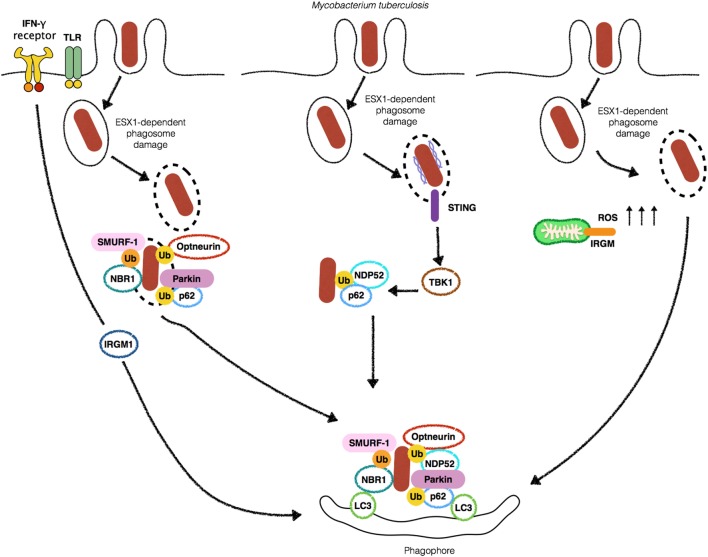
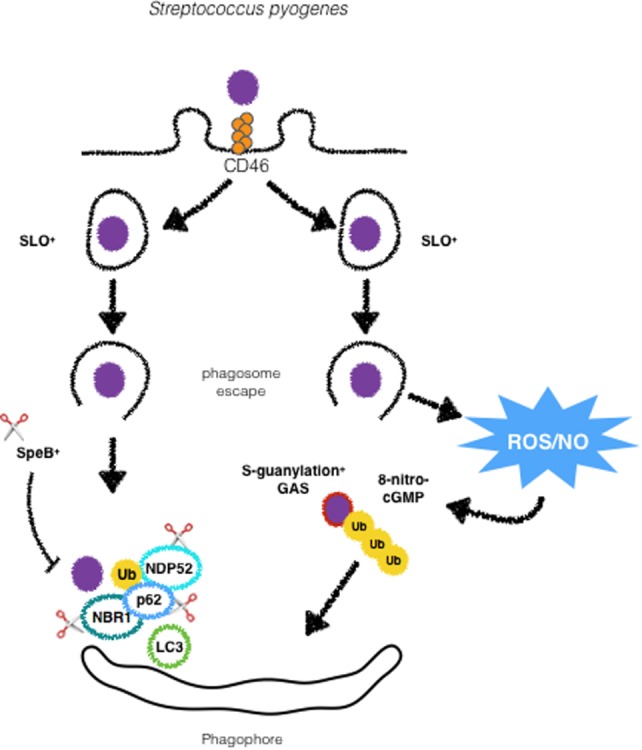
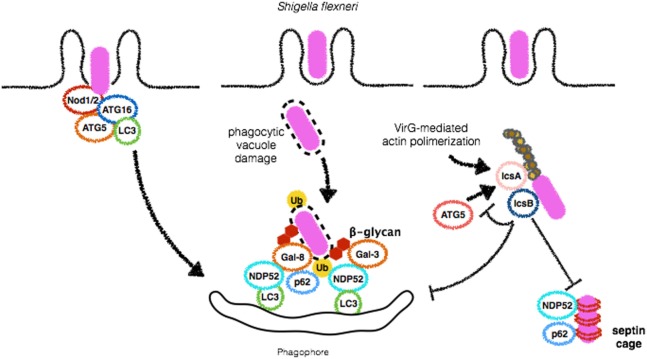
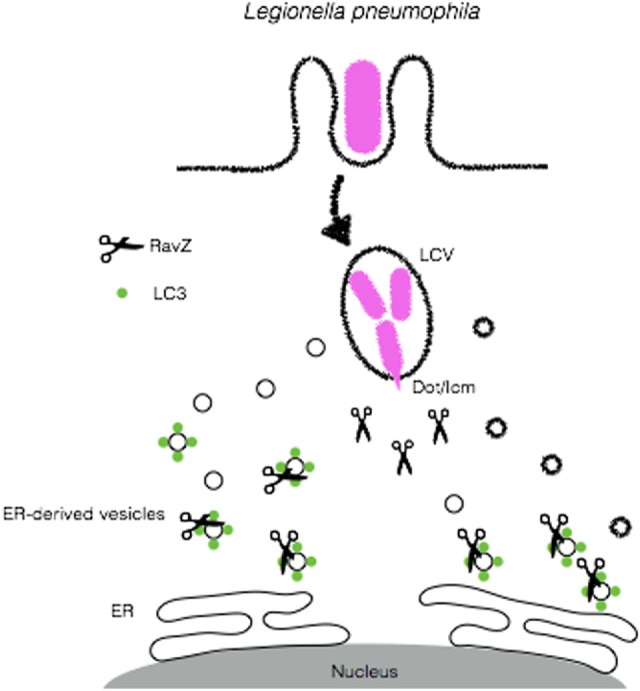
Cellular responses to stress can be defined by the overwhelming number of changes that cells go through upon contact with and stressful conditions such as infection and modifications in nutritional status. One of the main cellular responses to stress is autophagy. Much progress has been made in the understanding of the mechanisms involved in the induction of autophagy during infection by intracellular bacteria. This review aims to discuss recent findings on the role of autophagy as a cellular response to intracellular bacterial pathogens such as, , how the autophagic machinery senses these bacteria directly or indirectly (through the detection of bacteria-induced nutritional stress), and how some of these bacterial pathogens manage to escape from autophagy.
细胞对压力的反应可以通过细胞在接触和压力条件下(如感染和营养状态改变)所经历的大量变化来定义。细胞对压力的主要反应之一是自噬。在细胞内细菌感染过程中诱导自噬的机制研究方面已经取得了很大进展。本文旨在讨论自噬作为细胞对内源性细菌病原体的反应的最新发现,如 ,自噬机制如何直接或间接(通过检测细菌诱导的营养应激)感知这些细菌,以及一些内源性细菌病原体如何设法逃避自噬。